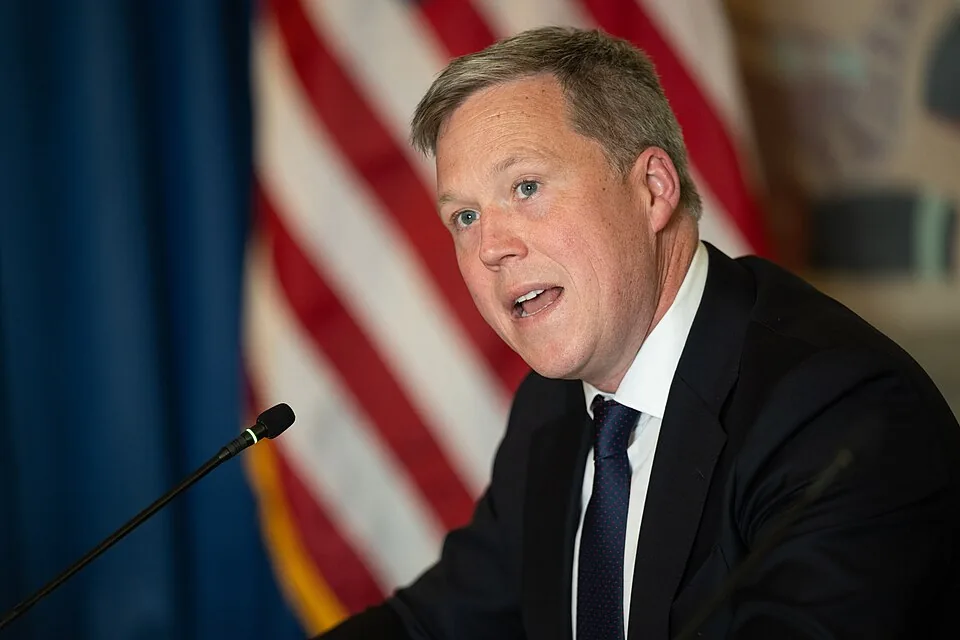
The Army Secretary just rage-quit the Pentagon, and he apparently told the White House exactly who to blame. Dan Driscoll submitted his resignation after concluding that Secretary of War Pete Hegseth had been actively sabotaging Army readiness by firing the generals responsible for it. This is the kind of internal meltdown that usually takes a two-term administration at least four years to produce.
What Actually Happened
Fox News confirmed that Driscoll submitted his resignation to President Trump, though as of reporting the White House had not yet accepted it. A source familiar with the situation told Fox News that Driscoll raised concerns about Army transformation and readiness, and specifically pointed to Hegseth as the obstacle blocking those efforts.
The source was blunt about it: "Driscoll brought up concerns with the administration surrounding Army transformation and readiness and Hegseth's blocking those efforts specifically by firing the Generals who were responsible." That's not a vague policy disagreement. That's someone telling the president that his Defense Secretary is breaking the military on purpose, or at minimum through staggering incompetence.
Driscoll is expected to physically leave the Pentagon in the coming days, according to the Wall Street Journal. His tenure ends with him effectively telling the chain of command that the chain of command is the problem.
The General George Situation
The tensions Driscoll is resigning over didn't come from nowhere. Hegseth removed several senior Army leaders in recent months, and the most high-profile casualty was Army Chief of Staff General Randy George, a decorated combat veteran with 42 years of service and a Purple Heart.
Driscoll testified about George's firing at an April House Appropriations subcommittee hearing, and the account he gave was revealing in ways he probably didn't intend. He said he was on vacation in North Carolina when he heard George had been asked to resign, and drove straight to the general's home. "We walked right in, and we all gave him a hug," Driscoll told lawmakers. He called George "an amazing, transformational leader" and said he adored him and his family.
Then, in the same breath, he defended the administration's right to fire him anyway. "The design of our system is that they get to pick the leaders that they want, and we execute on those orders." Which is technically true. It's also the kind of thing you say when you're still trying to keep your job but can feel yourself losing the will to do it.
Who Is Dan Driscoll and Why Does It Matter
Driscoll isn't some Biden holdover or establishment Republican the MAGA world was waiting to push out. He's a Yale Law grad who went to school with JD Vance, and both of them served in the military before ending up in the same law school cohort. He came into this job as a genuine ally of the vice president, which made him about as insider as it gets in this administration.
He also wasn't a passive secretary. Fox News notes he had been actively working with Silicon Valley companies to expand the Army's drone capabilities, which fits neatly into the administration's own stated priorities around modernization and tech-forward military transformation. He was trying to do the things they said they wanted done.
The fact that even this guy hit a wall with Hegseth and walked out tells you something. This wasn't a culture-war exile. This was a guy who came in aligned, tried to execute the mission, and concluded that the Defense Secretary was making the Army less capable and less ready, not more.
Hegseth's Pattern of Purging People Who Know Things
Pete Hegseth has now presided over the removal of enough senior military leadership that it's stopped being a series of individual decisions and started looking like a doctrine. General Randy George was one of the most respected officers in the Army. His firing was not a personnel adjustment. It was a signal.
The message Hegseth has been sending, whether intentionally or not, is that institutional knowledge and operational credibility are liabilities. The generals who built and ran Army transformation programs got fired. The Army Secretary who worked with them and believed in what they were doing is now resigning. What's left is whoever was willing to stay quiet and absorb all of it.
That's not how you build a more ready, more capable fighting force. That is, in fact, almost exactly how you build a less ready one.
The Dingo Take
You are supposed to believe this is all going according to plan. The firings, the resignations, the systematic removal of experienced senior officers and the people who worked with them. You are supposed to look at an Army Secretary quitting because the Defense Secretary fired all the generals, and read that as reform.
It isn't. What Pete Hegseth has done at the Pentagon is run the kind of leadership purge that authoritarian governments conduct when they're more worried about institutional loyalty than operational effectiveness. The goal isn't a better Army. The goal is an Army that doesn't push back. Driscoll pushed back, told the White House about it, and is now heading for the exit. General George pushed back in subtler ways and got walked out first. The people who remain are the ones who decided the hug at the door wasn't worth it.
Driscoll came in as a JD Vance ally, a veteran, a true believer. He leaves having apparently concluded that the man running the Department of Defense is actively damaging the Army's ability to function. If even that guy couldn't make it work, the problem isn't the people leaving. The problem is the man who keeps firing them.
Comments