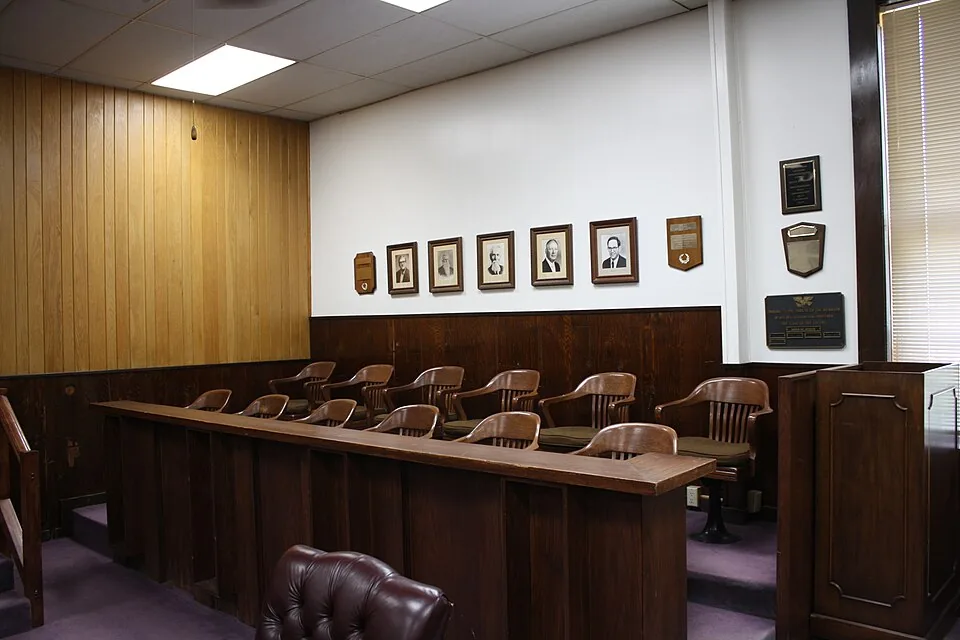
A jury of nine women and three men has spent more than 17 hours trying to decide whether Lindsay Clancy is a murderer or a woman who lost her mind so completely that the law cannot hold her accountable. On Tuesday morning, they told the judge they couldn't agree. The judge told them to try harder. Three children are still dead either way.
What the Jury Told the Court
Just after 10 a.m. Tuesday at Plymouth Superior Court, Judge William Sullivan read a note aloud from the deliberating jury: "After many hours of deliberation, we are unable to come to a unanimous decision." Sullivan sent them straight back into the room.
"I know that this was a long trial," the judge said, according to NBC News. "I know there were over 80 witnesses, over 300 exhibits. But because of that, I'm going to ask you to go back out, keeping in mind all the instructions that I gave you."
The jury had been deliberating since last Thursday afternoon. CBS News reports they had logged more than 17 hours before declaring the deadlock. The only notable question they'd asked before this was a Friday request to review pill bottles and a knife entered into evidence, which tells you something about where at least some minds were going.
Clancy showed no visible reaction to the announcement, according to NBC News. Her parents and sister were present in the courtroom. Her attorney, Kevin Reddington, had apparently whispered to the family before the announcement, so they already knew what was coming.
What Happened on January 24, 2023
The facts of what occurred are not in dispute. Lindsay Clancy, then a 32-year-old labor and delivery nurse, used exercise bands to strangle her three children in the basement of their Duxbury, Massachusetts, home: Cora, 5; Dawson, 3; and 8-month-old Callan. She then attempted to take her own life by jumping from a second-story window, leaving her paralyzed from the waist down. She has attended the entire trial in a wheelchair.
Her then-husband Patrick Clancy was out running errands when it happened, according to the New York Post. He had gone to pick up medication from CVS and takeout from a local restaurant. Prosecutors say this was deliberate planning by Lindsay Clancy to get him out of the house. The defense says it was just life with three small kids. Patrick came home to find her in the backyard, wrists and throat cut, and then discovered the children dead downstairs. The 911 call, in which he can be heard screaming "she killed the kids," was played for the jury.
Two Completely Different Women on Trial
The prosecution painted a portrait of a woman who was depressed and controlling, who had grown tired of a life that wasn't meeting her expectations, and who made a cold calculation. "Lindsay made a calculated decision," Plymouth County prosecutor Shanan Buckingham told jurors in opening statements, as reported by the New York Post. "She was a woman who no longer liked the life she thought she wanted." Buckingham argued that Clancy manipulated her healthcare providers, sought a quick fix, and when it didn't come, chose what the prosecutor called "the alternate route."
The defense told an entirely different story. Reddington argued that Clancy was prescribed at least 13 psychiatric medications by five separate providers in the roughly two months before the killings. She had checked herself into a psychiatric hospital. She'd called a suicide hotline twice. She'd sought help from two perinatal clinics. Patrick Clancy himself testified that she had disclosed having thoughts of harming the children, and that she "kept getting worse and worse." The defense's position is that she was not a woman making choices. She was a woman whose mind had been destroyed.
The defense also argued that at the moment of the killings, Clancy was hearing a man's voice instructing her to kill the children and herself, a hallucination consistent with postpartum psychosis. Prosecutors said no psychosis existed, that she was in her right mind and knew exactly what she was doing. The jury has heard from 85 witnesses total and has more than 200 pieces of evidence to sort through, according to CBS News. The central question, as CBS legal analyst Jennifer Roman framed it, is whether Lindsay Clancy had the mental capacity to appreciate right from wrong and conform her conduct to the law.
The Legal Landscape and What Comes Next
This is not a whodunit. The jury's job is to decide what kind of act this was. They can convict Clancy of first-degree murder, second-degree murder, or manslaughter, all of which carry prison time. A first-degree conviction means a mandatory life sentence. Or they can find her not guilty by reason of lack of criminal responsibility, which under Massachusetts law means she would remain confined to Tewksbury State Hospital, where she currently resides, with her case reviewed periodically.
If the jury hangs completely, Reddington says he is ready to do it all over again. NBC News reports the attorney told reporters Tuesday morning, without any apparent hesitation, that he would "absolutely" try the case again. "Maybe today's the day; we'll see," he said. A retrial would mean another five weeks of testimony, another 85-plus witnesses, and another jury asked to look at the pajamas of three dead children and decide what justice means.
The Guardian notes that even an acquittal does not mean freedom. A judge could still order Clancy confined to a mental health facility if an evaluation determines she poses a danger to the public. There is no version of this story with a clean ending.
Why This Case Has Split People So Completely
Postpartum psychosis is real, rare, and terrifying. It affects roughly one to two out of every thousand women who give birth, and in its most severe form it can involve hallucinations, delusions, and a complete break from reality. It is not postpartum depression. It is not baby blues. It is a psychiatric emergency. The defense built its entire case on the argument that Clancy was in that state, made catastrophically worse by a pharmacological cocktail prescribed by providers who failed to communicate with each other.
The prosecution's counter is that psychosis doesn't leave room for the kind of planning they say Clancy did, maneuvering her husband out of the house, conducting disturbing Google searches including, per the New York Post, "How to slit throat to die" in the days before the killings. Both arguments are internally coherent. Both cannot be entirely true. That's why 12 people have now spent 17 hours in a room together and still can't agree.
The case has consumed the tight-knit community around Duxbury and sparked a national argument about what the criminal justice system is actually equipped to handle when severe mental illness intersects with violent tragedy. The jury deadlock suggests that argument has followed the case right into the deliberation room.
The Dingo Take
You are supposed to look at this case and see a clear villain. That's what the prosecution needs you to do. They need you to see a cold, calculating woman who decided her children were inconvenient and staged an exit. The problem is that the more you learn about what happened to Lindsay Clancy in the months before January 24, 2023 — the psychiatric hospitalizations, the suicide hotline calls, the cascade of medications from providers who apparently weren't talking to each other, the husband on the stand saying she kept getting worse and worse — the harder it is to make that picture hold together. That doesn't make the outcome less devastating. Three children are dead. Cora was five years old. Callan was eight months old. Nothing fixes that.
What this case does, more than almost any in recent memory, is expose the gap between what the criminal justice system is designed to adjudicate and what it is actually being asked to do here. Courts are built to answer: did you know what you were doing, and did you do it anyway? They are not built to answer: what happens to a person when the medical system fails them so catastrophically that their mind stops being their own? Those are different questions. The jury has been handed the second one and told to answer it using tools designed for the first.
Seventeen hours and no verdict. That's not jury dysfunction. That's twelve people taking seriously the possibility that both things can be true at once: that three children were murdered, and that no one who could be called a criminal did it. If the judge sends them back again tomorrow and they still can't agree, that hung jury will say something real about this case, and about the limits of what a courtroom can actually resolve.





Comments