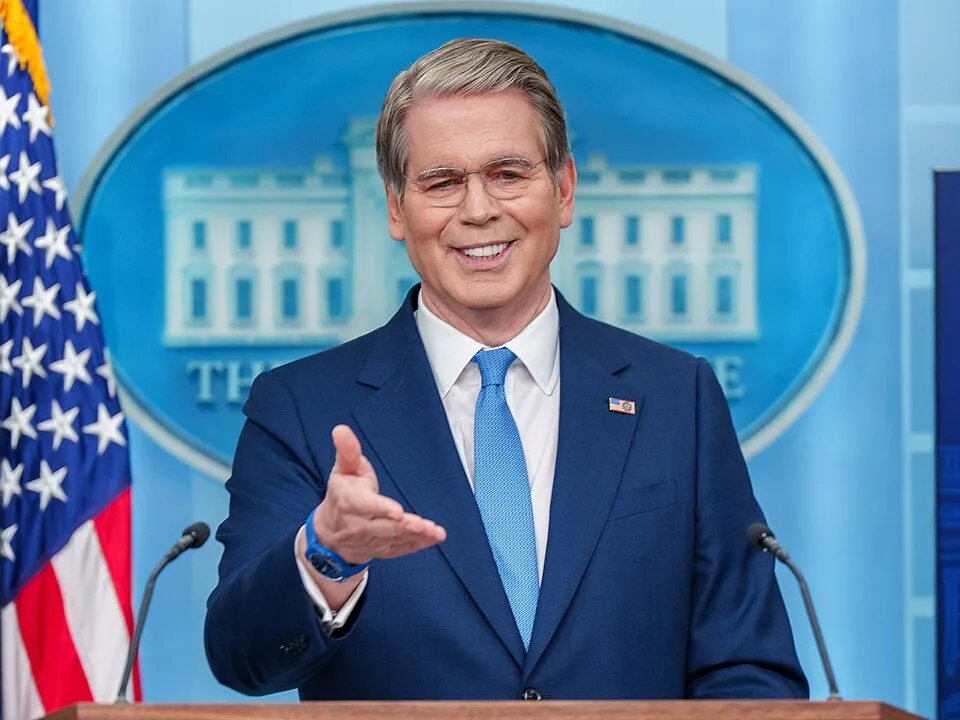
With gas averaging $4.12 a gallon and midterm elections ten weeks out, the Trump administration has landed on its villain: Ukraine, the country currently being invaded by Russia. Treasury Secretary Scott Bessent went on Fox & Friends Wednesday morning to explain that Kyiv is the problem here, actually, because it keeps blowing up the energy infrastructure of the country that has been bombing its cities for five years.
What Bessent Actually Said, Out Loud, On Television
"Ukraine has decided that they want to blow up Russian energy assets and refined products," Bessent told Fox & Friends. "So that is creating upward price pressure on a global basis." That's the Treasury Secretary of the United States, on a major television network, framing a country fighting for its survival as the party responsible for American pain at the pump.
Bessent also cited "an energy shock" tied to the wars in Ukraine and Iran, and promised that once the Iran conflict wraps up, prices will come down. He did not mention when exactly that might happen, presumably because nobody knows, including him.
The average national gasoline price sits at $4.12 per gallon, up nearly a dollar from this time last year, according to AAA data. That's a real problem for any administration heading into a midterm cycle. The question was always going to be who they'd blame. The answer, apparently, is the people getting bombed.
The Politics of This Are Pretty Transparent
Gas prices are one of the most reliable political weather vanes in American elections. Higher prices around Memorial Day are historically bad omens for the party in power ahead of November. It's now September, the numbers are ugly, and the midterms are November 3. The math isn't complicated.
The New York Post reports that Trump met privately with oil and gas retailers and refiners on Tuesday, one day before Bessent's Fox appearance. The administration is clearly in full damage-control mode. And when you're scrambling to control damage, you need a story. Bessent's Fox appearance was that story.
What's interesting is what that story requires you to ignore. Ukraine attacking Russian energy targets is a military strategy in an active war of self-defense against a country that invaded them in 2022. Framing that as the reason your constituents are paying more for gas is a rhetorical choice that happens to align almost perfectly with what Moscow has been arguing for years.
Meanwhile, the Administration Is Doing Oil Deals With Venezuela
While Bessent was on Fox blaming Ukraine, the White House was quietly defending a separate story: a new oil deal with Venezuela. The Post reports the deal covers 17 offshore oil fields with proven reserves of 65 billion barrels, entitles the US to purchase 20% of output at cost, and gives first refusal on the remaining 80%.
The deal involves Alejandro Betancourt, a businessman who reportedly became a billionaire through allegedly corrupt dealings with Venezuela's former socialist leadership. This is the same administration that spent years hammering the socialist government of Venezuela as a cautionary tale about left-wing policy. Now they're cutting oil contracts with its billionaire alumni. The cognitive dissonance required to hold all of this together would snap most people's spines.
Trump is also working to get global shipping firms to transit the Strait of Hormuz with US military assistance, despite ongoing threats from Iran. So the administration is simultaneously blaming Iran for the energy shock while trying to push more tankers through the water Iran controls. These are the people managing your gas prices.
What This Means for Ukraine
Bessent's comments weren't just spin. The New York Post framed them, accurately, as a potential warning shot to Kyiv. Ukraine depends on American military equipment to fight a war it didn't start. When the Treasury Secretary of its primary benefactor goes on morning television to suggest Ukraine's military operations are hurting American consumers, that's a message with weight.
The Trump administration has spent much of the past two years sending mixed signals to Ukraine, alternating between expressions of support and pointed suggestions that Kyiv should be more accommodating to Russian interests. This fits the pattern. It's pressure, dressed up as economic analysis.
If the point was to signal to Ukraine that continued attacks on Russian energy infrastructure might cost them American goodwill, Bessent could not have done it more publicly or more effectively. Whether or not that was the intent, that is absolutely the effect.
The Dingo Take
Ukraine is being invaded. Has been for nearly five years. It is striking Russian energy infrastructure as part of a war it is fighting to not be conquered. Scott Bessent went on Fox News and presented this as the reason you're paying $4.12 for a gallon of gas. The country getting bombed is causing your commute to cost more. Sure.
You are supposed to hear that and nod and think, yeah, Ukraine, that's the problem. You are not supposed to notice that the administration simultaneously cut an oil deal with a Venezuelan businessman with a corruption-adjacent resume, or that they're trying to route tankers through a strait being threatened by the country they're also blaming for the energy shock. You are definitely not supposed to ask why, after two years of "unleashing American energy," domestic production hasn't actually solved the problem.
Blaming a victim for the cost of their victimization is a very specific move. It takes a certain kind of confidence to do it on national television nine weeks before an election, point at the people running from the fire, and say they're the ones making things hot. Bessent has that confidence. Whether voters buy it is the only question that matters right now, and the Trump team is clearly betting they will.



Comments