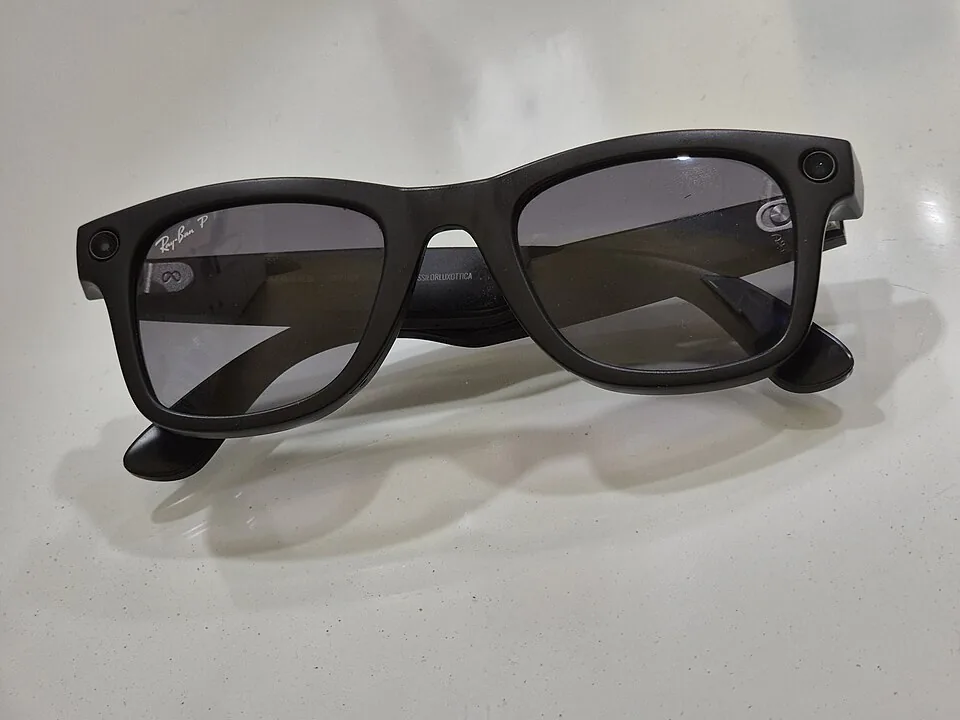
A woman was filmed without her knowledge or consent by a stranger wearing Meta's AI-powered glasses, and the footage ended up on social media. Meta's response to this dystopian little nightmare was to make the tiny recording light slightly harder to cover up. Problem solved, everyone go home.
What Actually Happened Here
CBS News reported in August that a woman discovered video of herself circulating on social media, footage she had no idea was being taken. A man wearing Meta's AI glasses had filmed her without asking. Without warning. Without anything except a small LED light that, as it turned out, people had already figured out how to defeat.
"I had no say," she told CBS News. Three words that should be hanging over every product meeting at Meta's headquarters in Menlo Park right now, projected on the wall in 96-point font.
The glasses come equipped with an LED indicator light meant to signal to bystanders that recording is underway. This is the entire privacy architecture of the product. A little light. That's the system. And third-party services had already popped up specifically to help users cover or disable that light so they could film people without even the minimal warning the light provides.
The Fix That Wasn't, and Now the Fix That Supposedly Is
To Meta's credit, they did try to patch this before CBS News ran the August story. To their enormous discredit, the patch didn't work. CBS News senior crime and public safety coordinating producer Anna Schecter tested the earlier version of the fix and found that covering the light after recording had already started did absolutely nothing to stop the camera.
So the camera kept rolling. The light was covered. Bystanders saw nothing. The supposedly improved safeguard failed under basic real-world testing by a journalist with a pair of glasses and a free afternoon.
Now Meta says they've updated the system again. According to the company, the camera will now deactivate whenever tampering is detected at any point during recording, not just before it starts. "These investments are already having a deterrent effect," Meta told CBS News, noting that companies offering LED tampering services have apparently shut down since the new update rolled out. Which is nice. The black market for secret-filming accessories is smaller than it was. Progress.
The 'Tiny Minority' Defense
Alex Himel, Meta's vice president of wearables, posted last week that "only a tiny minority of people try to get around these protections." He framed this as evidence that Meta's efforts are working, which is one of the more creative interpretations of the phrase "people are actively trying to defeat our safety measures" you'll encounter this year.
Let's think about what "tiny minority" means in Meta scale. Meta's Ray-Ban smart glasses have sold in the millions. A tiny minority of millions of users is still potentially tens of thousands of people motivated enough to seek out third-party services to disable a privacy light so they can film strangers covertly. That's not a reassuring statistic dressed up as one. That's a crisis dressed up as a reassuring statistic.
Meta also announced a broader awareness campaign and said it has removed online posts offering tampering instructions, taken down thousands of posts tied to pickup artist and prank content, and blocked search terms including "pickup artist" and "rizz" content associated with nonconsensual filming. Which raises the question: if the product required blocking "pickup artist" content as a category-level response, at what point during development did anyone stop and ask whether the product should exist in its current form?
The Part Where We Talk About the Actual Problem
Here is what no LED light, however tamper-resistant, actually solves: people don't know to look for it. Most people have no idea that the person sitting across from them at a coffee shop might be wearing recording glasses at all. The entire consent model here depends on strangers noticing a small LED, understanding what it means, and then having some mechanism to object. None of those conditions reliably exist in public.
This is not a niche concern or a slippery-slope hypothetical. CBS News documented a real woman who was filmed without her knowledge, whose image ended up on social media, and who found out about it after the fact. The system failed her completely. The update announced today does not change the fundamental structure of that system. It patches one specific exploit while leaving the underlying architecture, strangers filming strangers with no meaningful consent mechanism, entirely intact.
Meta's awareness campaign is designed to teach people that the LED means recording is happening. But you cannot consent to something you don't know is being done to you, and no amount of public education about indicator lights changes the fact that most people in most public situations are not scanning every face they encounter for smart eyewear.
The Dingo Take
You are supposed to believe that a company worth hundreds of billions of dollars has done its due diligence on privacy because it made a tiny light harder to put a sticker over. Meta shipped a product that lets people record video in public while looking completely normal, watched third-party services emerge to defeat the one warning mechanism built into it, and is now on its second patch after a journalist proved the first one didn't work. This is not a company that got ahead of a privacy problem. This is a company that is one news cycle behind it at all times and calling that leadership.
The LED light was never a real privacy solution. It was a legal and PR buffer, something Meta could point to when this moment came, and it was always going to come, to demonstrate good faith effort. The product was designed to make wearable recording feel normal and socially acceptable. Making recording socially normal was the whole point. The privacy theater was built in from day one to manage the blowback from that, not to actually protect anyone.
The woman who found footage of herself on social media and said "I had no say" is not an edge case. She is the feature working as designed, from the perspective of anyone who wants to film strangers without their knowledge. Meta can block the hashtag "rizz" and issue all the vice president posts it wants. Until there's actual legal liability attached to nonconsensual recording enabled by this hardware, the company has every financial incentive to keep shipping the product and every PR incentive to keep calling a firmware update a privacy fix.




Comments