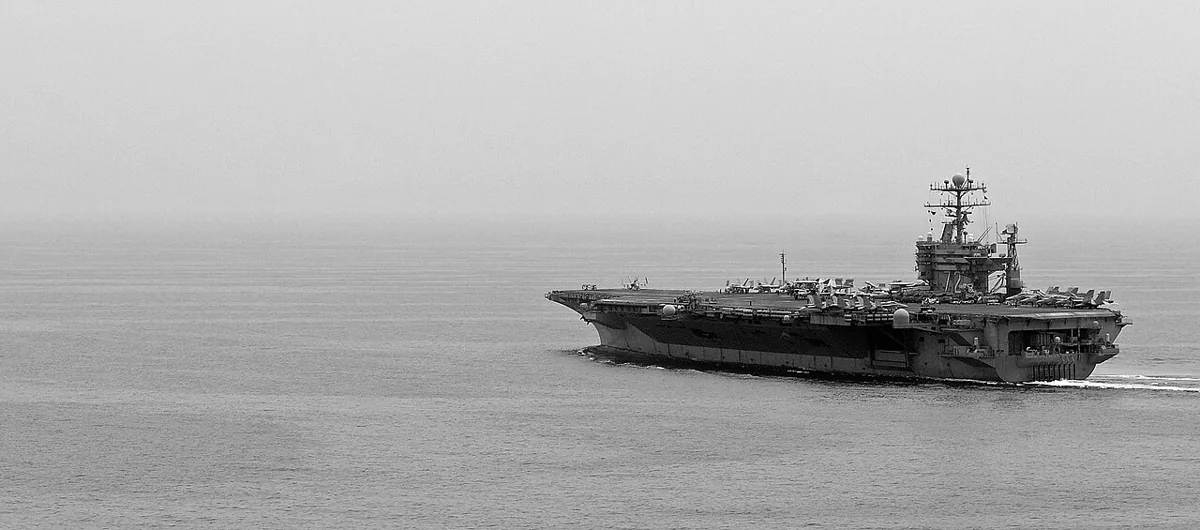
After a record 250 days locked inside a steel warship in the Middle East, nearly 5,000 sailors from the USS Abraham Lincoln finally made landfall this week. Their destination: Pattaya, Thailand, a city whose main export is exactly what the Navy just told them they cannot have. Welcome ashore, gentlemen.
Nine Months at Sea, First Stop: The Mall
BBC News reporter Jonathan Head was on the ground in Pattaya as the sailors arrived, and the first thing he noticed was that they went shopping. Not to the beach. Not straight to the bars. To the mall. Which, honestly, tracks. When you have been sharing a grey steel tube with thousands of other people for the better part of a year, sometimes the most decadent thing imaginable is wandering around a food court in air conditioning while holding a bag from a t-shirt shop.
At the Hard Rock Hotel, where some of the crew were permitted to stay off-ship, sailors milled around clutching their purchases. One older crew member told the BBC he had genuinely lost track of how long they had been at sea. "The news says we've been at sea for nine months. To be honest I've lost track of time," he said. "It got boring. It's never big enough on board. It's big but it still feels like a boat, especially when you're sharing it with thousands of people." The guy asked how long it would take to get home to California. His answer: "Too long."
That is the voice of a man who has been staring at the same gray walls since roughly December. File that under: relatable, and also slightly heartbreaking.
The Sex Industry Was Off-Limits. The Go-Go Bars Were Apparently Fine.
Here is where it gets classically, bureaucratically military. Pattaya is not exactly known for its hiking trails. The city's economy runs on nightlife, and the nightlife runs on an industry that the US Navy has officially declared off-limits. Prostitution is technically illegal in Thailand, sailors were reminded, and they would be expected to conduct themselves accordingly.
And yet. By midnight on Wednesday, according to BBC reporting, some of the younger sailors on Walking Street, Pattaya's most infamous promenade, were drunk enough to need each other for structural support. Others were, per the BBC's own words, edging "nervously into the red-lit caverns of the go-go bars, with their gyrating and barely-clothed pole dancers." A massive illuminated sign at the entrance to Walking Street welcomed the crew of the carrier by name.
The Shore Liaison Group, identifiable by their SLG t-shirts, was everywhere. Their job, per BBC reporting, is to maintain discipline, watch out for younger and less experienced crew members, and coordinate with local authorities. So yes: the Navy sent chaperones to the go-go bars. This is what passes for harm reduction in the United States Armed Forces.
Nine Months of Unspent Salary, Zero Answers About What They Were Doing Out There
Local businesses in Pattaya had been very publicly hoping that nearly 5,000 sailors carrying nine months of unspent wages would stimulate the local economy. The Middle East conflict had already hurt tourism in the city, the BBC notes, with many of the visitors Pattaya depends on simply not traveling.
The sailors, for their part, were well-trained to say absolutely nothing useful about what they had actually been doing during those 250 days. The USS Abraham Lincoln spent its deployment operating in the campaign against Iran, a mission that has drawn significant criticism back home over reported conditions on board the ship. Questions about that deployment went nowhere. Crew members redirected journalists to their media teams. US Naval Attache Kristopher Robinson told the BBC he was "trying to give the sailors as much opportunity for rest as they can" and that personnel would "conduct themselves in accordance with US law, US naval regulations, and the laws of Thailand." That is four complete sentences of nothing.
The Families Waiting at Home Are Not Getting the Sanitized Version
While Navy spokespeople talked around every question, the families at home have been considerably more honest about what the last nine months felt like. Shakeira Fairfax, whose 25-year-old daughter Jada serves on the Lincoln, told Reuters there were moments when "morale was low." She described the period after hostilities broke out in the Middle East as "uncertain" and "scary."
"I just can't wait to see her smile. I can't wait to hear 'mum', I know that's the first thing she's gonna say," Fairfax said. That quote is going to wreck you a little if you let it. A mother who spent nine months not knowing exactly what her kid was doing or whether she was safe, waiting for a single word.
The Lincoln is still on its way home to California. The Pattaya stop is a waypoint, a pressure valve. As the BBC notes, the hope is that some shore leave and a few nights of Pattaya doing Pattaya things will have drained away whatever frustration or resentment the crew might be carrying by the time they dock stateside. Whether a mall trip and a night on Walking Street is sufficient to process nine months of combat deployment is, the Navy would prefer you not ask.
The Dingo Take
Two hundred and fifty days. That is not a deployment. That is a hostage situation with better food and a chain of command. The USS Abraham Lincoln broke a record nobody was rooting to break, running a combat mission in the Gulf that lasted the better part of a year, under conditions that were bad enough to draw official criticism back in the United States, and the reward at the end of it is a port call in a city where the entire entertainment infrastructure the sailors were hoping to access has been declared technically off-limits. The Navy sent them to Pattaya and told them not to do Pattaya. That is a special kind of institutional sadism.
The spokespeople deserve their own paragraph. Kristopher Robinson, a United States Naval Attache, stood in front of journalists in Thailand and said words for several seconds without conveying a single piece of information. "Conduct themselves in accordance with US law, US naval regulations, and the laws of Thailand" is the verbal equivalent of a loading screen. Meanwhile his sailors are propping each other up on Walking Street at midnight, which is fine, and which is also the whole point of a port call, and which everyone understands is the whole point, and the fact that the Navy cannot say so out loud is one of those small American hypocrisies that accumulates into something larger over time.
These are real people. Some of them are 25 years old. Some of them have mothers who spent nine months scared. The least this country owes them is honesty about what it asked them to do and why, rather than a spokesperson with a checklist of approved phrases and a hope that Pattaya's nightlife smooths over whatever questions they might be bringing home. They earned some answers along with the shore leave.




Comments