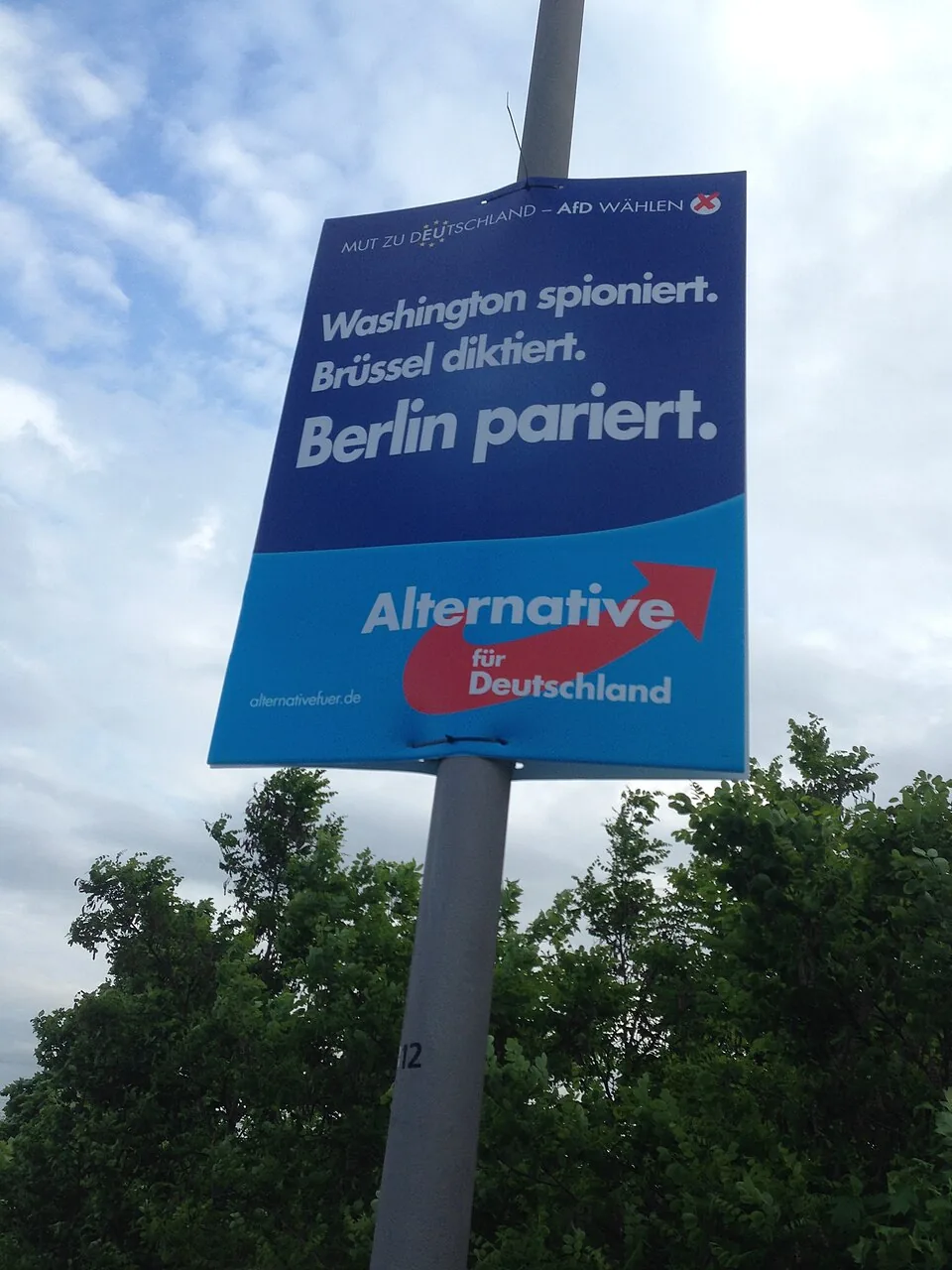
Germany is about to potentially hand a far-right party control of a state government for the first time since World War II, and the candidate doing it looks like a guy who sells luxury watches on Instagram. Ulrich Siegmund, 35, former marketing professional, TikTok star, and Alternative for Germany candidate for governor of Saxony-Anhalt, is comfortably leading polls ahead of Sunday's state election. His party has already been classified as right-wing extremist by domestic intelligence authorities in several German states. He smiles a lot.
The Most Photogenic Threat to German Democracy You've Ever Seen
According to NPR, Siegmund has almost half as many TikTok followers as there are eligible voters in Saxony-Anhalt. He films from his back porch. He answers questions personally. He wears a flawlessly ironed white polo shirt in every video. His side parting is immaculate. This is the face of what German intelligence agencies have formally labeled right-wing extremism, and it looks suspiciously like a LinkedIn profile photo.
This is not an accident. Siegmund is a former marketing professional, and it shows. Where other AfD figures tend to grimace and rage, Siegmund grins and reassures. He keeps his campaign speeches, as NPR describes them, full of pep talk rather than policy. The actual policy is tucked away in party documents that a 23-year-old law student named Hannes Kreschel has made it his mission to drag into the light.
But the polished exterior does slip, occasionally. In a recent TikTok, Siegmund complained that it is 'unacceptable' that German doctors leave for Norway and Switzerland 'while we bring in doctors from India or other places to replace them.' The AfD's formal platform is even blunter, stating that 'culturally foreign' health workers 'endanger patient well-being.' Siegmund just says the quiet part loud enough, then pivots back to optimism.
What the Voters Are Actually Saying
NPR spoke to voters in Halle, the city where the election's stakes feel most concrete, and the results are instructive. Alexander Winsek, a 49-year-old aviation engineer, told NPR he's considering voting AfD for the first time. He likes their immigration positions. He does not, he stressed, agree with everything: he wants to stay in NATO, keep the euro, and isn't 'exactly pro-Russia.' But Siegmund, he said, is the breath of fresh air democracy needs.
This is the thing that gets lost when mainstream outlets cover the far-right surge in Europe. The voters aren't all marching around in matching shirts. Many of them are people like Winsek: broadly mainstream in a lot of their views, genuinely frustrated with how things are going, and being told by a smiling man in a white polo that the problem is immigration and the solution is him. It's a very old pitch. The branding is new.
Marcel Lewandowsky, who researches democratic resilience at Martin Luther University Halle-Wittenberg and wrote the book 'What Populists Want,' told NPR that polls show the majority of AfD voters actually describe themselves as pro-democracy. They just think democracy isn't working. And the AfD has figured out that the harder mainstream parties push back on them, the more those parties look like an establishment protecting its own turf from the 'silent majority' the AfD claims to represent. That's a trap, and Germany is walking straight into it.
The Kid Trying to Stop It With a Microphone and a Beer
Hannes Kreschel used to vote AfD. He was 23, fed up, and wanted to stick it to the people in power. Then he read the party's actual policies. He stopped voting AfD.
Now Kreschel shows up at AfD rallies, talks to voters on camera, and posts the exchanges online. He told NPR that conversations go a range of ways: 'They try to hit the microphone and they try to hit me.' He says he tries to stay civil because he thinks you should separate people from their talking points, which is a level of generosity most people would struggle to maintain when someone is swinging at their face.
His videos are popular but don't get the same reach as Siegmund's. That's the math problem here. A TikTok-native candidate with a massive following and a carefully managed image is running against a law student with a camera and a commitment to good faith. One of them has the German intelligence apparatus worried. The other one is getting microphones swatted out of his hands.
What a Win Actually Means
The AfD has been polling first not just in Saxony-Anhalt but nationally. NPR reports that a win on Sunday would represent a major breakthrough for a party that has been formally classified as right-wing extremist by domestic intelligence authorities in multiple German states. That classification matters. These are not fringe observers making a political judgment call. These are government intelligence agencies applying a legal standard, and the party is on the verge of running a state government.
The historical echo here is not subtle. Germany has spent 80 years being extremely careful about exactly this kind of thing, for reasons that are well documented and require no elaboration. The fact that it's happening with TikTok content and a great smile rather than torches does not make it less real. If anything it makes it harder to see coming, which is exactly the point.
The Dingo Take
You are supposed to look at Ulrich Siegmund and see a normal politician. That is the entire strategy. The white polo, the back porch TikToks, the broad smile, the relentless optimism: it's all packaging for a political platform that German domestic intelligence has formally designated as right-wing extremist. The AfD's actual documents describe 'culturally foreign' doctors as a danger to patients. The candidate who wants to lead the government smiles and talks about fresh air and can-do energy. These two things are not in conflict. The smile is the product.
Lewandowsky's research captures the genuine bind here. The more the German political establishment frames this as democracy vs. the AfD, the more AfD voters hear 'we are the democracy and you are not invited.' That framing is not wrong, but it's also losing. Siegmund has cracked the code that Marine Le Pen cracked in France, that Giorgia Meloni cracked in Italy: sand down the edges, keep the substance, let the mainstream parties exhaust themselves on process arguments while you talk to regular people about their actual frustrations.
Kreschel, the 23-year-old with the microphone, has the right idea and a fraction of the reach. That gap is the whole story. Sunday's vote won't be the end of Germany. But it will be the moment a party that Germany's own intelligence services classify as right-wing extremist takes the wheel of a state government for the first time since 1945. The immaculate white polo will be in every photograph. Smile for the camera.




Comments