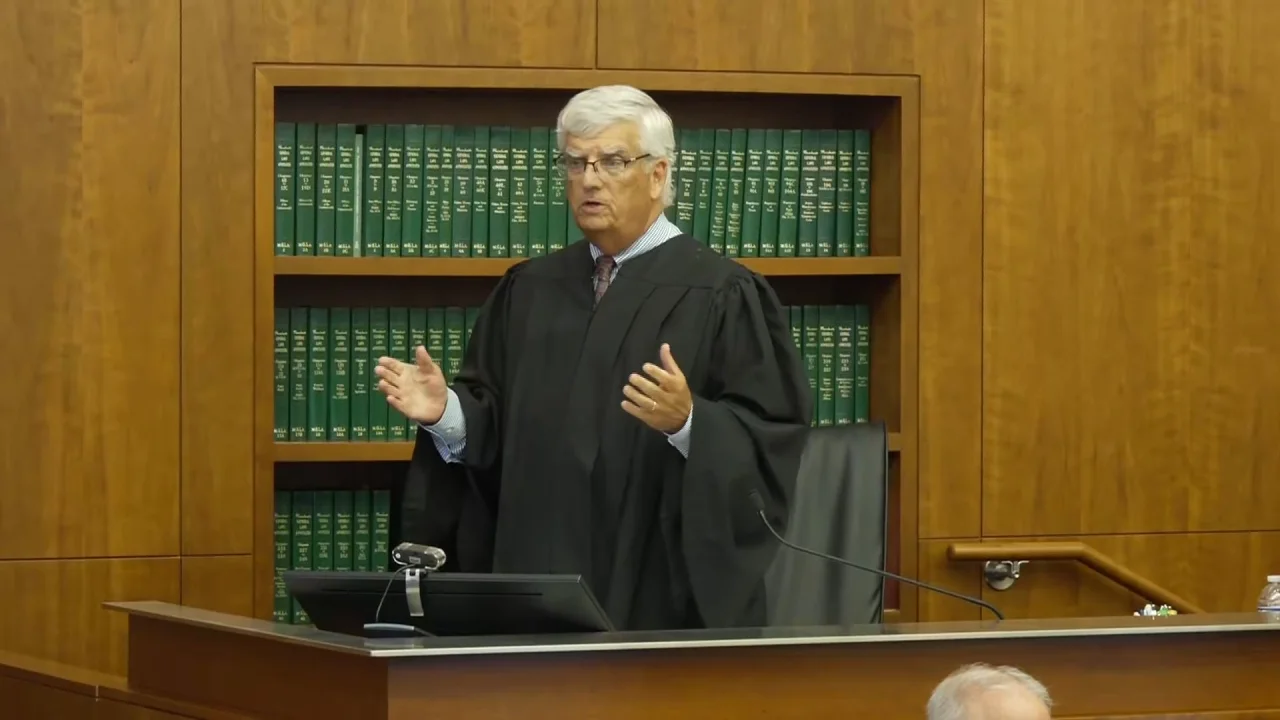
After six weeks of trial, seven days of deliberation, and three separate deadlocks, a Massachusetts jury could not agree on what to do with Lindsay Clancy, the mother accused of strangling her three children in 2023. Judge William Sullivan declared a mistrial on Friday, meaning the case that gripped the country ends not with a verdict but with an exhausted jury and a note that said, with a heavy heart, they simply couldn't get there. Cora was five years old. Dawson was three. Callan was eight months.
Three Deadlocks, One Last Hail Mary, and Still Nothing
The jury sent its first deadlock note on Tuesday, the fourth day of deliberations. Sullivan sent them back. On Wednesday they sent another, and Sullivan responded with what Massachusetts law calls Tuey-Rodriguez instructions, essentially a formal please-just-try-one-more-time delivered by a judge in a robe. On Friday, per NBC News, the foreperson sent a third note saying that "with a heavy heart" they were still stuck. That was it. Three deadlocks is the legal limit under Massachusetts law, and Sullivan declared a mistrial.
But defense attorney Kevin Reddington wasn't ready to accept that. In a move NBC News described as a sudden announcement, Reddington told the court he wanted to appeal to the Massachusetts Supreme Judicial Court before Sullivan could officially pull the plug. Sullivan gave him an hour. The hour became two. Reddington's associate Dana Goldblatt eventually got a Supreme Judicial Court judge on a Zoom call and argued that a single holdout juror was refusing to "follow what the law states" and should be removed from the panel.
The SJC judge said no. The stay was denied. NBC News legal analyst Danny Cevallos called Reddington's odds "a very low probability" even before the ruling came down, noting that it was still Reddington's job to try "absolutely everything" to avoid this outcome. He tried. It didn't work.
What the Two Sides Were Actually Fighting About
The core dispute in this case was never whether Lindsay Clancy killed her children. She did. The question was what was happening inside her mind when she did it.
Clancy's defense argued she was in the grip of postpartum psychosis, a rare and severe psychiatric condition that can completely sever a person's connection to reality. According to NBC News, her attorneys said she had been deteriorating for months, had repeatedly sought psychiatric help, called a suicide hotline, and was never properly diagnosed. Instead she was cycled through a series of medications, some to treat her symptoms and some to treat the side effects of the previous drugs. In closing arguments, Reddington blamed "the damn medicine and the lousy medical care that she got." The defense also leaned on testimony from forensic psychiatrist Dr. Phillip Resnick, who concluded Clancy was psychotic at the time of the killings, and her account that she heard a male voice telling her to kill her children.
Prosecutors had a different story. They told the jury, per NBC News, that Clancy deliberately sent her then-husband Patrick Clancy out to get dinner and stop at CVS, that she looked up how long the trip would take, called the store to confirm a medication was in stock, and then killed the children one by one before throwing herself from a second-story window. Patrick Clancy testified he came home to "blood everywhere." The prosecution acknowledged she had mental health struggles but argued she knew exactly what she was doing and was capable of distinguishing right from wrong.
The jury heard from 85 witnesses and reviewed more than 200 pieces of evidence over nearly six weeks, according to CBS News. They had five options: not guilty by reason of insanity, not guilty, first-degree murder, second-degree murder, or manslaughter. They couldn't agree on any of them.
What Happens to Clancy Now
A mistrial resets the legal clock to pretrial conditions. That means, as CBS News reports, Clancy stays in custody and under psychiatric care at Tewksbury State Hospital, where she has been held since 2023. She is also paralyzed from the waist down, the result of her suicide attempt that night. She is not going anywhere.
The next move belongs to Plymouth County District Attorney Timothy Cruz, who has to decide whether to retry Clancy on first-degree murder charges, bring a lesser charge, pursue a plea deal, or walk away from the case entirely. CBS News reports that Clancy's attorney Reddington has already said he doesn't believe she is emotionally prepared to face a second trial, though he said he'd be ready to litigate one if it came to that. Reddington has also been openly critical of Cruz for pursuing first-degree murder in the first place, a charge that by law requires a jury trial and forecloses the option of a bench trial or easy plea arrangement.
The Prosecution's Mistakes, and Why a Retrial Could Go Differently
Legal analysts aren't exactly rushing to call this a win for the defense. CBS News legal analyst Caroline Polisi called the mistrial "gut-wrenching" but said she expects prosecutors to come back for a second try, pointing to the Karen Read case as a recent precedent where prosecutors retried after a hung jury. Read was ultimately acquitted in the retrial, which is probably not the comparison Cruz is hoping for.
Polisi was candid that the prosecution made "pretty big missteps" in the first trial, specifically flagging their argument that Clancy faked her suicide attempt as something they should probably drop. "I would think they would really hone down their case," she told CBS News, suggesting prosecutors could concede that Clancy was severely depressed while sharpening their argument that she still knew the difference between right and wrong. That's a narrower, cleaner argument than "she wasn't really that sick and also she faked jumping out a window."
Loyola Law professor Jessica Levinson, also speaking to CBS News, noted that both sides will want to poll the deadlocked jurors to understand exactly where the breakdown happened before making any decisions about round two. What made one juror dig in while eleven others couldn't bring them along? Nobody outside that deliberation room knows yet. The answer to that question will shape everything that comes next.
A Case That Was Never Going to Be Simple
The Lindsay Clancy case arrived with almost no clean exits. Supporters showed up at the courthouse. Protesters showed up at the courthouse. Counter-protesters showed up at the courthouse. The internet has been arguing about it since the night it happened. CBS News notes that the public debate has been raging continuously, which tracks: a case involving dead children, a mother who may have been failed catastrophically by the medical system, and genuine contested questions about mental illness and criminal responsibility is going to generate heat.
What the jury's deadlock tells us, or at least suggests, is that reasonable people who sat through six weeks of evidence and seven days of deliberation could not land in the same place. That is not nothing. It does not mean Clancy is innocent and it does not mean she is guilty. It means this case is exactly as complicated as it looks, and that the American legal system's demand for a unanimous verdict in criminal cases sometimes produces this: nothing at all.
Clancy will stay at Tewksbury State Hospital while Cruz decides what to do. The children are still dead. The jury went home.
The Dingo Take
You are supposed to look at this outcome and feel like justice either worked or failed, depending on which side you were already on. That's how these cases get covered and that's how people consume them. But the honest reading of this mistrial is that twelve people who actually heard all of it, not Twitter's version of it, could not agree. One juror apparently held out against the other eleven. We don't know why. We don't know what they believed or what they couldn't get past. What we know is that postpartum psychosis is real, that the American mental health system is genuinely catastrophic, and that three children are dead and their mother threw herself out of a window the same night.
The prosecution has decisions to make, and they're not enviable ones. Going back to trial means putting Patrick Clancy through this again, spending another six weeks and an enormous amount of public money, and potentially arriving at the exact same outcome. A plea deal might actually serve everyone better than another trial, though "better" is a word that sits uncomfortably in a conversation about three strangled children. DA Cruz charged this as first-degree murder from the start, a decision Reddington criticized repeatedly and publicly, and that choice closed off a lot of off-ramps.
Here is the part that should make everyone uncomfortable regardless of where they come down on Clancy's guilt: she called a suicide hotline. She sought help, repeatedly, and the system handed her different pills each time and sent her home. Even the prosecution acknowledged she was mentally ill. The argument was only about how mentally ill and whether it mattered legally. Whatever Cruz decides to do next, that part of this story does not go away. The system that was supposed to catch her didn't. Three kids paid for it. Arguing about what to do with Lindsay Clancy now doesn't change that, and no second trial will either.





Comments