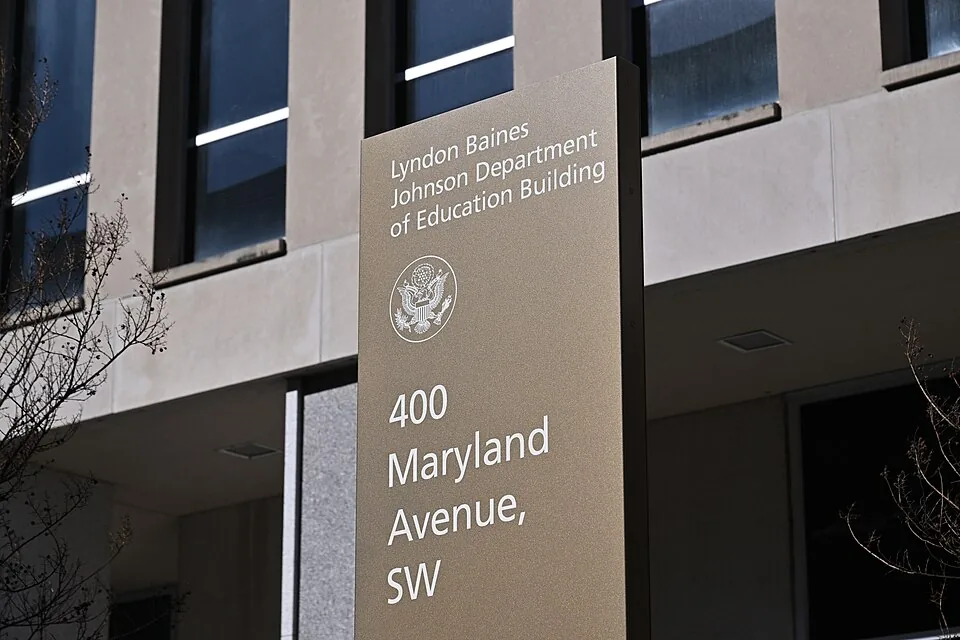
The federal government has been collecting civil rights data on American schoolchildren for over fifty years. This week, the Trump administration finally released the latest batch, six months late, stripped of the plain-English summary that parents and advocates have relied on for more than a decade, and with zero explanation for either decision. Just dropped it on a website and walked away.
Six Months Late, and Counting
The Civil Rights Data Collection, or CRDC, is the kind of data that sounds boring until you realize what it actually tracks: which kids get bullied, which students can access Advanced Placement classes, how schools treat children with disabilities, how discipline breaks down along racial lines. It covers nearly every public school in the country. It is, in other words, a snapshot of whether American schools are treating kids fairly.
According to NPR, the Education Department's own deadline for releasing this data was the end of last year. It came out this week. The Trump administration did not answer questions about the delay. An Education Department spokesperson offered a response so thin it barely qualifies as one: "The Department released the 2023-24 Civil Rights Data Collection (CRDC), and it can be found here." That's it. No explanation. No accountability. Just a link.
The agency releases this data every two years. Being six months past your own stated deadline is not a scheduling hiccup. It is a choice.
They Also Killed the Part Regular People Could Actually Read
Here is where it gets worse. For more than a decade, the CRDC release has come packaged with what's called a "First Look Report" — a simplified, accessible summary that lets a parent, a school board member, or a local journalist actually understand what the data says without running hundreds of pages of code. This year, there is no First Look Report. Just raw data files aimed at researchers.
Catherine Lhamon, who led the Office for Civil Rights under both Obama and Biden, put it plainly: "It didn't make it usable for somebody's mom to be able to see what's happening in a school community, advocate with a school board, compare the school community experience to another district or other states in the country." She said public usability was a central goal during her tenure, and that the spirit of transparency held even through the first Trump administration.
Maithreyi Gopalan, a professor and researcher at the University of Oregon, reportedly spent two days just getting her analysis program running on the new files. Her code, she said, runs hundreds of pages long. That is what it now takes to read a report that used to come with an executive summary. If you do not have a research team and a university affiliation, you are simply out of luck.
The Office Overseeing This Lost Half Its Staff
The Office for Civil Rights, which oversees the CRDC, has been gutted since Trump returned to office. OCR reportedly cut its staff by half after the second Trump administration took power. The administration has also announced plans to move OCR out of the Education Department entirely and into the Justice Department.
Advocates reportedly said these upheavals likely contributed to the delay, though a former Education Department employee who worked on the CRDC said the team responsible for the data is still intact. That employee asked not to be named, citing fear of professional consequences. Think about that for a second: a federal employee is afraid to go on record saying that their own office is still doing its job.
Meanwhile, the administration has been using OCR's remaining bandwidth to crack down on DEI initiatives and investigate schools that allow transgender athletes to compete in women's sports. That's the priority. That's what gets the staff.
What This Data Is Actually For
Ivy Morgan, director of P-12 research and data analytics at EdTrust, an advocacy group focused on education equity, did not mince words. "The public has come to expect that CRDC releases include easily digestible national statistics that showcase disparities in discipline, access to advanced coursework, and more," she said. "Hiding the data this way is part of this administration's pattern of attacking research, data and evidence."
Daniel Losen, a longtime civil rights lawyer and researcher now at the National Center for Youth Law, said he has used the federal data source for countless projects, working with districts to identify and address discriminatory patterns. Lhamon described parents using prior CRDC releases to show up at school board meetings and demand that students with disabilities be included in gifted and talented programs, and that discriminatory discipline rates come down. That is what accessible public data does. It gives people without lawyers and lobbyists the same information as the people making decisions about their kids.
The data still exists. It is still technically public. But making it incomprehensible to anyone without a research background is its own form of suppression.
The Pattern Is The Point
This is not an isolated incident of bureaucratic fumbling. The CRDC delay and the elimination of the First Look Report land in the same pile as the administration's broader assault on federal data collection: the removal of public health statistics, the gutting of economic research, the erasure of climate data.
The message, delivered consistently and without apology, is that the government will collect information about what is happening to Americans, and then it will decide how much of that you get to know. The 2023-24 data reportedly includes new information about teacher retention, whether preschoolers are being evaluated for English-learner or disability status, and whether students who needed Wi-Fi devices for learning actually received them. That is genuinely useful, genuinely important information about the state of American public schools.
And the administration buried it in a format that requires a university researcher and hundreds of pages of code to parse. That is not an accident.
The Dingo Take
You are supposed to believe this was just a scheduling delay. Six months past deadline, no explanation given to reporters, and the one piece of the release that made the data legible to ordinary human beings quietly discontinued after more than a decade. Sure. A scheduling delay.
The federal government has been collecting this civil rights data for over fifty years. It survived Nixon. It survived every administration that wished it would go away quietly. The first Obama administration actually made it more useful to the public. Even the first Trump term left the First Look Report intact. This administration looked at that track record and decided to be the one that finally made the thing functionally useless to anyone without a research grant. That takes commitment.
A parent trying to find out whether their kid's school disciplines Black students at higher rates, or whether children with disabilities are being excluded from advanced coursework, now needs to find a data scientist. In the meantime, the Office for Civil Rights that is supposed to enforce these civil rights protections is running at half staff, being shuffled to a different department, and spending its remaining energy policing transgender athletes. The cruelty of the prioritization is almost elegant in its completeness.


Comments