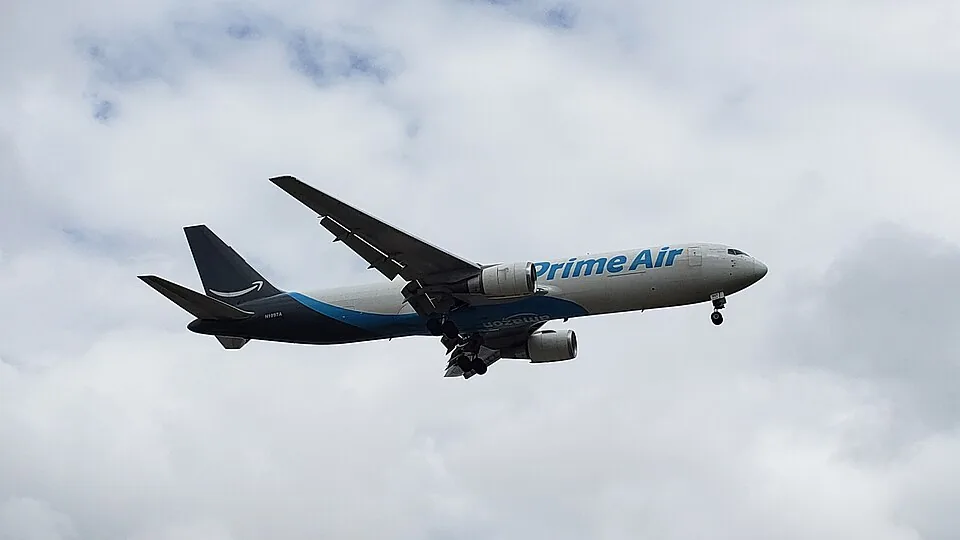
An Amazon Air cargo plane overshot the runway at Miami International Airport Sunday afternoon, plowed into several vehicles on the ground, burst into flames, and killed five people. Five more were injured, three of them critically, on one of the busiest travel days of the year. This is not a metaphor for anything. This actually happened.
What We Know: The Plane, the Runway, the Fire
The aircraft was a Boeing 767-300 cargo plane operating as 21 Air Flight 7598, contracted to fly for Amazon Prime Air. According to the FAA, it departed from Luis Muñoz Marín International Airport in San Juan, Puerto Rico, and came in to land at Miami International Airport around 2 PM local time Sunday. It did not stop.
The plane overran what the airport describes as its diagonal runway and ended up disabled at the northwest end of the airport, where it caught fire. Miami-Dade Fire Rescue units arrived to find, in their words, 'heavy flames and smoke showing.' Over 200 firefighters responded. The flames were eventually brought under control, but hours after the crash, fire chief Raied Jadallah confirmed there was still a fuel leak at the site.
Flight tracking data from FlightRadar24 shows the plane was traveling at 112 knots, roughly 129 miles per hour, as it exited what the site calls the 'useable runway.' That is not a speed at which you want to be leaving useable runway. The plane came to rest near a parking lot servicing an Amazon warehouse and other businesses, because of course it did.
Five Dead, Three Critical, People Trapped in Their Cars
Miami-Dade County Mayor Daniella Levine Cava confirmed the death toll at a Sunday evening news conference: five people killed, five more injured. Of the injured, three are in critical condition and two were taken to a local hospital, according to Miami-Dade fire rescue. The Guardian reports that the pilot and copilot were both trapped in the cockpit as a result of the crash.
Several of the other injured were trapped inside or underneath vehicles that the plane struck as it careened off the tarmac. Fire chief Jadallah described it as a 'very complex situation,' which is doing a lot of heavy lifting as understatement goes. Rescue crews, the mayor said, arrived within seconds of the crash. Whether that was fast enough for everyone involved is one of the questions this investigation will have to answer.
All victims were taken to hospital with what officials called 'unknown injuries,' which is the kind of phrase that tells you the scene was chaotic enough that there wasn't time for neat categorization. The mayor said the focus right now is 'on the families, those who were injured, and the ongoing response.'
Miami Airport Grinds to a Halt on the Worst Possible Day
The FAA ordered a ground stop at Miami International Airport immediately after the crash, halting all arrivals and departures. By 3 PM, all runways and taxiways were closed. According to FlightAware, roughly 250 flights were delayed by late Sunday afternoon. Street closures went up around the airport, with the Miami-Dade sheriff's office shutting down NW 67th Avenue between NW 25th and NW 36th Streets.
The timing could not have been worse, at least from a travel disruption standpoint. The TSA had predicted 17 million travelers at US airports in the week leading up to Labor Day, with 2.3 million people flying on Sunday alone. Miami International is not some regional backwater airport either. The BBC notes it is America's busiest airport for international freight and second busiest for international passengers, handling about 60 percent of all international visitors to Florida.
Transportation Secretary Sean Duffy posted on social media that responders would 'assess the scene,' and warned travelers to expect 'significant delays and potential cancellations.' The Secretary of Transportation broadcasting travel advisories on social media hours after a fatal crash is where we are now.
Weather, 21 Air, and the Investigation Ahead
FlightRadar24 noted there were light thunderstorms and gusting winds in Miami at the time of the incident. Whether that played a role is unknown. Officials said Sunday it is too early to determine a cause, and the National Transportation Safety Board, which investigates all US air crashes, has assembled a team and is scheduled to hold a press briefing Monday.
The plane was operated not directly by Amazon but by 21 Air, a charter cargo company based in North Carolina. Amazon's Director of Corporate Global Media Relations, Kelly Nantel, confirmed in a statement to multiple outlets that Amazon is 'working closely with local authorities' and will 'cooperate fully with any investigation.' The BBC said it reached out to 21 Air directly and received no response.
Amazon said it is 'heartbroken' to learn of the five deaths. The company's statement was careful to note that the plane 'was operated by 21 Air,' a detail they mentioned twice, which is the kind of thing you do when your lawyers are already in the room.
The Dingo Take
Five people are dead because a cargo plane carrying Amazon packages couldn't stop in time. Three more are fighting for their lives. Some of them weren't even at the airport, they were just parked near it, or driving past, living their Sunday afternoon, and then a Boeing 767 came off a runway and into their world. That is the actual human cost of what happened Sunday, and it deserves to be stated plainly before anyone pivots to talking about stock prices or PR strategy.
The NTSB will do its job. There will be a briefing Monday, then weeks of preliminary findings, then months of investigation, then a final report that most people will never read. In the meantime, Amazon will cooperate fully, as they say, and 21 Air will eventually return someone's call. The FAA, still an agency, will investigate. This is how the process works, and the process is worth something, even when it takes forever and produces a PDF.
What is worth watching is whether any of this prompts a harder look at the cargo aviation industry, the subcontracting arrangements that put charter operators like 21 Air between big companies and regulatory scrutiny, and what safety standards actually look like when Amazon Prime Air is technically not the one flying the plane. These are not abstract regulatory questions. Five people died in a parking lot on Labor Day. Someone should answer for that.




Comments