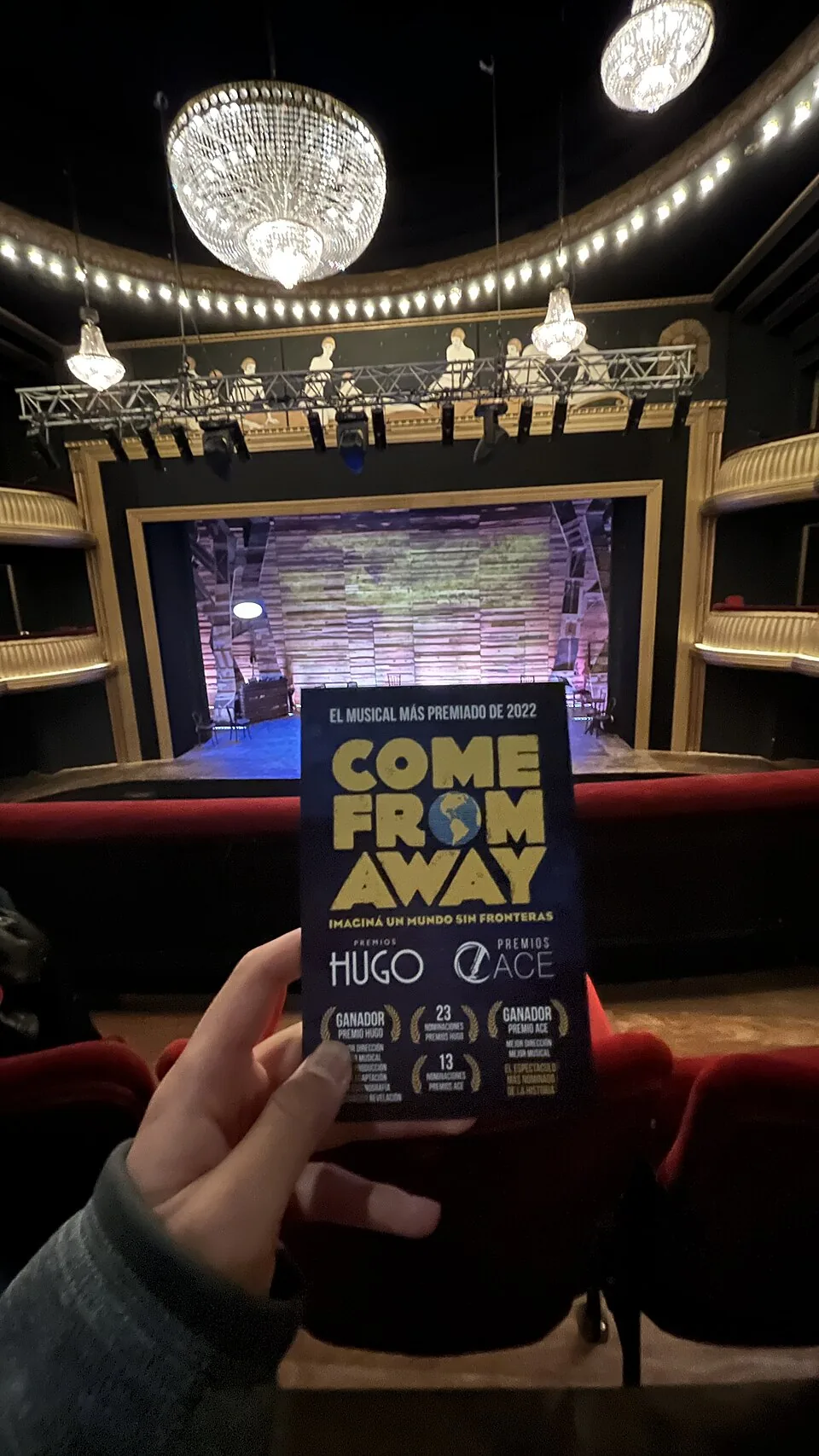
Two Canadian writers traveled to a tiny Newfoundland town to interview the people who housed seven thousand stranded airline passengers on the worst day in modern American history. They figured, at best, maybe some Canadian high school kids would be forced to perform it as a civics assignment. Instead they wrote one of the most celebrated Broadway musicals of the 21st century. That's the part where you're allowed to feel good about something.
What Actually Happened in Gander
When the FAA grounded every aircraft in American airspace on September 11, 2001, 38 international flights had nowhere to go but down. They landed at Gander International Airport in Newfoundland, a town of about ten thousand people that suddenly had to absorb seven thousand frightened, disoriented passengers and crew members who had no idea what was happening, no way to reach their families, and nowhere to sleep.
The people of Gander fed them. Housed them. Played them music. Opened their schools and their churches and their living rooms. It was, by any measure, one of the most extraordinary collective acts of human decency to come out of that day. And for years, most of the world had no idea it happened.
Two Canadians in New York, Not Yet Knowing the Half of It
Irene Sankoff and David Hein, the husband-and-wife team who would eventually write Come From Away, were living in Manhattan on September 11. They were in a residence for international students when the towers fell, and as CBS News reports, their own community pulled together in the immediate aftermath. Hein's cousin escaped the towers from the first floor. They waited for news alongside neighbors they barely knew.
"At the time, one of the residents actually said thank you to us for taking planes on that day, and we didn't even know what they were talking about," Hein told CBS Sunday Morning. That offhand comment would eventually make sense. But not for a while.
Sankoff is from Ontario. Hein grew up in Saskatchewan. They were commissioned to write a musical for a Canadian college theater project, and when the Gander story came up, their first instinct was cautious. "I remember being afraid," Sankoff said. "There are so many stories, this cannot be the typical musical."
The Moment It Clicked
What changed everything was a benefit concert. Hein had grown up on Newfoundland folk music, and when he and Sankoff attended a concert raising money for 9/11 survivors and family members, the music hit differently. "As soon as that music started, I turned to David, and I was like, 'Oh my God, you're right, it is a musical,'" Sankoff told CBS News.
They traveled to Gander for the 10th anniversary reunion in 2011 and started interviewing locals and passengers. The response was immediate and overwhelming. People drove two hours to talk to them. The story had been waiting for someone to tell it. "These people who experienced it firsthand and are so grateful want this told," Sankoff said. "We've gotta do it. We've gotta tell it."
The show they built from those interviews features an ensemble cast of just 12 actors playing every character, a score drenched in Celtic and folk influences, and a structure that draws from everything from A Chorus Line to The Laramie Project. The writing team has talked about how Into the Woods shaped their thinking about group storytelling, how Once proved that a folk musical vocabulary could work on a Broadway stage, and how Peter and the Starcatcher showed them what raw theatrical imagination could pull off with almost nothing.
The Part Where the High School Project Becomes a Tony Winner
Come From Away opened on Broadway in March 2017 and promptly won a Tony Award for Best Director, plus three Drama Desk Awards including Outstanding Musical and Outstanding Book of a Musical. It ran for five and a half years, pausing for COVID and then returning, which is the kind of resilience that seems appropriate for a show about people surviving catastrophe by leaning on each other.
The show has been produced around the world since then, and a live capture featuring the Broadway cast is currently streaming on Apple TV+. As CBS News reports, the creative team's ambitions at the outset were considerably more modest. "We thought Canadian high schools would be forced to do the show as some sort of Canadian high school project," Hein said. As miscalculations go, that one aged pretty well.
Why It Still Matters, Especially Right Now
We are currently living through a political moment in which the United States government has been loudly hostile to Canada, to immigrants, to the very idea that strangers from other countries might deserve basic human decency. The trade war is real. The rhetoric about Canada is genuinely strange. The dehumanization of people who travel across borders has been central to the last several years of American political life.
Against that backdrop, a story about a small Canadian town that housed seven thousand scared foreign travelers and asked for nothing in return hits with a particular sharpness. The people of Gander did not ask those passengers where they were from. They did not ask them for papers. They opened their doors because people needed help and help was something they could give. That's it. That was the whole logic.
The 25th anniversary of the September 11 attacks is approaching. Come From Away is one of the few pieces of art to emerge from that era that manages to be about grief and generosity simultaneously, without cheapening either one.
The Dingo Take
A show about Canadian generosity saving thousands of stranded travelers is now streaming on an American platform while the American government is in an active trade dispute with Canada and the president has repeatedly suggested Canada should become the 51st state. The irony is so thick you could choke on it.
Sankoff and Hein went to Gander expecting to collect some nice stories for a college production. What they found was a community that had done something genuinely remarkable and never really gotten credit for it outside of Newfoundland. They turned that into a musical that made people cry in 17 countries. Broadway being Broadway, there's always a risk that a show about human kindness tips into sentimentality and loses the edges that make it honest. Come From Away mostly avoids that trap because the writers were journalists first, letting the testimony do the heavy lifting rather than smoothing it into something easier to swallow.
Go watch the Apple TV+ capture. Not because this column tells you to, but because a story about people taking care of strangers at the worst possible moment is about as useful a thing as you can put in front of your brain right now.





Comments