
Twenty-five years ago this morning, nearly 3,000 people went to work and never came home. On Friday, the United States stopped — at memorials, firehouses, and fields in Pennsylvania — to say their names out loud. This is the kind of anniversary that doesn't get easier.
2,977 Lights and a Skyline That Will Never Be Quite Right
The commemoration started Wednesday night, before the official ceremonies even began. According to The Guardian, a drone show featuring exactly 2,977 lights — one for every person killed in the attacks — rose over New York Harbor, then slowly shifted into the outline of the twin towers against the night sky. If you need a moment, take it.
That number, 2,977, is the kind of fact that should never feel routine. A quarter century later, it still lands like a punch. The towers. The Pentagon. A field in rural Pennsylvania where passengers forced a plane into the ground rather than let it reach its target. Three sites, one morning, the world before and the world after.
Name by Name at Ground Zero
On Friday morning, the main event in New York City began at 8:30am at the 9/11 Memorial Plaza, where families of victims gathered to read the names of those killed in the attacks and in the 1993 World Trade Center bombing. Seven moments of silence were observed throughout the ceremony, timed to mark the exact moments each tower was struck and fell, when Flight 77 hit the Pentagon, and when Flight 93 went down in Shanksville. The final silence honored those who have since died from 9/11-related illness, a death toll that has never stopped climbing.
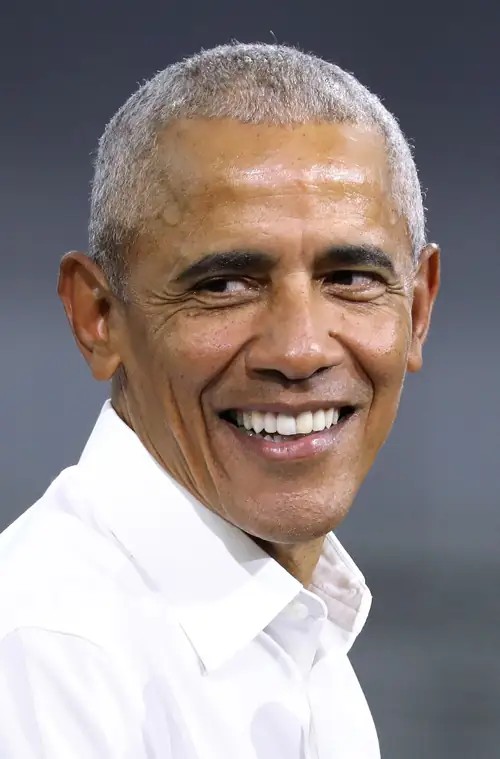
The Guardian reports that current New York City Mayor Zohran Mamdani attended, alongside former presidents Barack Obama, George W. Bush, and Bill Clinton, and former first lady Hillary Clinton. Former President Joe Biden and Jill Biden were also expected. The political range in that crowd tells you something about what this day still means — it is one of the few remaining pieces of common ground.
Donald Trump marked the anniversary at the Pentagon, where Flight 77 struck the building 25 years ago. Vice President JD Vance attended the New York ceremony.
343 Firefighters, and the Department That Buried Them
Separate from the main ceremony, New York City firefighters held their own commemoration Friday morning at the FDNY memorial on the Upper West Side, according to The Guardian. They honored the 343 members of the department who died on September 11. Three hundred and forty-three people who ran toward the towers while everyone else ran out.
The FDNY's losses that day were so catastrophic that the department had to grieve and function simultaneously, conducting rescue operations while burying colleagues in a procession that lasted months. Twenty-five years later, they are still holding the ceremony. They will probably hold it for another twenty-five.
Pennsylvania and the Pentagon: The Attacks America Sometimes Forgets
In Virginia, the national 9/11 Pentagon Memorial closed to the public from 3am through noon for the observance, with an exception for victim's families and survivors. The Pentagon attack is often treated as a footnote in popular memory — overshadowed by the towers — but 184 people died there, inside the building and aboard Flight 77.
At the Flight 93 National Memorial in Pennsylvania, the morning ceremony included a reading of names and a ringing of the bells of remembrance. The afternoon program featured keynote speakers, music, and a public wreath-laying at the Wall of Names, according to the National Park Service. On Saturday, 40 candle lanterns will be carried to the Wall and placed beneath the name of each passenger and crew member. Forty people on that plane decided, in real time, with no preparation and no certainty, to fight back. The country has spent 25 years trying to do right by that decision.
The Documents They Didn't Want You to See
Friday's ceremonies arrived just days after the Mamdani administration in New York City released more than 170,000 documents related to the city's response to the attacks, according to The Guardian. Those documents include records suggesting that New Yorkers were misled about the safety of air quality in the days and weeks after the towers fell.
This is the part of the 9/11 story that the official commemorations tend to soft-pedal. The government told people the air was safe to breathe. It was not. First responders, cleanup workers, and residents of lower Manhattan have been getting sick and dying from that lie ever since. The September 11th Victim Compensation Fund exists precisely because of it. The fact that those documents are only now being released, 25 years later, is not a footnote. It is part of the story.
The Dingo Take
You are supposed to compartmentalize this. File it under "history," watch the ceremonies, observe the silences, and move on with your Friday. That's what anniversaries train us to do — feel the weight briefly, formally, in designated increments, then let the day carry on. But the 9/11 story resists that kind of tidy closure, and it always has.
The 170,000 documents released this week are a reminder that grief and accountability are not the same thing. People are still sick. People are still dying. The death toll from 9/11-related illness has surpassed the number killed on the day itself. When politicians stand at a microphone and say "never forget," it would be worth asking exactly what it is we're supposed to remember — and whether the parts that implicate the government's own failures make the cut.
For now, though: 2,977 lights over New York Harbor. Families reading names they have read every year for a quarter century. Firefighters standing at a memorial wall in a city that will never stop mourning 343 of its own. Whatever else is true about this country and this moment, that part is real. Hold it.


Comments