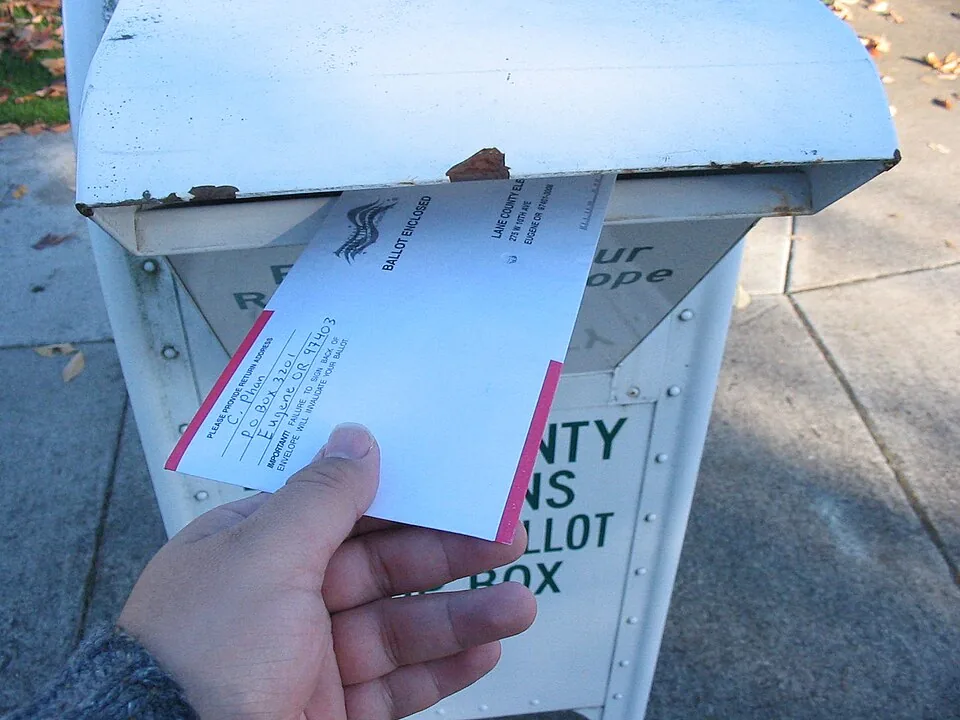
A federal judge blocked the Trump administration's mail voting restrictions for the third time in as many tries on Friday, and by Sunday the administration was already crawling back to the Supreme Court begging for help. This is a pattern at this point. Michigan Secretary of State Jocelyn Benson watched the whole spectacle and had a message for voters: we're not scared.
What Trump's Mail Voting Power Grab Actually Does
Back in March, President Trump signed a series of executive orders directing the U.S. Postal Service to enforce strict new federal guidelines governing how mail-in ballots are designed, transmitted, and tracked. The administration framed this as an election security measure. Critics, including voting rights groups and state officials across the country, called it something else: a targeted effort to make mail voting so complicated and burdensome that large numbers of eligible voters, particularly those in marginalized communities, simply can't do it.
U.S. District Judge Indira Talwani wasn't buying it either. On Friday, CBS News reports, Talwani extended a previous ruling blocking the Postal Service from enforcing the new requirements, keeping the injunction in place as legal challenges grind forward. This was not a close call. It was the second time Talwani had issued such a ruling.
So the administration did what it always does when courts say no. It ran to the Supreme Court. According to CBS News, Sunday's appeal was the third time the Trump administration has asked the high court to intervene in this specific fight. The Supreme Court has previously allowed parts of the plan to move forward, but has not ruled on whether any of it is actually constitutional. That distinction matters enormously, and the administration is betting the justices will eventually hand them the win the lower courts keep refusing to give them.
Michigan Is Ground Zero for This Fight
Michigan is not a random backdrop for this story. Trump has spent years targeting the state's elections, throwing accusations at its mail voting infrastructure going back to 2020. Most of those claims were unproven. CBS News notes that Michigan lawmakers did find a small number of non-citizens who voted in the 2024 general election, with 22 cases under review and six people charged with election law violations by Attorney General Dana Nessel.
Secretary of State Jocelyn Benson's response to that number is worth sitting with. Six prosecutions out of millions of votes cast, in a state with 1,500 local election officials working every cycle. Benson, appearing Sunday on Face the Nation with Margaret Brennan, called it proof that the system is working, not evidence of systemic fraud. "The fact that we have identified a handful of individuals who are ineligible to vote and we were able to hold them accountable," she said, "that shows that the system is working."
That's the part that never makes it into the Trump campaign version of this story. When the machinery of election administration catches bad actors, that's the system functioning correctly. It is not, as the administration would have you believe, a sign that elections are hopelessly corrupt and in need of a federal takeover.
Benson Is Running for Governor and She's Not Pulling Punches
It's worth being clear about who Jocelyn Benson is in this moment. She is not a neutral party. CBS News reports she is the Democratic nominee for governor of Michigan, running against Republican Rep. John James in November. She has a direct political stake in how this fight lands.
That said, her job as Secretary of State is a real job with real legal obligations, and nothing she said Sunday contradicts her official record. Michigan's elections have repeatedly been rated among the most secure in the country. She said as much on Face the Nation, and the data backs her up. "We will use every tool in our toolbox," she told Margaret Brennan. "We'll follow the law. We'll protect the right to vote. And that's why, frankly, state officials who know how to do that, to stand up to the president, are so important right now."
That last line is the whole argument. The reason federal judges keep blocking Trump's mail voting orders is precisely because state election systems have their own legal frameworks, their own constitutional standing, and their own officials who are not obligated to simply comply when a president decides to rewrite the rules by executive fiat three months before a midterm election.
Three Strikes and Still Swinging
Let's do a quick count. The Trump administration has now asked the Supreme Court to intervene in this mail voting fight three separate times. It has lost at the district court level twice. The Supreme Court has permitted parts of the plan to proceed on an emergency basis but has not declared it legal. And a federal judge extended the block again on Friday anyway.
This is not a strategy that is working. But it doesn't have to work in court to do damage in the real world. Every week this fight drags on, every time another confusing headline drops about mail ballot rules changing or being blocked or being appealed, that's another week where some percentage of voters gets the vague impression that mailing in their ballot might be risky or might not count. Confusion is the point. Chaos is the mechanism. Depressed turnout is the goal.
Benson said her office will spend the coming months making sure Michigan voters "know the truth about our elections." That is a harder job than it sounds when the president of the United States has a megaphone and a demonstrated willingness to use it to say things that aren't true about how your ballot gets counted.
The Dingo Take
Three trips to the Supreme Court. Two losses at the district level. Zero successful outcomes from the policy itself. The Trump administration has turned losing a specific legal fight into a repeatable content strategy, and it is genuinely brilliant in the worst possible way. You don't have to win in court if losing loudly accomplishes the same thing: making people distrust the mail ballot sitting on their kitchen table.
Benson is right that state officials matter enormously right now, and she is right that the system catching a handful of bad actors is proof it functions, not proof it's broken. But she is also a candidate in a competitive governor's race, which means her credibility on this issue lives and dies on whether Michigan voters actually show up in November and whether their votes actually get counted. The administration knows that. The pressure is not random. It is targeted.
The Supreme Court still hasn't ruled on whether any of this is constitutional. That clock is ticking, and the midterms are closer than they feel. If you are waiting for the highest court in the land to step in and make this simple and clean before November, history strongly suggests you should not hold your breath.


Comments