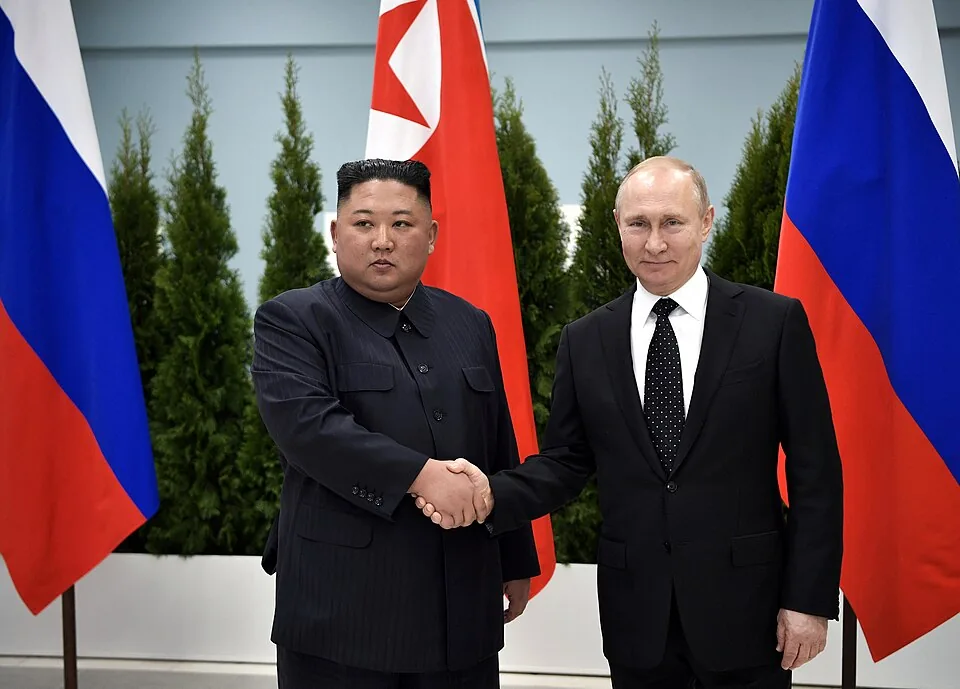
Two of the world's most sanctioned, most isolated, and most aggressively destabilizing regimes just cut the ribbon on a shiny new bridge. Russia and North Korea opened their first-ever road crossing over the Tumen River on Monday, because apparently sharing thousands of troops and an arms pipeline wasn't intimate enough. They needed infrastructure.
A Bridge Putin Ordered, Kim Delivered
According to TASS, Russia's state news agency, the new road bridge spans the Tumen River and sits near the existing "Friendship Bridge," a rail crossing that has connected the two countries since 1959. The Soviet Union built that one. Putin ordered this one during a visit to Pyongyang in 2024, and construction kicked off in April of last year.
Russian Prime Minister Mikhail Mishustin showed up to the opening ceremony via video link, which is either a scheduling conflict or a sign that nobody with real power wanted their face too prominently attached to this particular photo op. He called it a catalyst for trade, tourism, science, and culture. Tourism. Between Russia and North Korea. In 2026.
What 'Deepening Ties' Actually Looks Like
Let's be specific about what this relationship has become. The New York Post reports that North Korea sent thousands of troops to Russia's Kursk region to help push back a Ukrainian incursion in 2024. Not advisors. Not technical staff. Troops. Boots on frozen Russian ground, fighting a war in Europe on behalf of a nuclear-armed autocrat who can't staff his own military adequately after three-plus years of meat-grinder combat.
In exchange, Pyongyang gets money, prestige, technology transfers, and now a road bridge that makes cross-border movement faster and easier. Both sides win, in the specific sense that two governments willing to commit war crimes get to commit them more efficiently together.
There are already direct flights and a rail line running between Moscow and Pyongyang. This bridge isn't about creating a relationship. It's about expanding one that is already doing serious work.
The Tourism Pitch Nobody Asked For
Mishustin specifically cited tourism as one of the sectors the bridge would boost. Sit with that for a second. The pitch is that Russians, currently banned from most of the world's desirable destinations due to sanctions and the general embarrassment of their government's ongoing war crimes, will now have a smoother road trip option to North Korea, a country with no free press, no freedom of movement, and a famine history.
To be fair, both countries have been economically strangled by Western sanctions, so they are genuinely building their own bilateral economy out of necessity and spite. The bridge is real infrastructure solving a real logistical problem for two states that have decided the rest of the world can go to hell. You don't have to respect it to understand what it is.
The Bigger Picture Nobody Should Be Comfortable With
This is what an axis looks like when it's being bolted together in real time. TASS framed the bridge as a "milestone in strategic partnership," which is diplomatic language for: we are locking this in. You don't build permanent cross-border infrastructure with a country unless you're planning for the relationship to last.
The war in Ukraine started all of this. Before 2022, Russia and North Korea had a relationship of convenience and ideology. After 2022, the Post reports, ties "grew stronger" in ways that have genuinely altered the balance of the conflict. North Korean artillery shells. North Korean soldiers. And now, a North Korean-Russian road bridge commissioned by Vladimir Putin himself.
Meanwhile, the architects of the sanctions regimes meant to isolate both countries are watching this and wondering where exactly the pressure points are, because the ones they have clearly are not working fast enough.
The Dingo Take
You are supposed to look at this bridge and see a construction project. A river crossing. Some ribbon-cutting footage on a state news channel. That is the framing both governments want. What it actually is: a physical monument to the failure of the international community to make either of these regimes pay a cost they couldn't absorb.
Russia invaded Ukraine and got cut off from Western markets. Its response was not to recalibrate. It was to sprint toward every remaining partner willing to deal, and North Korea sprinted back. The result is an alliance that is now, brick by bridge bolt by artillery shell, becoming structural. Not a marriage of convenience. A load-bearing relationship.
The bridge will still be there long after whatever ceasefire eventually lands in Ukraine. The troops North Korea sent to Kursk will go home with combat experience, Russian military knowledge, and presumably a bill to be paid in technology and security guarantees. This isn't an episode. It's a new arrangement. And Mishustin's tourism pitch aside, nobody should be confused about what it's really for.




Comments