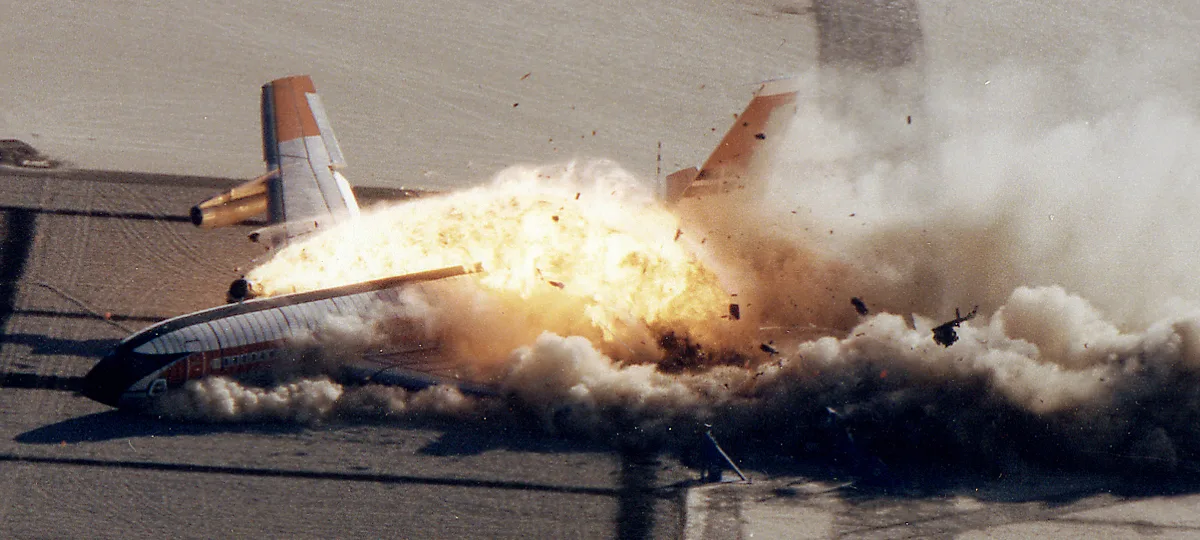
Two people are dead after a plane went down at a San Diego airport Monday afternoon, and right now nobody is saying much about why. The crash happened at Montgomery-Gibbs Executive Airport in Kearny Mesa, with police receiving the first report at 5:21 p.m., according to the New York Post. The circumstances, as of this writing, remain unclear.
What We Know: A Crash, Two Dead, Not Much Else
Here's the frustrating truth about breaking aviation stories: the first hours are almost always a fog. What the New York Post has confirmed is this — two people died, the crash happened at Montgomery-Gibbs Executive Airport, and police had it on their radar by 5:21 p.m. Monday. That is the full extent of the confirmed public record right now.
Montgomery-Gibbs Executive Airport is what's called a general aviation facility, meaning it handles smaller private and charter aircraft rather than commercial flights. It sits in the Kearny Mesa neighborhood, a dense inland section of San Diego that is very much not somewhere you want a plane going down unexpectedly. How the aircraft went down, what type of aircraft it was, whether it came down on the runway or somewhere nearby — none of that has been confirmed yet.
What we don't have: names of the victims, the make and model of the plane, whether there were any survivors beyond the two confirmed fatalities, whether the plane struck any structures on the ground, or what air traffic control may have recorded in the moments before impact. Those answers are coming. They're just not here yet.
Montgomery-Gibbs Has a History Worth Knowing
Montgomery-Gibbs Executive Airport has been part of San Diego's aviation infrastructure for decades, and it has seen its share of incidents over the years. General aviation airports across the United States handle an enormous volume of small aircraft traffic daily, and statistically, smaller private aircraft crash at significantly higher rates than commercial jets. That's not a knock on anyone — it's just what the data shows.
The National Transportation Safety Board will almost certainly be involved in this investigation. That agency handles aviation accidents across the country, and their process is methodical: they collect physical evidence, review maintenance records, pull any available flight data, interview witnesses, and eventually produce a report that can take months or even years to finalize. In the meantime, local authorities and the FAA will secure the scene and begin their own preliminary assessments.
San Diego is no stranger to aviation tragedy either. The city sits under some of the busiest flight corridors on the West Coast, and the proximity of multiple airports — including the major international airport right on the bay — means air traffic management in the region is perpetually complex. A crash at a general aviation facility in a populated urban area is exactly the kind of event that sends investigators back to look at approach paths, runway conditions, mechanical logs, and weather data all at once.
Why the Silence Right Now Isn't Suspicious, Just Frustrating
When details are thin this early, the instinct is to read something into the silence. Don't. Authorities routinely withhold information in the immediate aftermath of fatal accidents for reasons that are completely mundane and procedurally sound. Next of kin have to be notified before names go public. The physical scene has to be secured and documented before anyone starts talking. Investigators need to make sure whatever they say first is actually accurate, because correcting the record later is a nightmare.
That said, the public has a right to know what happened at a public airport. Montgomery-Gibbs is a city-owned facility. Two people are dead. The community around Kearny Mesa deserves a clear and timely accounting of what went wrong, whether the flight path took the aircraft over residential areas, and whether there is any ongoing risk to people on the ground. Those are not unreasonable things to ask for.
We will update this story as more information becomes available from official sources. If the NTSB, FAA, San Diego Police Department, or San Diego Fire-Rescue Department releases additional details, we will have them.
The Broader Context Nobody Wants to Think About
Aviation safety in the United States has been a topic of genuine concern this year, particularly around smaller aircraft and the regulatory frameworks that govern them. The FAA has faced scrutiny over staffing and oversight capacity, debates that have gotten louder following several high-profile incidents involving various aircraft types. None of that may be relevant to what happened at Montgomery-Gibbs Monday. But it is the backdrop against which every aviation accident now gets reported.
What is relevant right now is simple: two people got into a plane, and they did not survive. That is the story. Everything else — the cause, the chain of events, the question of whether anything could have prevented it — comes later, after the people who know how to answer those questions have had time to do their work.
For now, the confirmed facts are few and the questions are many. That's an uncomfortable place to sit, but it's where we are.
The Dingo Take
Two people are dead and we know almost nothing about why. That is not a criticism of the reporting — it's a criticism of how little the authorities have put out in the immediate aftermath of a fatal crash at a public airport. By 5:21 p.m. you have first responders on scene. By the time anyone is writing about this, hours have passed. A press release confirming aircraft type and whether the crash was confined to airport grounds is not classified intelligence. It's basic public information, and the absence of it is not "investigation protocol" — it's a communication failure.
Montgomery-Gibbs is a city-owned facility in a populated urban neighborhood. The people who live and work around Kearny Mesa have a legitimate interest in knowing whether a plane came down on the runway or in a parking lot or somewhere worse. "Circumstances unclear" is a placeholder, not an answer. The NTSB will eventually produce a thorough report. Local officials should be producing basic facts within hours.
We will follow this one. Two families are getting the worst phone call of their lives tonight, and the rest of us are owed at least a clear account of what happened and where. That's not too much to ask.




Comments