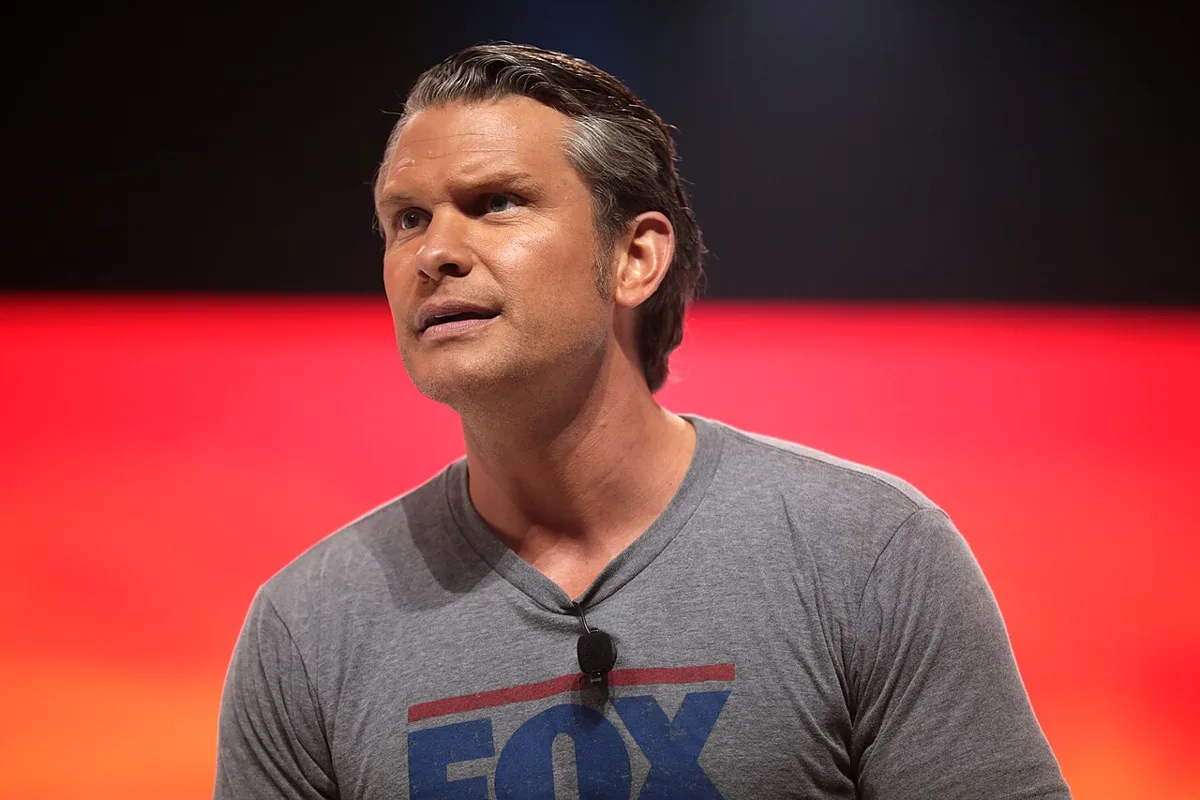
The United States Army Secretary just resigned because Pete Hegseth, a former Fox News pundit with no combat command experience, kept firing the generals responsible for modernizing the military. The man tasked with running the world's most powerful fighting force is now so thoroughly hollowed out at the top that a sitting Republican senator is publicly demanding Hegseth be fired. And Donald Trump, surveying all of this, called Hegseth 'actually one of my best.'
Dan Driscoll Walked Out the Door. Here's Why That's a Big Deal.
Dan Driscoll is not a name that trends on social media. He's not a cable news fixture. But as the BBC reports, his resignation last Monday as Secretary of the Army sent shockwaves through the Pentagon precisely because of what it represented: the latest senior official to be ground up and spat out by Pete Hegseth's ongoing purge of the military's leadership class.
Driscoll had been pushing hard to integrate drones throughout standard Army formations, the kind of urgent battlefield modernization that the Ukraine war made obviously necessary. Cheap drones and anti-missile systems have fundamentally changed how wars are fought. The US military, with its glacial procurement bureaucracy and institutional inertia, was already behind the curve. Driscoll was trying to fix that. According to sources familiar with his departure cited by BBC News, Hegseth was 'blocking' that modernization by firing the very generals responsible for implementing it.
H.R. McMaster, who served as Trump's own National Security Adviser during his first term, told CBS News bluntly: 'Secretary Driscoll was pushing a modernisation agenda to catch the army up.' He called the resignation 'not good news. You know, for our nation, for the army.' When the guy who literally sat in the West Wing running Trump's security policy is going on television to express alarm, maybe pay attention.
The Purge by the Numbers
Driscoll is not an isolated case. BBC News reports that Hegseth has removed or sidelined the top uniformed officers in charge of the Army, Navy, and Air Force, along with at least two dozen generals, admirals, and civilian defense leaders, including some of the most decorated officers in the US military. Many were shown the door with little or no explanation.
Jon Duffy, a retired Navy captain who commanded US warships before serving as a White House defense policy official, put it plainly to the BBC: 'You lose the secretary, the chief of staff and other senior leaders driving modernisation, it creates a lot of uncertainty and it disrupts momentum.' He added that the uncertainty at leadership levels has 'downstream effects on the force.' Translation: when you gut the people running the machine, the machine stops working properly.
One critic quoted by the BBC compared what Hegseth is doing to Xi Jinping's political purges of the Chinese military, purges that are widely understood to have left serious deficiencies in command structure and battlefield readiness. Think about that for a second. The benchmark comparison for what the US Secretary of Defense is doing to the American military is what China's authoritarian leader did to his.
What Hegseth Says He's Actually Doing
In Hegseth's telling, all of this is a righteous cleansing. He came in vowing to end 'woke' initiatives, scrap 'stupid' rules of engagement, and eliminate what he described as 'fat generals in the halls of the Pentagon.' He banned beards. He tore up diversity programs. He has spent an extraordinary amount of time, for a man ostensibly running two active military operations in the Gulf, railing against cultural rot in the armed forces.
Vice President JD Vance defended all of it last week, telling reporters he was in 'strident agreement' with Hegseth's culture war mission and framing 40 years of American military engagements as nothing but 'lost wars and military misadventures.' That's a remarkable thing for a sitting vice president to say about the institution he's currently asking to fight a war. The message, apparently, is that the military failed because it wasn't mean enough, not because of anything to do with strategy, politics, or the fundamental limits of military power.
A Republican Senator Is Saying the Quiet Part Loud
Senator Thom Tillis, Republican of North Carolina and a frequent Trump critic, did not mince words after Driscoll's resignation. 'I have never witnessed more inept management of the brave men and women who serve our country,' he said, calling for Hegseth to be fired outright.
This is a Republican senator. Calling a Trump cabinet member inept. Demanding his firing. In the current political climate, that takes a level of nerve that most of his colleagues have long since misplaced. The fact that Tillis said it publicly, on the record, about the Pentagon, tells you something about how bad things look from inside the building.
The White House, asked about all of this by the BBC, said Trump had 'full confidence in Secretary Hegseth and the entire Department of War' and pointed to the records of Operations Epic Fury, Absolute Resolve, and Midnight Hammer as proof of success. That's the response. Not 'we're addressing concerns about readiness.' Not 'we're taking this seriously.' Full confidence. Case closed. Moving on.
The Military Is Already Stretched. This Is Happening Now.
All of this internal chaos is unfolding while the US military is simultaneously engaged in Trump's ongoing standoff with Iran over the Strait of Hormuz, drawing in forces and equipment from around the globe, according to BBC News. The two crises are not separate stories. They are the same story.
Michael Schiffer, a former senior Pentagon official who covered East Asia under the Obama administration and is now a senior fellow at the Center for American Progress, told the BBC that the way Hegseth is shaking up the military 'is bringing on board an awful lot of risk without any apparent way to be able to address or ameliorate it.' He also noted the parallel to China's military purges, saying the US has been conducting its own version, with real effects on the military's ability to 'discharge its responsibilities.'
The people raising these alarms are not Twitter activists or partisan operatives. They are former Navy captains. Former National Security Advisers. Former Pentagon officials with decades of experience. The kind of people who, under normal circumstances, would never go on television to criticize a sitting defense secretary. They are going on television.
The Dingo Take
You are supposed to believe that firing your most experienced generals and driving out the Army Secretary mid-conflict is how you build a stronger military. You are supposed to accept that the man blocking drone modernization while drones rewrite the rules of warfare is actually the adult in the room. You are supposed to trust that Pete Hegseth, whose pre-Pentagon resume consists of Army National Guard service and years of shouting on Fox News, has correctly identified the real problem with the US military, and that the real problem is beards and fat generals, not strategic coherence or institutional knowledge.
What is actually happening is that the Trump administration is conducting a political loyalty purge of the armed forces in the middle of an active military standoff with Iran, and the people being pushed out are specifically the ones who were trying to make the military more capable of fighting the wars it will actually have to fight. The drone modernization Driscoll was pushing for is not a 'woke' initiative. It is the single most important battlefield lesson of the last four years. Hegseth killed it. Then he fired the people running it. Then he let the Army Secretary walk out the door.
A Republican senator called this the most inept management of the military he has ever seen. Trump called Hegseth one of his best. One of those two men is right, and it is not the one currently running the Department of War.

Comments