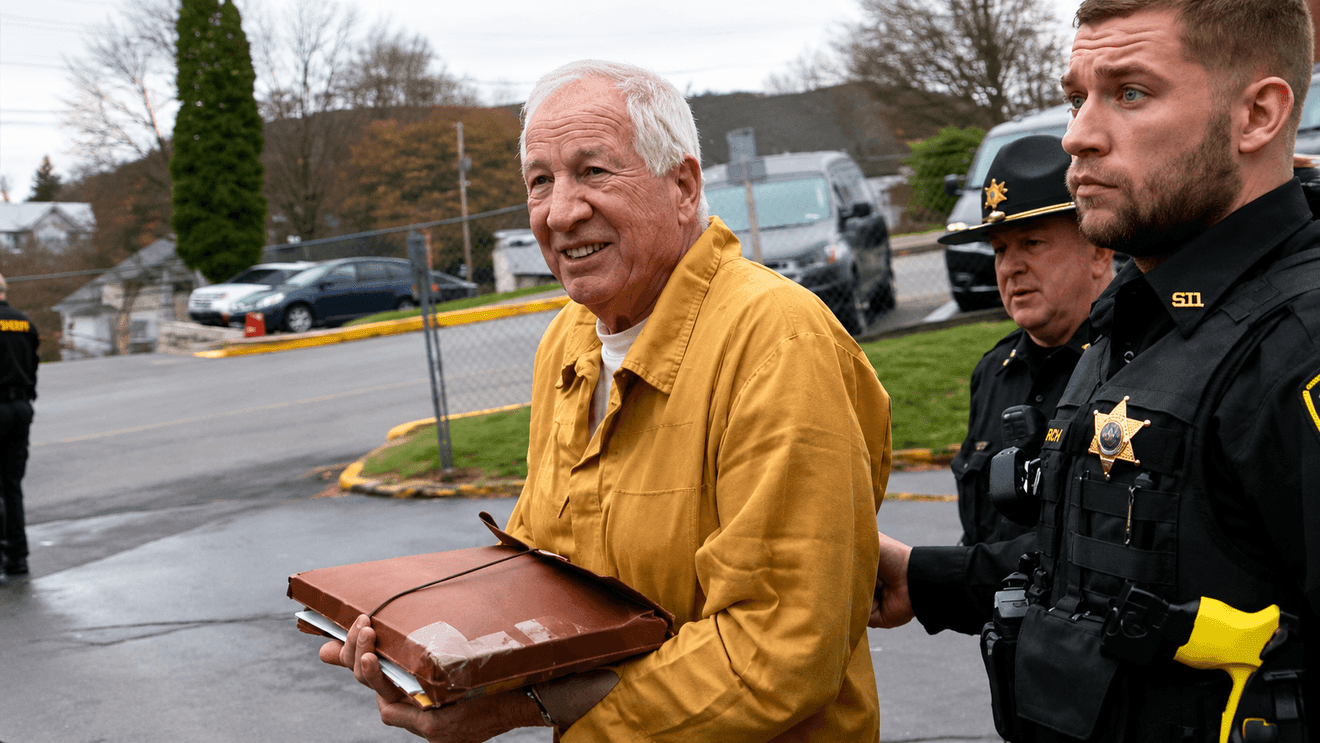
Jerry Sandusky, the 82-year-old convicted child sex abuser who became one of the most reviled figures in American sports history, appeared in court via video feed from prison on Tuesday to sign off on a new legal gambit: dropping his state court appeal and betting on a federal judge to give him what fourteen years of incarceration apparently haven't convinced him he deserves. One of his accusers has recanted. His lawyers say that changes everything. The Pennsylvania Attorney General says it changes nothing.
The Move, Explained
Here is the basic shape of what happened Tuesday. Sandusky's legal team decided that their best shot at getting their client out of State Correctional Institution Laurel Highlands is to move the fight to federal court. The catch, as NBC News reports, is that making that move means surrendering the right to litigate in state court their central claim: that Victim No. 10, identified in court documents as "R.R.," was manipulated into giving false testimony.
Judge Maureen Skerda asked Sandusky directly, over a video feed from prison, whether he understood what his lawyers were doing. He confirmed he did. "I'm making this decision on advice of counsel," Sandusky said, according to the Associated Press. Judge Skerda then dismissed the state court bid for post-conviction relief, ruling that Sandusky had been "fully informed of his rights" before the withdrawal.
What the Recanting Witness Actually Said
So what is R.R.'s recantation, exactly? According to Sandusky's defense team, R.R. came forward on June 30, 2025, with a statement claiming state investigators told him his "role was critical to stopping a predator" before he had any clear memory of abuse. The defense says prosecutors told R.R. that other alleged victims were reluctant to come forward and "repeatedly encouraged" him to believe Sandusky had molested him despite what R.R. describes as a lack of certain memory.
"I was told, both directly and indirectly, that trauma may have fragmented my memory, and that I could safely affirm details I did not fully recall," R.R. said in the statement cited by NBC News. Sandusky's attorneys argue R.R.'s account "changed over time as the result of emotional strain, repeated exposure to leading questions, intense investigative pressure and psychological manipulation."
That is a serious allegation if true. It is also, to put it plainly, one recantation, from one witness, in a case built on the testimony of multiple young men, a conviction on 45 counts, and a mountain of corroborating evidence that the Pennsylvania Attorney General's office says "debunks this highly-suspect claim."
The AG Is Not Buying It
Pennsylvania Attorney General Dave Sunday did not mince words. In a statement Tuesday, Sunday called Sandusky a "child predator" and characterized the entire legal maneuver as "yet another attempt by a convicted child predator to avoid accountability and escape punishment for years of abuse he perpetrated under the veil of a child-empowerment program."
Sandusky's nonprofit, The Second Mile, which prosecutors say he used to identify and groom victims, is central to the prosecution's case. Sunday's office says it has extensive evidence that rebuts R.R.'s recantation and put that evidence on record during the state court proceedings. The AG commended his litigation team for "challenging this alleged recantation" before the case jumped jurisdictions.
How We Got Here: A Brief, Awful Recap
Sandusky was convicted on June 22, 2012, on 45 sex abuse-related counts. He was sentenced to 30 to 60 years in prison. Multiple young men testified that Sandusky had sexually abused them as boys, often after meeting them through The Second Mile, a charity nominally designed to help at-risk youth. The scandal did not stay contained to Sandusky.
Penn State fired legendary head coach Joe Paterno over his alleged failure to take appropriate action after learning of Sandusky's conduct. Paterno's statue was removed from outside Beaver Stadium. He died in January 2013, a few months after his firing, his reputation in ruins. The university has since crept toward rehabilitating Paterno's legacy, recently opening the "Paterno Family Football Experience Room" inside Beaver Stadium, described by Penn State as a "permanent museum experience celebrating more than a century of Penn State Football history." Which is one way to handle it.
What Comes Next
The fight now moves to federal court, where Sandusky's lawyers will press their argument that the original trial was tainted by prosecutorial misconduct and witness manipulation. They are no longer arguing the R.R. recantation specifically in that venue, having dropped the state court claim to get there, but the broader wrongful conviction argument remains alive.
Sandusky is 82 and serving a minimum 30-year sentence handed down in 2012. The math is not complicated. His lawyers are fighting for a man who, if he lives long enough to exhaust every appeal, may die in prison regardless. But they are fighting, and the federal courts will now have to reckon with what they bring.
The Dingo Take
You are supposed to look at a recanting witness and see the whole case unravel. That is the emotional logic here, and Sandusky's legal team is counting on it. One man says he was pressured. One man says his memory was shaped by investigators who needed him to remember. And yes, if that happened, it is a genuine problem, the kind of thing that should make any serious person pay attention to how this conviction was built.
But let's be precise about what one recantation is and is not. It is not 45 counts collapsing. It is not multiple other accusers reversing course. It is not the entire architecture of the prosecution falling apart. The Pennsylvania AG's office says it has the receipts to prove R.R.'s recantation doesn't hold up, and they put those receipts on record before Sandusky's team bailed to federal court. That timing is worth sitting with.
Sandusky is 82 years old and he appeared on a video screen from a prison in Laurel Highlands to tell a judge he understood his lawyers' strategy. There is something almost cinematic about that, and not in a good way. This is what the long tail of a monstrous case looks like: a very old man on a screen, lawyers threading procedural needles, and a federal courthouse now waiting to decide whether any of it adds up to a new trial. The victims who testified in 2012 are in their thirties and forties now. They built their lives around telling the truth about what happened to them. Whatever happens in federal court, that does not change.





Comments