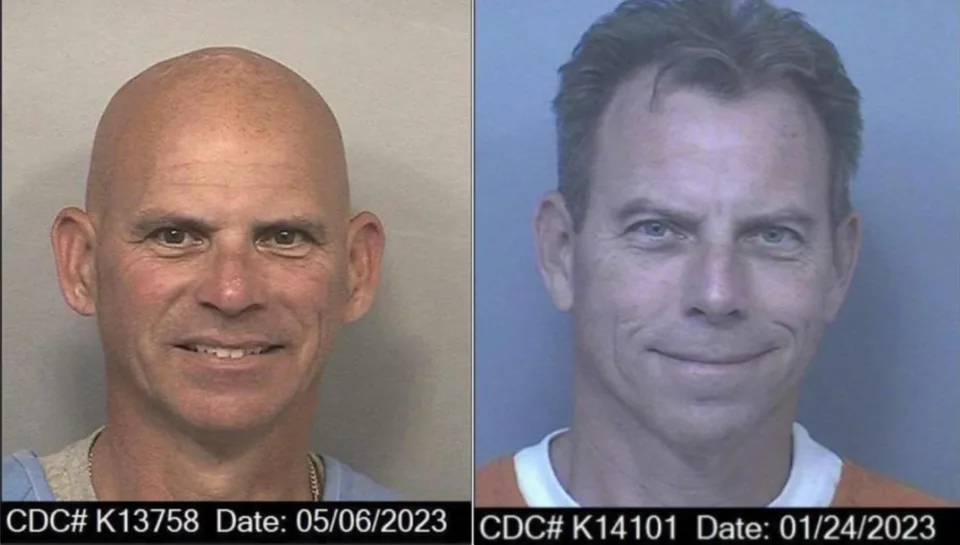
Less than 13 months after a California parole board told Erik and Lyle Menendez to sit down and wait until 2028, the board has changed its mind and moved their next hearing up to March. That is 17 months earlier than scheduled. No one is explaining why.
Where Things Stand Right Now
According to The Guardian, the brothers will appear before the parole board again in March 2027, after the board granted their requests for earlier hearings on Friday. They were originally slated to wait until August 2028 for another shot at release. Something changed. The California department of corrections and rehabilitation did not respond to requests for comment, and the brothers' attorney declined to speak through a family spokeswoman. So we are left to read the tea leaves on our own.
The brothers are currently held in a San Diego prison. Their sentences were reduced from life without parole to 50 years to life back in May 2025, which made them parole-eligible under California rules that apply to offenders who were under 26 at the time of their crimes. Erik was 18 and Lyle was 21 when they shot their parents, Jose and Kitty Menendez, in the family's Beverly Hills mansion in 1989.
What Got Them Rejected Last Time
The August 2025 parole denial was not close. The California parole board looked at Lyle and said he still exhibited "anti-social personality traits like deception." They looked at Erik and noted he had repeatedly violated prison rules by using a cellphone. These are not minor procedural quibbles. Those are the kinds of findings that tend to stick around, get read aloud at the next hearing, and make board members very comfortable saying no again.
And yet, here we are. The board found sufficient "change in circumstances or new information" to justify bumping their hearing forward by nearly a year and a half. That is the legal standard under California law for granting an earlier hearing. What that new information actually is? Still a mystery, at least publicly.
A few weeks after the parole denial, The Guardian reports, a Los Angeles judge also rejected the brothers' petition to review their convictions based on new evidence about the alleged sexual abuse by their father. So 2025 was a rough year. The fact that they are already back at the table in early 2026 is genuinely surprising.
The Case That Will Not Quit
If you somehow missed the last several years of true crime discourse, here is the short version. Erik and Lyle were convicted in 1996 after two trials. The first, in 1994, ended in hung juries for both brothers. The defense had argued they killed their parents out of fear after years of physical, emotional, and sexual abuse by their father. Prosecutors argued it was about the inheritance. In the retrial, much of the abuse evidence was excluded, and both brothers were convicted of first-degree murder and sentenced to life without parole.
The case came roaring back into public consciousness after Netflix ran documentary and dramatized series covering the case, introducing it to a generation that was not around for the original spectacle. Public sympathy shifted, or at least complicated. Petitions were signed. Celebrities weighed in. The political pressure on California officials became hard to ignore, which is part of why then-Governor Gavin Newsom was quietly being watched during the sentence reduction process last year.
The brothers' family released a statement Monday saying Erik and Lyle have "worked to take responsibility for their actions, confront and heal from the unimaginable abuse and trauma they endured." The family also said the brothers helped establish a hospice program and a beautification program at the prison. Whether the parole board finds those contributions meaningful enough this time is the entire question.
What Happens in March
The March date is tentative, The Guardian notes. Parole hearings can move. But the direction of travel here is clear. This case is not going away, and the California corrections system appears to be giving the brothers a faster runway to make their case.
The standard the board will apply has not changed. They will assess whether Lyle still shows those anti-social traits the board flagged last year. They will assess whether Erik's cellphone violations reflect something deeper about his readiness for release, or whether they were the kind of rules-lawyering you do when you are bored and desperate in a prison cell. They will weigh whatever new information or changed circumstances justified bumping this hearing up in the first place.
Neither brother is young anymore. Lyle is 58. Erik is 55. They have been incarcerated for 37 years. That fact alone does not automatically mean they should be free, but it does tend to feature prominently in how parole boards think about public safety risk.
The Dingo Take
You are supposed to believe this is a normal administrative process playing out on its merits. Maybe it is. California law does allow earlier hearings when circumstances change, and 37 years in prison, a sentence reduction, a hospice program, and a wave of public reconsideration could plausibly constitute changed circumstances. That is a coherent argument. What makes it hard to take purely at face value is that nobody will say what specifically changed. The department of corrections went silent. The attorney said nothing. The family issued a statement that reads like it was workshopped by a publicist. Transparency would help here.
The abuse allegations at the center of this case were never properly adjudicated. The retrial excluded large chunks of defense evidence, and the brothers have spent decades arguing that the full story was never told to a jury. A judge rejected that argument again just last year. But the parole process is not a retrial. It is a different question: are these specific men, at this specific age, still a danger? That is genuinely worth asking.
What is certain is that the Menendez case has become a cultural and political object as much as a legal one, and it is nearly impossible to separate the two anymore. Netflix did not create the public interest, but it poured gasoline on it. The brothers have better lawyers, better PR, and better timing than they have had in decades. Whether March produces a different result than August 2025 did is anybody's guess. But the parole board just handed them a much shorter wait to find out.





Comments