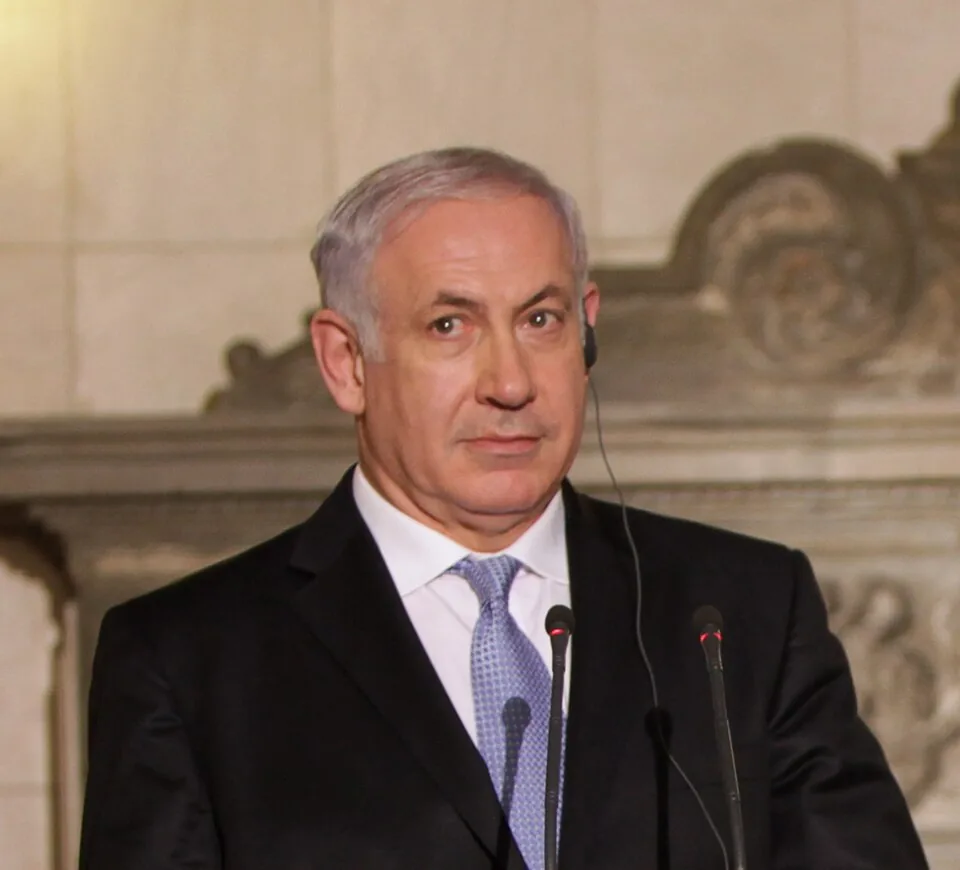
An Israeli newspaper reported that Benjamin Netanyahu received a phone warning from the leader of the United Arab Emirates days before Hamas killed 1,200 people on October 7, 2023, and that he never passed it on to his security chiefs. Netanyahu's response was not to call an inquiry. It was to call his lawyers.
What Haaretz Actually Reported
The Israeli newspaper Haaretz published a report this week claiming that the UAE's leader personally phoned Netanyahu in the days before October 7 to warn him that Hamas was planning a major assault. According to Haaretz, Netanyahu did not relay that warning to Israel's security leadership. The attack proceeded. More than 1,200 people were killed. Hundreds more were taken hostage.
CBS News has not independently confirmed the Haaretz reporting. Haaretz, for its part, issued a statement Tuesday saying it stands by every word.
This is not a small allegation. If true, it would mean the leader of a country now at war across multiple fronts received an explicit heads-up from a neighboring Arab government and buried it. That is not a bureaucratic failure. That is a decision made by one person.
Netanyahu's Denial and the Lawsuit Nobody Saw Coming
Netanyahu's office issued a flat denial Tuesday. "No conversation took place between the Prime Minister and the President of the United Arab Emirates," the statement read. It then called the Haaretz report "a malicious libel with clear political timing, as part of the left's election campaign," and announced that Netanyahu had instructed his attorneys to file a defamation lawsuit against Haaretz and the reporter responsible.
So that's the move. Not a formal state inquiry. Not independent investigators with subpoena power. A lawsuit against the newspaper.
Netanyahu's office also said the Prime Minister's Office, the National Security Council, and the Military Secretariat all checked their records and found no evidence of a call or an Emirati visitor during the relevant period in September 2023. That is the government investigating itself and finding itself innocent, which is a thing governments do, and which you are free to weigh accordingly.
The UAE's Very Careful Non-Answer
Here is where it gets genuinely interesting. When the UAE government issued its own statement Tuesday, it said that since normalizing relations with Israel five years ago, the two countries have maintained "open and direct lines of communication." Full stop. That was the statement. The UAE neither confirmed nor denied the Haaretz account of the specific phone call.
That is a very deliberate piece of diplomatic language. A full denial was available to them. They did not use it.
And Haaretz's reporting included a detail that Netanyahu's own office confirmed: when the Emirati leader wants to speak with the Israeli prime minister, a UAE representative physically travels to Netanyahu's office and brings a specially encrypted phone for the conversation. Netanyahu's people confirmed the protocol exists. They just say it wasn't used in the relevant window.
The Three-Hour Gap Nobody Has Explained
The October 7 warning story lands on top of a separate problem that surfaced last week. Israel's national broadcaster Kan News reported that three hours elapsed between the moment Netanyahu was woken by his military secretary at 6:27 a.m. as the Hamas invasion began and the moment he first requested to speak with the country's top general. Netanyahu's office released a schedule that roughly confirmed that timeline, though it noted he spoke with the defense minister around 8 a.m.
Netanyahu has said consistently that his advisers and security officials failed to wake him promptly and that the intelligence and military chiefs bear responsibility for the disaster. He has also said that warnings he did receive in the lead-up to the attack did not specifically name Gaza as the origin point or give a clear timeline.
None of that has been tested by a formal inquiry, because Netanyahu has blocked the establishment of one. Israel routinely conducts state inquiries after national catastrophes. This is, by any measure, the worst national catastrophe in Israeli history. The inquiry has not happened.
The Election Six Weeks Out
Israel holds national legislative elections on October 27. There is currently no clear front-runner, according to CBS News. The Haaretz report landed directly into the middle of an already ferocious campaign.
Former Prime Minister Naftali Bennett, who is running against Netanyahu and has met with the Emirati leader multiple times himself, wrote on social media Tuesday that he believed the Haaretz report was accurate. He called Netanyahu's "ignoring of the warnings" an act of "criminal negligence." That is a former prime minister and current opposition candidate using the phrase "criminal negligence" about the sitting leader's conduct before the worst attack in his country's modern history.
Netanyahu's opponents have promised that if they win in October, they will immediately establish a formal state inquiry into October 7. That promise is now a central axis of the campaign.
The Dingo Take
You are supposed to believe that the correct response to a newspaper reporting you ignored a pre-attack warning that might have saved 1,200 lives is a defamation lawsuit. Not an inquiry. Not a special prosecutor. A lawsuit filed against journalists, timed to an election, designed to make the story about press freedom and partisan attacks rather than what actually happened on the morning of October 7, 2023, and in the days before it.
The UAE's statement is doing a lot of quiet work here. They had every reason to issue a clean denial if the call didn't happen. Normalizing relations with Israel was politically expensive for Abu Dhabi, and getting dragged into a story about Netanyahu's negligence serves no one in the Gulf. They didn't deny it. They talked about "open lines of communication" and sat down. Read that however you want, but read it carefully.
Israel is about to vote, and the central question of that election is whether the man in charge on October 7 should remain in charge. Netanyahu's answer to every mechanism of accountability, whether it's a formal state inquiry, a security review, or now a newspaper report, has been to attack the mechanism. That pattern is not a defense of innocence. It is a strategy for survival. There is a difference, and Israeli voters have six weeks to decide if they care about it.




Comments