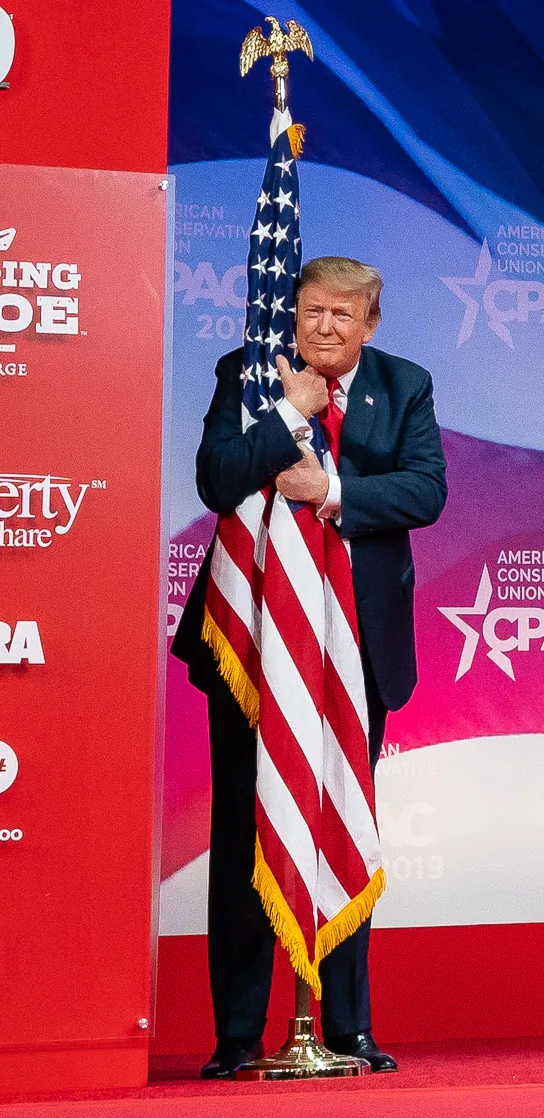
Republicans gathered in Dallas Tuesday night for what they're actually calling 'Trumpapalooza,' a two-day convention designed to fire up the MAGA base heading into the midterms. The president who headlines the event has a 24% job approval rating among independents. Thirty-five House Republicans looked at that number and decided they had somewhere else to be.
The Convention Nobody Could Agree to Attend
According to an NBC News tally, 32 House Republicans confirmed they would show up for the Dallas gathering. Thirty-five said they would not. That is not a rounding error. That is a majority of the people who were asked choosing to be somewhere, anywhere, else when their president takes the stage.
The split is not subtle. On one side: candidates who need Trump's MAGA base to haul themselves to the polls in November. On the other: members representing competitive districts who have looked at the polling on the economy and the Iran war and decided that getting photographed next to this particular president is a liability they cannot afford. Both calculations are correct. That is the problem.
Trump was scheduled to address the convention at 9 p.m. ET Tuesday. Vice President JD Vance draws the Wednesday slot, which, if you know anything about how these events work, is the political equivalent of getting booked to open for a band the headliner has already left the building to avoid.
The Numbers That Explain Everything
The latest NBC News Decision Desk poll puts Trump's job approval at 80% among Republicans. Among independents, it sits at 24%. Write that second number down. Twenty-four percent.
That is the entire story of why Republican incumbents in competitive districts are treating this convention like a family reunion with an estranged uncle who owes everyone money. The base loves him. Everyone else has made their feelings clear. And in a midterm election, "everyone else" is exactly the group that decides who keeps their job.
GOP Rep. Derrick Van Orden of Wisconsin, who represents a battleground district and did choose to attend, told NBC News that Republican accomplishments are "just so under the radar, unfortunately." He is not wrong that they have gone unnoticed. He may want to spend some time thinking about why.
Rhode Island Has Its Own Drama
While Republicans were sorting out their seating chart in Dallas, Rhode Island held its Democratic gubernatorial primary on Wednesday — yes, a Wednesday, moved to accommodate the late Labor Day holiday this year. Democracy finds a way.
Gov. Dan McKee is at serious risk of becoming the first sitting governor to lose a primary in eight years, according to NBC News reporting by Adam Edelman. His challenger, former CVS executive Helena Foulkes, outspent him on the airwaves 3-to-1 according to AdImpact. Foulkes also narrowly lost to McKee in the 2022 primary, which means she has been waiting four years for this exact moment.
For the record, the last sitting governor to lose a primary was Republican Jeff Colyer in Kansas in 2018, taken out by Kris Kobach with Trump's backing. Rhode Island's race has less to do with ideology or generational politics and more to do with a bridge. Specifically, the closure of a major bridge in Providence in 2023, which apparently leaves a mark on voters in ways that abstract policy arguments do not. Local politics is always personal.
New Hampshire Sets Up Its Own Battle
Meanwhile, Tuesday's New Hampshire primaries produced cleaner results. Republican former Sen. John Sununu and Democratic Rep. Chris Pappas both won their Senate primaries, as NBC News reporter Bridget Bowman writes, setting up what will be a genuine battleground state race in the fall.
New Hampshire is exactly the kind of state that makes life complicated for a Republican Party trying to balance Trump loyalty with electability. Watch that race. It will tell you a great deal about whether there is still a version of the GOP that can win without being absorbed entirely into the MAGA gravitational field.
25 Years Later, a Lesson About Official Reassurance
Separate from the midterm circus, Tuesday marked another grim anniversary beat. As NBC News correspondent Andrea Mitchell writes, the aftermath of 9/11 is still being felt 25 years on, and not just emotionally.
One week after the towers fell, the EPA under Christine Todd Whitman told New Yorkers the air was safe. The 9/11 Commission reported in 2004 that the EPA "did not have sufficient data and analysis to make such a blanket statement." First responders spent years fighting Congress for health benefits while their colleagues died of lung ailments and cancer. Former first responder John Feal told Mitchell on NBC News in 2019 that he had attended 181 funerals of fellow responders by that point. One hundred and eighty-one.
It took Jon Stewart showing up and shaming Congress on camera to finally move the needle on survivor benefits. That is not a metaphor about the power of celebrity advocacy. That is a real indictment of how the government treats the people it sends into the rubble, then forgets exist. The benefits were eventually extended until 2090. The people who needed them decades sooner did not get that extension.
The Dingo Take
You are supposed to believe this convention is a show of Republican strength heading into the midterms. A "Trumpapalooza." The branding alone should tell you something. You do not name an event like a theme park if you are projecting confidence. You name it like that when you are trying very hard to make enthusiasm look like it does not need to be manufactured.
Thirty-five House Republicans looked at a president with 24% independent approval, an ongoing war, a shaky economy, and a convention named after a portmanteau of "Trump" and "extravaganza," and said no thank you. These are not profiles in courage. These are incumbents reading a poll correctly. The ones who showed up made a different calculation. Neither group looks particularly comfortable. That is what a party in trouble actually looks like from the inside.
Rhode Island might boot a sitting governor over a bridge. New Hampshire is about to run a real competitive Senate race. First responders from 9/11 spent decades dying while Congress debated whether they deserved healthcare. All of this is happening on the same Tuesday in September 2026. The political circus never actually pauses for the serious stuff. It just keeps going, louder, in a convention center in Dallas, at 9 p.m. ET.


Comments