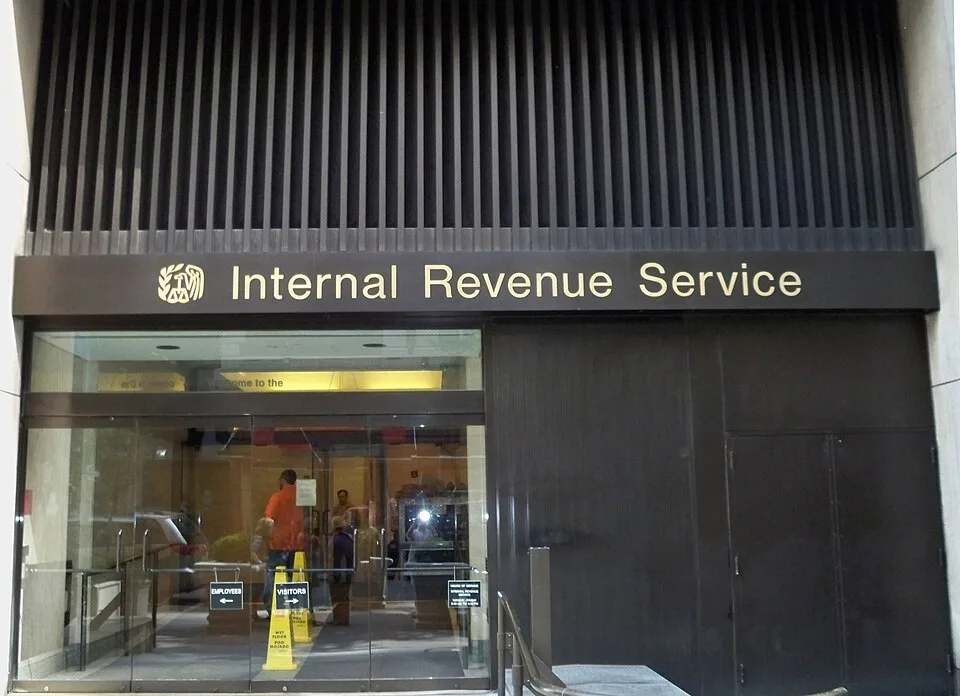
The federal government took the personal tax records of 1.28 million people and handed them to immigration enforcement without following the law. A federal appeals court just said so, plainly and on the record. The Trump administration's response was essentially: we disagree, good day.
What the IRS Actually Did
Here's the sequence of events. ICE wanted the last known addresses of 1.28 million people it suspected of being undocumented immigrants. The IRS, which holds that information because people filed taxes, handed over roughly 47,289 taxpayer records in 2025 under a newly adopted data-sharing policy designed to support the administration's mass deportation agenda. Then a lower court blocked the policy. The IRS had already made the handoff.
The U.S. Court of Appeals for the District of Columbia Circuit upheld that injunction on Tuesday, finding the IRS violated a federal tax-confidentiality law that has been on the books since Watergate. Yes, Watergate. The law exists specifically because Congress decided, after watching Richard Nixon weaponize government agencies against his enemies, that tax records should not be a free buffet for federal law enforcement. The IRS apparently needed a reminder.
The Part That Should Make Everyone Uncomfortable
The court's ruling, written by U.S. Circuit Judge Cornelia Pillard, identified several ways the IRS procedure violated federal law. The most damning one is almost cartoonishly bad. According to Fox News, when ICE submitted requests for information on 1.28 million taxpayers, it listed the same single person as the point of contact for every single request. Every one. All 1.28 million.
Judge Pillard called the IRS's failure to catch this "most egregious." The law requires ICE to identify a federal employee "personally and directly engaged" in a qualifying investigation of a specific taxpayer. What ICE did instead was essentially clone-stamp one name across more than a million forms and hand it back. The IRS accepted it. This is the system that was processing your neighbors' private financial information.
Pillard wrote that the procedure "automates the review of millions of records without any individual review or any other means of ensuring compliance with the legal prerequisites to releasing each individual taxpayer's information." In plain English: nobody was actually checking anything. They just ran it through a machine and called it law enforcement.
The Administration's Argument, Such As It Was
The Trump administration appealed the lower court's injunction, arguing the ruling hindered federal law enforcement. That's the whole argument. It makes things harder, therefore it should not apply.
Judge Pillard had a tidy response to that. "But that's a gripe with Congress, not the court," she wrote. Which is a polite judicial way of saying: you don't get to ignore a law because following it is inconvenient. Congress wrote the tax-confidentiality statute. Congress can change it. Until then, it means what it says.
Who This Law Was Actually Protecting
The three-judge panel also ruled that the data-sharing procedure violated privacy rights, including those of noncitizens. The court found that by creating a separate automated pathway specifically for ICE to request noncitizens' tax information, the IRS stripped those taxpayers of protections the law guarantees to everyone who files a return, regardless of immigration status.
That matters because these 47,000-plus people filed taxes. They participated in the tax system, which the federal government has long encouraged undocumented immigrants to do, precisely because it generates revenue and, implicitly, promised a degree of confidentiality in return. The Trump administration's move turned that implicit arrangement into a trap. File your taxes, provide your address, receive a deportation officer. A Department of Homeland Security spokesperson told Reuters the agency disagrees with the ruling and will keep using "every lawful tool available" to locate people for removal. The court just ruled this particular tool was not lawful. So.
Where This Goes From Here
The injunction stands. The IRS cannot share taxpayer addresses with ICE under the current procedure. Whether the administration tries to redesign the data-exchange process to actually comply with the law, appeals to the Supreme Court, or simply waits for a friendlier political moment is an open question.
What is not an open question is that 47,289 records were already shared before any court could stop it. Those addresses are already sitting somewhere in ICE's systems. The court can block future disclosures. It cannot un-ring a bell.
The Dingo Take
You are supposed to believe that a government agency, processing tax returns filed in good faith by over a million people, handed their home addresses to immigration enforcement using a system so sloppy that it listed the same contact person for every single one of 1.28 million requests. Not a few hundred. Not a few thousand. One point two eight million. And the IRS signed off on it.
This is what "every lawful tool available" looks like in practice: an automated pipeline that stripped out every individual review, every legal safeguard, every check the statute requires, and just ran the data through. The Watergate-era law existed for exactly this reason. When you give the executive branch access to Americans' private financial records without meaningful constraints, bad things happen. Congress knew that. They wrote it down. The IRS read it and apparently thought it was more of a suggestion.
The 47,289 people whose addresses are already in ICE's hands don't get a do-over because a court eventually said this was illegal. That's the part DHS's statement glosses right past. They'll keep looking for lawful tools, they say. Great. Maybe next time start there.




Comments