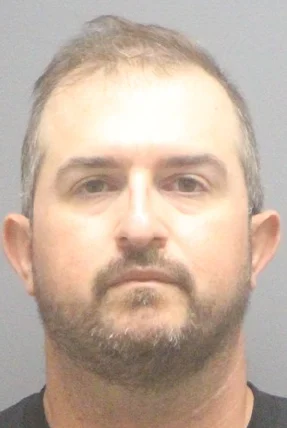
A North Carolina detention officer apparently decided that due process was more of a suggestion than a requirement, allegedly forging judges' signatures on 20 separate court documents to keep immigrants locked up long enough for ICE to collect them. Michael Diehl, 40, a former Guilford County detention officer, now faces 20 felony counts of common law forgery. He got a $5,000 bond and walked. The people he allegedly helped detain illegally didn't get that kind of consideration.
How This Actually Works — And How Diehl Allegedly Broke It
North Carolina has a specific legal process for handling ICE detainers, and it exists for a reason. Under state law, when an inmate is subject to an ICE detainer, they must be physically brought before a magistrate with a copy of that detainer. If the magistrate signs off, they can issue what's called an AOC-CR-662 form, which allows the detention center to hold that person for up to 48 extra hours beyond when they'd otherwise be legally entitled to walk free. That 48-hour window gives ICE time to show up and take custody.
It is a process with a human being, a judge, in the middle of it. That is not an accident. The magistrate is the check. According to the Guilford County Sheriff's Office, Diehl allegedly decided to skip that part entirely.
One Forged Signature Became Twenty
The Guardian reports that the whole investigation started when the Guilford County magistrate's office flagged a suspicious document tied to an inmate named Claudio Nepornuceno. The AOC-CR-662 form submitted for Nepornuceno contained the signature of a magistrate who had never processed Nepornuceno's arrest. That is a fairly basic thing to check. Apparently nobody checked it for a while.
Sheriff Danny H. Rogers confirmed that once investigators pulled the jail booking records, they found 19 more forms with the same problem: allegedly forged magistrate signatures on documents used to extend detention for ICE. Twenty inmates. Twenty forged documents. One guy.
In every single one of those 20 cases, according to the sheriff's office, ICE had issued a detainer based on suspected immigration violations. These were not random detentions. Someone was specifically targeting people with ICE detainers and allegedly manufacturing the paperwork needed to hold them.
Fired, Arrested, and Out on $5,000
Diehl was fired from the sheriff's office during the criminal investigation, which is the correct order of events but also the bare minimum you'd expect when an employee is accused of committing 20 felonies on the job. He was then arrested and charged with 20 counts of felony common law forgery.
His bond was set at $5,000 secured. He has since been released. The Guilford County Sheriff's Office says the investigation is ongoing and additional charges may follow, which suggests investigators think there may be more to find. Whether that means more documents, more people involved, or a longer timeline than currently known is not yet clear.
This Didn't Happen in a Vacuum
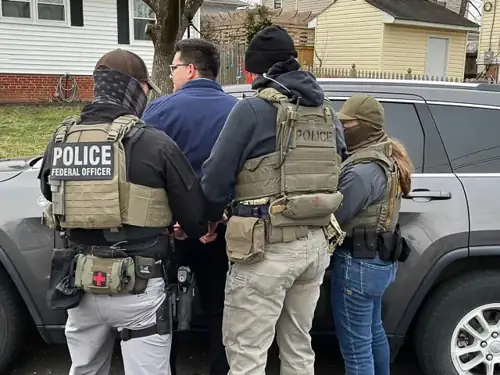
It should be noted that this case is unfolding against the backdrop of the Trump administration's immigration enforcement surge. Since January 20th, more than 70,000 people have been detained by ICE, a record number. The pressure to move fast, hold people, and deliver results for a White House that treats deportation numbers like a scoreboard is real and well-documented.
That context doesn't excuse what Diehl allegedly did. Not even slightly. But it does raise an obvious question about what kind of culture gets cultivated in immigration enforcement when the message from the top is that the ends justify the means and speed is the priority. When you spend months telling people that immigration enforcement is the most important thing happening in America and that obstacles to it are the enemy, some people are going to start treating legal requirements as obstacles.
The Rights That Got Skipped
Here is what actually happened to those 20 people in practical terms. Each of them was entitled, under North Carolina law, to appear before a magistrate before their detention could be extended. That appearance is not a formality. It is the moment at which a neutral judicial officer is supposed to look at the evidence and make an independent decision about whether extended detention is justified.
None of them got that. According to the sheriff's office investigation, Diehl allegedly just signed the magistrate's name and moved on. Twenty times. These were people who were already in custody, already subject to ICE detainers, and still entitled to a basic procedural protection that was allegedly ripped away with a forged pen stroke.
The Dingo Take
Twenty felony counts of forgery. Twenty people held without the legal process they were entitled to. One officer who apparently looked at a core judicial safeguard and decided it was paperwork, not a right. You are supposed to believe this is an isolated incident, a rogue employee, one bad actor in an otherwise functioning system. Maybe. The investigation is still open.
But let's not be naive about what incentive structure produces a Michael Diehl. This is an administration that has made immigration enforcement a centerpiece of its identity, that measures success in deportation numbers, that has repeatedly signaled contempt for procedural protections it views as soft obstacles invented by liberals to protect criminals. In that environment, someone somewhere was always going to start cutting corners. The only question was how many corners, and how long before anyone noticed.
Diehl walked out on a $5,000 bond. The 20 people whose detentions he allegedly fabricated judicial approval for did not have that option. Some of them may already be gone, deported on the back of paperwork a magistrate never actually signed. If the investigation finds that's the case, a $5,000 bond is going to look like the least appropriate part of this entire story.



Comments