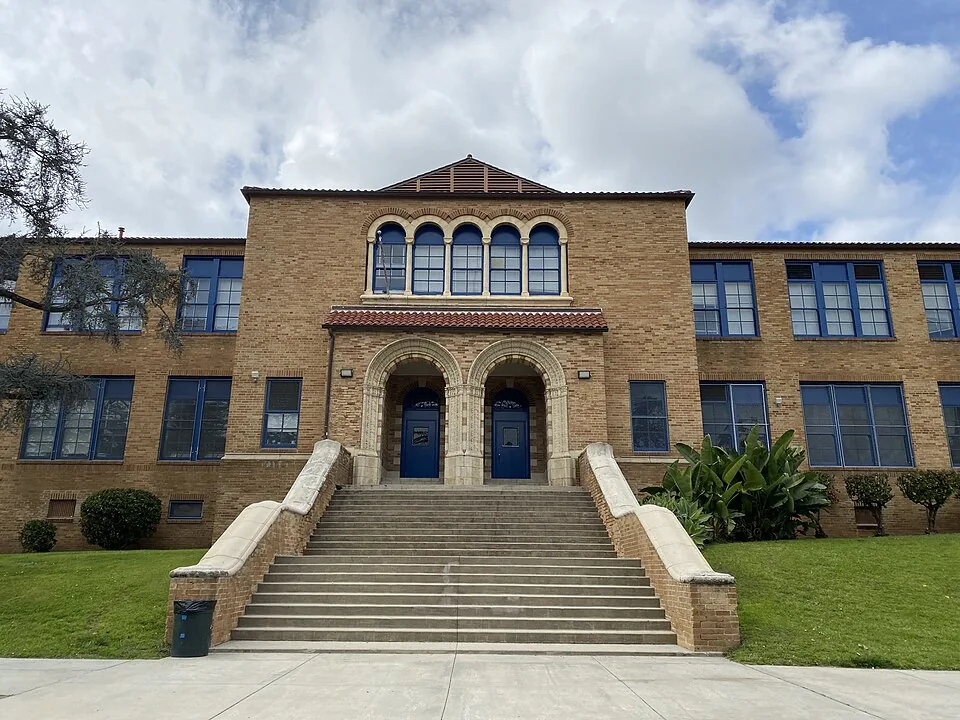
The number of California students applying to the University of California system with a perfect 4.0 GPA or higher has doubled in a decade, jumping from roughly 53,000 in 2015 to over 103,000 for the class of 2025. Over that same stretch, the share of 11th graders who are actually proficient in math cratered to 30.5%. So either California figured out how to produce a hundred thousand math geniuses during a pandemic, or something much more dishonest is happening in its schools.
The Numbers That Should Embarrass Everyone
According to UC data reviewed by the New York Post, the spike in perfect GPAs was especially sharp between 2020 and 2022, which is to say, exactly when schools shut down, moved online, and stopped expecting much of anyone. Funny how that works.
Meanwhile, California's own state-mandated Smarter Balanced assessments show that only 57% of 11th graders tested proficient in English and a genuinely jaw-dropping 30.5% in math during the 2024-2025 school year. Those numbers have ticked up slightly from the pandemic lows of 54.8% and 27%, but they remain worse than pre-pandemic levels. So students are performing worse on objective measures while earning better grades. The GPA is a receipt for work that was never done.
Teachers Told Not to Fail Anyone
Glenn Sacks, a social studies teacher in the Los Angeles Unified School District, told the Post exactly how the sausage gets made. When he was first hired, an administrator pulled him aside and said, quote, "Don't fail too many kids — remember, it's easier to replace one teacher than 35 students." That is a real thing a real administrator said to a real teacher, in one of the largest school districts in the United States.
Sacks says the pressure to eliminate D's and F's accelerated during COVID and has never let up. The logic, such as it is: a lot of failing grades means the instruction needs to be fixed, not that the students aren't learning. Which sounds almost reasonable until you notice that the solution was to stop recording failure, not to stop producing it.
Sonja Shaw, currently running for California state superintendent of education, was blunt about who's responsible. "Some districts are handing out high marks to students who haven't mastered basic reading, writing, and math, then passing the buck to colleges that are left dealing with underprepared kids," she told the Post. That's not a bug in the system. At this point, it is the system.
The Students Who Got Conned
Charles Cole graduated from California high schools in 2001 and got good grades throughout. He felt great about it right up until he arrived at California State University and was placed in remedial classes. The grades were real. The preparation behind them was not.
Cole now runs Energy Converters, an organization that works with underrepresented students across California and the country. He told the Post what he sees on the ground: "A large swath of these students are functionally — they're not on grade level. They're multiple grade levels behind, but they have the confidence of, 'Hey man, I just graduated with a 3.0. I'm about to go to college.'" That confidence is the cruelest part. These students were not failed by a lack of effort or ambition. They were failed by adults who decided their feelings mattered more than their futures.
Professors Are Now Teaching Middle School Math in Calculus Class
The consequences are now landing hard on the other end of the pipeline. More than 1,200 University of California professors signed an open letter this year stating they have been forced to teach what amounts to middle school math inside calculus and other university-level courses. Their solution: bring back the SAT.
The UC system dropped standardized testing requirements in 2020, responding to activist pressure that framed the exams as racially biased. The professors' open letter pushes back hard, arguing that GPAs and application essays, particularly in an era of rampant AI-assisted writing, "can no longer reliably distinguish readiness for university-level STEM majors." The UC Board of Regents is reportedly considering reinstating testing requirements, with a review expected next year. Marc Zawel, who co-founded admissions consulting group AcceptU, told the Post flatly: "A 4.0 simply doesn't distinguish a student in the way it once did."
Simon Nicholas, who runs a test-prep tutoring company with extensive California experience, told the Post that pandemic-era "asynchronous" classes, where students can log on whenever and tune out entirely because the content gets posted online anyway, locked in a permanent "downshift in rigor." And AI tools have made the whole situation considerably worse by letting students produce polished-looking essays and assignments without ever thinking hard about anything.
The Dingo Take
You are supposed to look at a 4.0 GPA and feel reassured. That's the whole point of the number. Parents feel proud, students feel accomplished, universities feel confident they're admitting prepared kids. Every single part of that transaction is now a fiction in California, and the adults running the system know it and have chosen to protect the fiction anyway because failing grades are bad for enrollment numbers and enrollment numbers are bad for budgets.
This is not a left-right issue, though the New York Post would very much like it to be one and spent considerable effort in its reporting making it one. Dropping the SAT to combat racial inequity in admissions is a legitimate policy debate. Telling teachers to stop recording failure so the district looks better on paper is not a policy debate. It is fraud committed against children. The student who leaves high school believing he earned his grades, walks into a Cal State campus, and gets handed a remedial math syllabus on day one was not done any favors by the system that handed him that diploma.
California has 6 million K-12 students. Thirty percent of its eleventh graders are proficient in math. The state's response, for years, has been to make sure the grades don't reflect that. At some point the bill comes due, and right now it's getting paid by every underprepared kid dropped into a college classroom wondering why nothing makes sense, while the administrators who built this system are still collecting their salaries and telling the next batch of teachers not to fail too many kids.





Comments