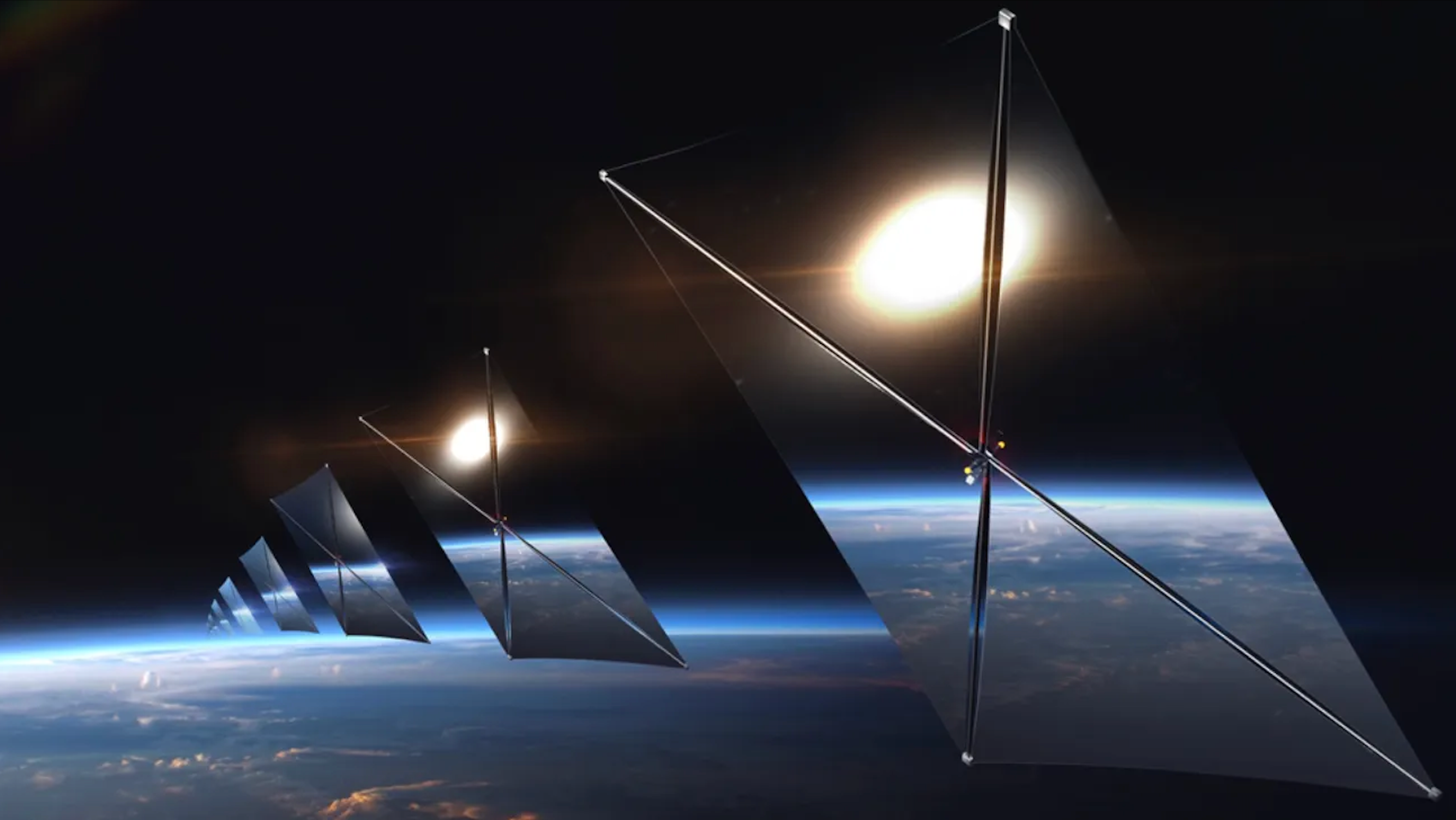
A startup called Reflect Orbital wants to launch 50,000 mirrored satellites to beam sunlight onto Earth at night, and this month it tested the concept on the residents of rural California without much warning. Locals near Lone Pine looked up at the Sierra Nevada and saw a dazzling glare pouring down over the desert, and one of them called it "blinding." The company says this is how it will save lives. Everyone else is asking who asked for a second sun.
The Night Somebody Switched On the Mountains
Here's what happened. Earlier this month, people near the town of Lone Pine, California, watched an intense light blaze from the mountains near Mount Whitney and wash over a stretch of desert below. Nobody told them why. It looked like something had gone wrong with the universe.
What they were seeing, according to The Guardian, was a demonstration. Reflect Orbital set up large mobile lights to simulate what its space mirrors would do, and compared the glow to a full moon. The company partnered with a local search-and-rescue team for the stunt and says it was a realistic test of how emergency responders might use the technology.
So the pitch is a lot of artificial light, aimed at a place where people live, in the dark, as a feature. The locals had a different word for it than "feature."
Fifty Thousand Mirrors and a Dream
The plan is as big as it sounds. Reflect Orbital wants to put 50,000 satellites into orbit over the next decade, each one a giant mirror bouncing sunlight down to targeted spots on Earth after sundown. In July, the Federal Communications Commission approved the company's proposal to launch a first demonstration satellite next year.
That test satellite carries a 59-foot-diameter mirror and will orbit around 400 miles up. It would throw 3-mile-wide beams of reflected sunlight, adjustable from moonlight all the way up to the brightness of the sun at noon. Let that last part sink in. Noon-sun brightness, at night, on demand.
The company's list of uses is a classic startup grab bag. Search and rescue. Replacing broken streetlights. Bathing crops in light. Powering solar panels after dark. Providing solar power for military operations. All of it summoned by the tap of a button on an app, because apparently the sky now has a delivery interface.
Scientists Are Using the Word 'Idiotic'
The reaction from people who study this stuff for a living has not been warm. Jan Hasselman, a senior attorney at Earthjustice, put it plainly: "This is an idiotic project." He added that all life on Earth evolved around the rhythm of day and night, and that there is a ton of data showing that messing with it is a bad idea.
He also said the plan for 50,000 mirrors "would really end the night sky as we know it." That is a lawyer talking, not a poet, and he still reached for the end of the night sky.
In August, four groups represented by Earthjustice asked the FCC to reconsider its approval. Their concern is the list you would expect and then some: birds, insects and mammals that depend on a reliable day-night cycle to feed, shelter and mate. Human sleep and circadian rhythms. Eyes, since staring at that glare is a lot like staring at a solar eclipse. And astronomers, who say the glare would worsen light pollution and trigger a rush of more satellites and more space debris.
The Climate Pitch Has a Problem
Reflect Orbital argues the whole thing is actually good for the planet. Point sunlight at solar panels at night, the company says, and you boost their output and cut reliance on fossil fuels. It sounds green. It is also a fix that involves launching tens of thousands of objects into orbit.
Climate scientists are not buying it. David Ho of the University of Hawaii noted that global warming comes from a radiative imbalance caused by the greenhouse gases we have dumped into the atmosphere. Then he delivered the line of the whole story. Some people, he said, are promoting the "already unhinged idea" of space mirrors facing away from Earth to cool the planet. "Imagine wanting to turn those mirrors around so that the Earth gets hotter."
That is the whole critique in two sentences. The industry is already fighting about whether to dim the sun with mirrors, and this company wants to aim mirrors the other direction.
Oversight, Allegedly
Reflect Orbital says it has held "substantive discussions" with scientists and astronomers and will steer clear of astronomical sites, national parks and wildlife-rich areas. A spokesperson said, "We welcome oversight and want to play a role in shaping it," and added that the company wants to work alongside regulators "rather than ahead of them."
That last phrase deserves a second look. The company has an FCC approval in hand, a demonstration satellite scheduled for next year, and a field test that startled a rural community, all before the formal conversation about whether any of this is a good idea has really happened. Working alongside regulators is a nice sentiment from a firm that is already past the first gate.
The approval came while Earthjustice and its partners were still waiting for an answer on their request for reconsideration. Hasselman wants some discussion and analysis before anyone is granted the right to fundamentally alter the night sky. That does not seem like an outrageous thing to ask.
The Dingo Take
The people around Lone Pine are the story here, and they got a surprise light show with no explanation. Imagine standing in your own yard in the rural California dark, wondering why the mountains are glowing like a stadium, and finding out later it was a sales demo. That's the consent process for rearranging the sky.
Look, search and rescue is a real thing and nobody is against finding lost hikers. But you do not need 50,000 orbital mirrors to do that, and the company knows it, which is why the pitch also includes crops, streetlights, solar farms and the military. Lead with the sympathetic use, then sell the rest. It's the oldest move in the startup book, and this time the product is the night.
The FCC signed off on a demonstration satellite while the people asking basic questions were still waiting for an answer. Every living thing on this planet has run on the same cycle of dark and light for as long as there has been life, and a regulator decided that could be tested next year. Maybe the mirrors are fine. Maybe the science says so. Then do the science first, out loud, before the sun goes up on a subscription plan.





Comments