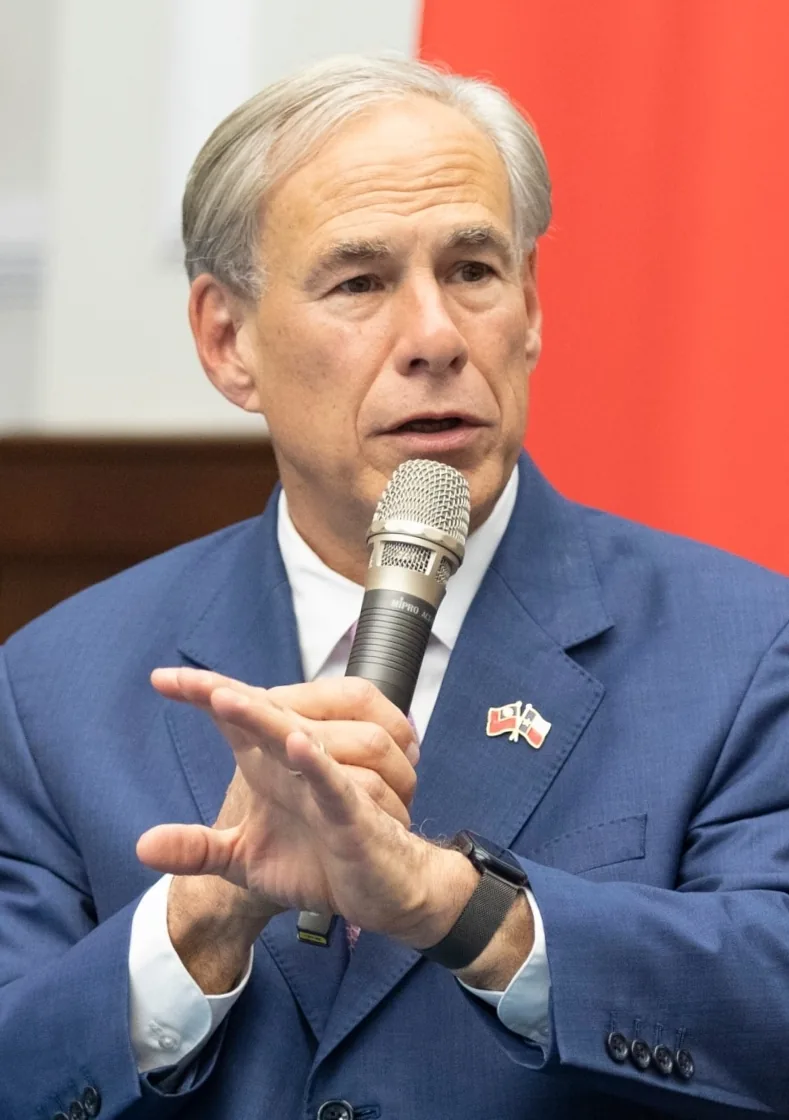
Texas data centers drank an estimated 25 billion gallons of water in 2025, and apparently a meaningful number of them just... didn't tell anyone. Greg Abbott, the governor of a drought-prone state that is simultaneously auditioning to become the world's largest concentration of data centers, has finally decided this might be worth looking into.
The Numbers You Should Sit With For a Moment
Let's do the math the way the Houston Advanced Research Center did it. Texas data centers used 25 billion gallons of water last year. If current trends hold, that figure hits 161 billion gallons annually by 2030. To put that in human terms: that's roughly the water consumption of 1.3 million households across the entire country, sucked up by server farms in a state that regularly runs out of water.
Texas currently hosts 335 data centers, according to a tally by the Pew Research Center, making it the second-largest concentration in the country. At least 248 more are in the pipeline. Experts believe Texas could overtake Virginia as the world's single largest data center hub before the decade is out. Virginia, for reference, has been building data centers since the 1990s. Texas is doing this in fast-forward, in a desert, during an era of worsening drought.
So What Exactly Did Abbott Actually Do?
On Monday, Abbott sent a letter to the Texas Water Development Board directing it to use its enforcement authority against data centers that have failed to comply with state law requiring them to disclose their water usage. The Texas Water Code, which has existed for a while now, requires major water users to submit complete and accurate water use surveys. Abbott's letter states that major data centers "appear to have committed civil and criminal violations" by ignoring that requirement.
The Governor also tied this to a separate audit he ordered last month through the Public Utility Commission of Texas and the Electric Reliability Council of Texas, better known as ERCOT. That audit requires data centers to hand over information about water consumption, water sources, and their use of water-efficient technologies. The penalty for non-compliance with that audit, Abbott says, is getting cut off from the state power grid entirely. No disclosure, no grid connection. That's a lever worth pulling.
Abbott said Monday that the two processes should be coordinated: "TWDB must coordinate with PUC and ERCOT to ensure that covered entities provide critical water use information in response." Which is a very formal way of saying: these companies need to start answering the phone.
The Part Where We Ask: How Did We Get Here?
Texas has spent the better part of a decade aggressively recruiting tech companies and data center operators with low taxes, minimal regulation, and cheap land. It worked. The state is drowning in investment, which is an ironic word choice given that it is also, periodically, actually drowning, and also running out of water in its western regions simultaneously. Texas is large and climatically complicated.
The political backdrop here matters too. Abbott is running for a fourth term as governor, according to The Guardian, and public concern over data center construction has been growing in the state. Communities near proposed facilities have raised alarms about strain on local water supplies and power grids. ERCOT, you may recall, is the same grid operator whose failures during the 2021 winter storm killed hundreds of Texans. Adding hundreds of power-hungry, water-gulping AI infrastructure facilities to that system is not a universally popular idea among the people who actually live there.
The Industry's Silence Speaks Loudly
Here is something worth understanding about what Abbott's letter is actually describing. Texas law already required these disclosures. This is not a new regulation. The water use survey requirement exists. The law exists. These companies, some of which are among the most valuable corporations in human history, looked at the law, looked at the survey form, and apparently just did not send it in.
That's what "civil and criminal violations" means in Abbott's letter. Not that they violated some new rule he invented. That they ignored an existing legal obligation in a state that they chose to build in precisely because it had a friendly regulatory environment. The chutzpah required for that is genuinely impressive, in the way that watching someone steal the tip jar at a coffee shop is impressive.
What Comes Next
The Texas Water Development Board now has a direct directive from the governor to use its enforcement authority, which includes financial penalties. Abbott's letter also makes clear that any future failure to comply will trigger that same authority automatically, without requiring another letter from the governor's office.
Whether this produces real accountability or a wave of carefully worded minimum-compliance filings from corporate lawyers remains to be seen. But the grid-connection threat is real. You cannot run a data center you cannot plug in, and ERCOT controls the plug. If Abbott and the Public Utility Commission follow through, that is a genuinely meaningful enforcement mechanism in a way that a fine to a company worth hundreds of billions of dollars simply is not.
The Dingo Take
You are supposed to believe this is a story about Greg Abbott getting tough on Big Tech. And in a narrow, technical sense, it is. He wrote the letter. He used the words "civil and criminal violations." He directed his regulators to actually enforce a law that has been on the books. Give him the credit. It happened.
But zoom out for one second. Texas recruited these companies. Texas sold them on the dream of cheap power, low taxes, and a government that wouldn't bother them. The data center boom didn't sneak up on anyone. 25 billion gallons of water consumed in a single year in a drought-prone state, and the revelation this week is that nobody even asked for the paperwork. That's not a tech industry failure in isolation. That's a decade of policy choices catching up to a governor who is, conveniently, running for reelection.
The 161 billion gallon projection for 2030 should be the headline of every conversation Texas is having about its future right now. That's not a rounding error or a worst-case scenario buried in a footnote. That's where this train is headed. Sending a strongly worded letter in September 2026 is better than nothing. It is also, given the scale of what's coming, a little bit like putting a Post-it note on a broken dam.



Comments