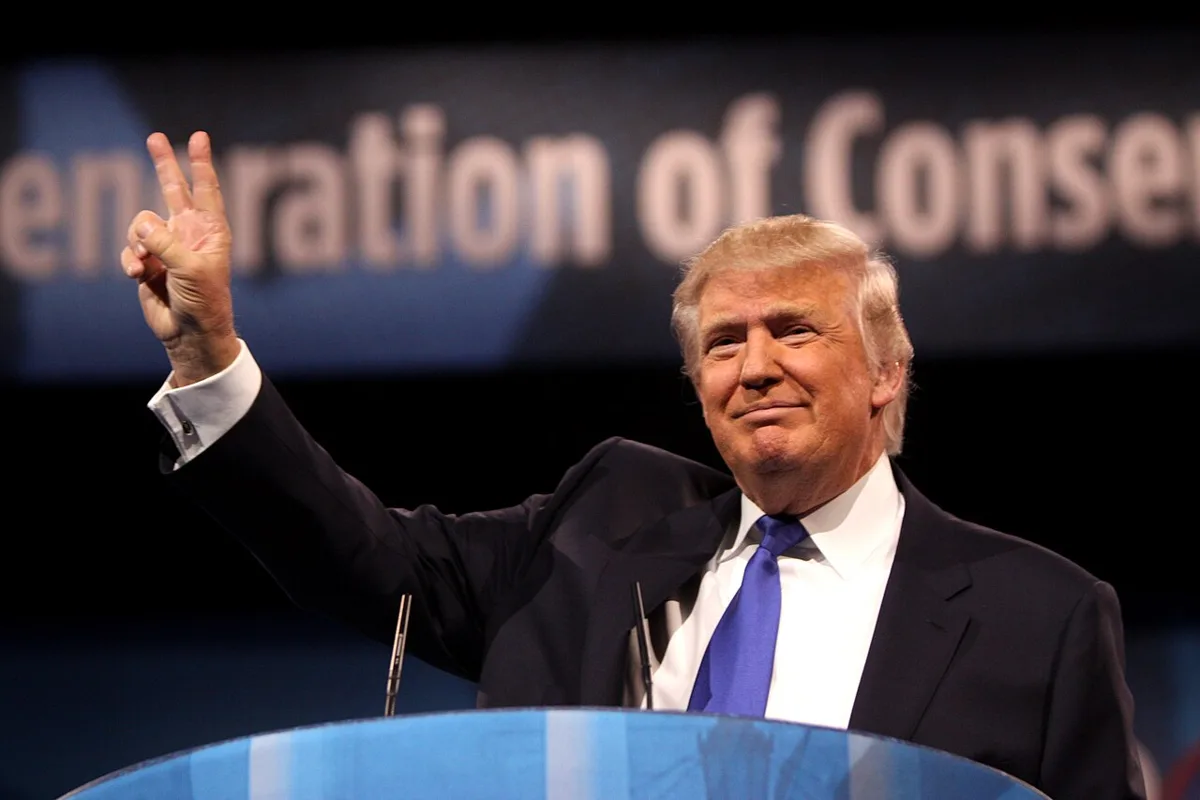
Tucker Carlson says Donald Trump looked him in the eye and told him he personally ordered the suppression of federal Epstein files. Not an aide. Not a department. Trump. According to Carlson's account in Vanity Fair, the former president copped to it directly, explained it as a conspiracy against him, and apparently expected that to be a satisfying answer.
What Carlson Actually Said
The claim came out of a private conversation Carlson says he had with Trump in the summer of 2025, during a period when the administration's handling of Epstein-related documents was already drawing serious legal heat. According to Carlson's account to Vanity Fair, Trump didn't deny it or deflect. He owned it.
"The order to cover it up came from Trump," Carlson said, describing what Trump told him. He then pushed Trump on why, and got what he called a "long, very emotional explanation" that the whole thing was a plot against him. Like Russiagate, Trump reportedly said. A conspiracy. A setup. The usual.
Carlson, to his credit, was apparently not moved by this. "My position from the beginning was, 'I don't understand why you would ever keep any of this stuff secret,'" he told Vanity Fair. He said he told Trump directly that he didn't feel any need to cover for Epstein and that Trump shouldn't either. "In the end, it came from Trump directly," he said.
The Files Everyone Wants and Nobody Will Release
Here's what makes this more than just two TV personalities having a falling out. The Epstein files at the center of this dispute aren't abstract. There is a specific law, the Epstein Files Transparency Act, that mandates the release of certain documents. The administration has been sitting on them anyway.
In June, U.S. District Judge Emmet Sullivan ruled that acting Attorney General Todd Blanche had effectively conceded he was violating that law. The Justice Department's response was to say Blanche had "not conceded anything" and announce plans to appeal. That is, as legal strategies go, pretty brazen.
Among the unreleased documents are FBI interview notes detailing allegations involving Trump himself, from a woman who says Epstein introduced her to him when she was approximately 13 years old. The claims have not been verified and no charges have been filed. But the question of why a law mandating transparency is being defied in court while those particular documents remain sealed is not a subtle one.
The Judge Is Losing Patience
Judge Sullivan has been watching the Justice Department run out the clock on this for months and is not being quiet about it. At a previous hearing, he pointedly told DOJ lawyers, "Christmas is forthcoming," as he pressed them for accountability. A federal judge using holiday metaphors to tell the government to get its act together is either charming or damning, depending on how you feel about the rule of law.
The White House, for its part, did not directly address Carlson's claim that Trump personally ordered the suppression. Instead, a statement said Trump has "been totally exonerated on anything relating to Epstein" and called him an advocate for victims. That is a statement so at odds with the facts of what is currently happening in federal court that it is genuinely difficult to know where to start.
The Breakup Nobody Saw Coming (Everyone Saw Coming)
The broader context here is that Tucker Carlson and Donald Trump have had a very public falling out, which is significant because Carlson spent years being one of the most reliable amplifiers of Trump's worldview on the most-watched cable news program in America. When that guy decides to tell Vanity Fair that his former patron personally admitted to ordering a cover-up, it lands differently than when a Democrat says it.
Trump, characteristically, has already gotten in front of it. In a radio interview with host Sid Rosenberg, he told listeners, "Of course, I dumped him a few months ago because I just felt it wasn't appropriate." That framing, that Trump ended things, not Carlson, is doing a lot of work. It's also somewhat undermined by the fact that Carlson is the one currently talking to Vanity Fair about private conversations in which Trump admitted things that could have serious legal implications.
Interestingly, Vice President JD Vance was reportedly pushing internally for the White House to release all the Epstein files before Congress could compel their disclosure. That's a striking contrast with the direction Trump apparently chose to go.
What the White House Wants You to Believe
The official position of the Trump administration is that Trump is an Epstein victim advocate who has been totally exonerated, that the acting AG has not conceded anything in the court proceeding where the judge ruled he conceded something, and that the ongoing refusal to release documents mandated by law is fine, actually.
Those three things cannot all be true simultaneously. They're not even close to compatible. And now sitting on top of that contradiction is Tucker Carlson, someone who was in Trump's inner circle, saying Trump told him personally that the suppression order came from him and that the justification was essentially that transparency would be bad for Donald Trump.
The claims remain unverified beyond Carlson's account. Trump has not held a sit-down to refute them in detail. The documents remain sealed. The appeal is pending. And the judge is apparently keeping an eye on the calendar.
The Dingo Take
You are supposed to believe that a president who personally, according to his own former most-loyal television surrogate, ordered the suppression of files he is legally required to release, and then explained that order as a plot against him, is simultaneously a champion for Epstein's victims. Pick one. You cannot have both.
What makes Carlson's account genuinely different from the usual noise is that he had every incentive to stay quiet. He built his entire post-Fox career on proximity to Trump. He is not a whistleblower with a grudge from day one. He's a true believer who pressed his guy for an explanation and came away more troubled than reassured. When someone like that decides the answer he got wasn't good enough, and then tells Vanity Fair about it by name with direct quotes, that is not nothing.
The files exist. The law requiring their release exists. The court ruling that the law is being violated exists. And now there is a specific, named account that the decision to defy all of that came from the top. What happens next depends entirely on whether anyone with actual power decides that matters. History suggests we should not hold our breath, but the record should reflect exactly what is being alleged, and by whom, and what the administration chose to do instead of answering.



Comments