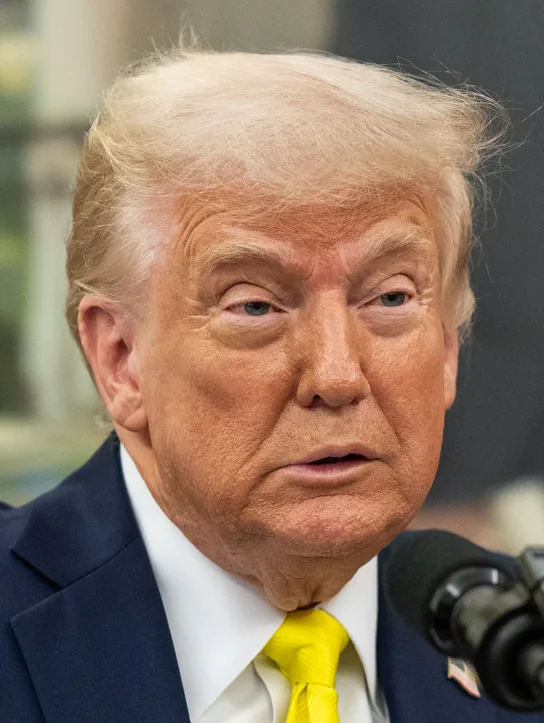
Donald Trump told the American public the Iran military campaign would wrap up in weeks. That was seven months ago. Now gas prices are near their highest levels since 2022, mortgage rates are closing in on 7%, and the midterms are less than two months out. Everything is fine.
A Victory Tour, With No Victory
Trump is heading to the United Nations on Tuesday to present the Iran war as a success. Let that settle for a moment. Seven months in, Iran can still disrupt regional shipping, global energy prices are getting hammered, and the administration's opening promise of a quick, clean operation has aged about as well as a fish left in a hot car.
"We are seeing what happens when a president launches a war of choice without anticipating the unintended consequences," Aaron David Miller, a former Middle East policy adviser to multiple administrations from both parties, told Reuters. That is a diplomatically phrased way of saying someone did not think this through.
The UN speech is essentially Trump doing what Trump does: declaring victory loudly enough that maybe people stop asking what winning actually looks like. It is a rhetorical strategy that works right up until the moment your constituents are paying $4.50 a gallon to get to work.
The Economy Is Not Cooperating
The Wall Street Journal's analysis of where the US economy stands right now is not a cheerful document. Mortgage rates are nearing 7%. Consumer prices rose 3.4% in the year through August. Gas prices are hovering near their highest point since 2022. These are not abstract statistics to the voters heading to the polls on November 3.
Republicans are defending both chambers of Congress in an environment where the war is costing money, the war is costing energy stability, and the war was supposed to be over before any of this became a political problem. High gas prices and low approval ratings, as The Guardian notes, are piling pressure onto a party that controls everything and therefore owns everything.
This is the deal with wars of choice. When they work fast, you get a parade. When they drag on, you get blamed for every dollar your voters spend at the pump. Trump is currently getting the second version.
Selling F-35s to Saudi Arabia, What Could Go Wrong
Separately, the Trump administration has signed off on a potential sale of 48 F-35 advanced fighter jets to Saudi Arabia, a package worth an estimated $24.3 billion. The State Department described the sale as strengthening Saudi Arabia's "homeland defense." That framing is doing a lot of heavy lifting.
The New York Times reports that US intelligence agencies have raised concerns about whether American and Saudi officials could actually secure facilities housing F-35 technology. The Pentagon's Defense Intelligence Agency issued a detailed report questioning the security of those sites and flagging the level of access Chinese military personnel have to Saudi bases. The Times also noted concerns about Saudi Arabia's widespread use of Chinese technology in its telecommunications infrastructure and defense installations.
So to recap: the United States is proposing to sell its most advanced fighter jet to a country where China already has a significant military and technological footprint, and where the Pentagon's own intelligence arm has doubts about the security arrangements. The State Department says this will help Saudi Arabia deter threats. It did not specify which threats.
Trump Wants His Name on Everything. Courts Are Not Thrilled.
Former staff members of the US Institute of Peace have gone to a federal appeals court to stop the Trump administration from literally chiseling the president's name into the building's facade. The building was already renamed the "Donald J. Trump United States Institute of Peace" last year, which is a sentence that requires a moment to absorb. Now lawyers for the ousted board members are arguing that engraving Trump's name in stone would cause "irreparable harm" to the organization's independent mission. The court appears to be taking it seriously.
Over at the Kennedy Center, a federal judge has ordered the Trump-backed leadership to give 30 days' notice before making any major physical changes to the building, including demolition. Trump floated the idea of "ripping down" the Kennedy Center after a dispute over slapping his name on the building and a proposed $257 million renovation. The center is currently closed, with its Trump-installed leadership citing safety concerns related to structural age and deficiencies.
Two of Washington's most recognizable institutions are now in active court battles over whether Donald Trump gets to put his name on them. The US Institute of Peace, whose entire purpose is independent conflict resolution, and the Kennedy Center, whose entire purpose is the arts. The branding campaign continues.
Early Voting Has Already Begun
While all of this is unfolding, voters in Virginia began early in-person voting Thursday, and voters in Minnesota, Idaho, and South Dakota can now cast absentee ballots in person. The midterm campaign is no longer theoretical. Ballots are being cast right now.
The issues shaping this election are coming into sharp focus: cost of living, the price of gas, a war that has no visible end point, and a congressional majority that has enthusiastically supported all of it. Republicans go into November defending the House and the Senate in an environment of their own making.
The Dingo Take
Seven months. Trump promised weeks, and it has been seven months. There is no version of that fact that is not a political catastrophe, and the economic ripple effects of a prolonged military engagement in one of the world's most energy-sensitive regions are now landing directly on the kitchen tables of the voters Republicans need in November. This is not bad luck. This is cause and effect.
The F-35 sale to Saudi Arabia deserves more attention than it is getting. The Pentagon's own intelligence agency wrote a report raising red flags about Chinese access to Saudi military sites, and the administration is moving forward anyway. That is not a footnote. That is a decision to prioritize a $24 billion arms deal over the security concerns of the people whose job it is to assess security concerns.
And then there is the name-on-the-building stuff, which would be almost funny if it were not actively consuming court resources and disrupting actual institutions. The president is engaged in simultaneous legal battles over his right to engrave his name on a peace organization and a performing arts center. The courts are having to step in to say: maybe slow down with the chisel. This is where we are. Early voting has started. The clock is running.


Comments