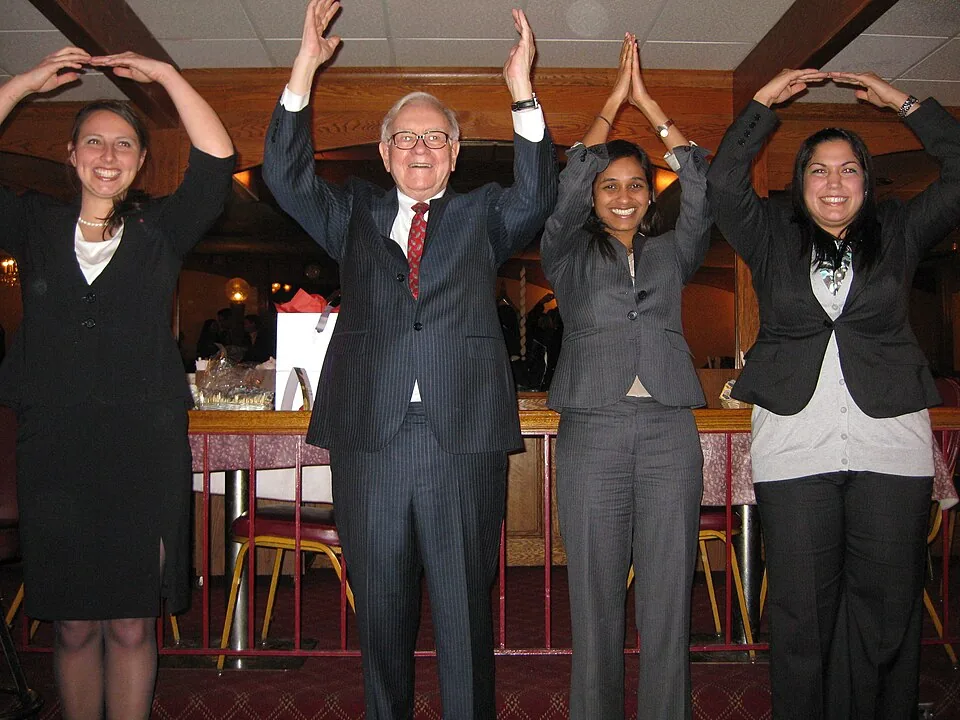
Warren Buffett, the 96-year-old man who turned a dying textile mill into a $1.1 trillion empire and somehow became the world's most beloved billionaire in the process, has officially stepped down as chairman of Berkshire Hathaway. His son Howard is taking the chair. Greg Abel is already running the day-to-day. And Buffett himself will stick around as chairman emeritus, because of course he will.
Six Decades, One Company, Zero Regrets
The BBC reports that Buffett formally handed the chairman role to Howard Buffett this week, nine months after passing the CEO title to Greg Abel. The transition has been so carefully choreographed it makes most corporate successions look like a bar fight over car keys.
Buffett took control of Berkshire Hathaway in 1965. Nineteen sixty-five. The Beatles had just released Rubber Soul. The Vietnam War was escalating. And a 34-year-old Warren Buffett was quietly acquiring a struggling New England textile company that he would eventually ride to one of the greatest wealth-creation stories in the history of capitalism.
Today, Berkshire owns GEICO, Dairy Queen, the BNSF railway system, and massive stakes in Apple and Coca-Cola. That last one matters for the image: Buffett famously drinks five cans of Coke a day, which is either a brilliant long-term brand endorsement or a medical mystery, and possibly both.
The Letter That Ended an Era
In a letter to shareholders, Buffett wrote that "the timing is right to complete the transition," noting he had recently celebrated his 96th birthday alongside the first birthday of one of his great-grandchildren, who is, in his words, "moving a bit faster" than he is. That is genuinely one of the more graceful ways a titan has ever announced he's slowing down.
He closed the letter by calling his tenure "the privilege of a lifetime" before landing the most Buffett line imaginable: "Father Time always wins." The man built a trillion-dollar company and his exit statement still reads like a fortune cookie from someone who actually earned the fortune.
The BBC notes that the company has moved to reassure investors that day-to-day operations won't skip a beat. Abel handles corporate strategy and capital decisions. Howard's job, by design, is softer but arguably more important: guarding the firm's culture and values.
Who Is Howard Buffett, Exactly?
If you're drawing a blank on Howard Buffett, you're not alone. He is not a financier. He is not a hedge fund guy. He is, somewhat improbably, a former farmer, philanthropist, and sheriff who has sat on Berkshire's board since 1993. That is 33 years of board experience, which is more than most CEOs have in their entire careers.
His role as non-executive chairman is explicitly not about running the company. According to the BBC's reporting, his mandate is cultural stewardship. Think of him less as a successor and more as a constitutional monarch who happens to have attended every annual shareholder meeting in Omaha for three decades. The operational heavy lifting stays with Abel.
The structure is deliberate. Buffett designed it this way. The message to markets is: nothing dramatic is happening here, and nothing dramatic will happen here.
The Oracle Steps Back, But Doesn't Step Out
Buffett will remain on the board and has agreed to stay available for his "judgement and perspective," according to the shareholder letter. So he is not gone. He is just no longer in charge, which is a distinction that will take the financial press approximately eighteen months to fully process.
For context on how unusual this transition has been: Berkshire Hathaway is one of the most closely watched companies on the planet, and this succession has unfolded without a single real crisis, boardroom drama, or activist investor threatening to blow the whole thing up. The annual meetings in Omaha became something close to a secular pilgrimage for value investors, and Buffett's shareholder letters turned into required reading for anyone who wanted to understand how patient capital actually works.
That legacy does not vanish because the title changed. But the title changing matters anyway. For sixty years, Berkshire Hathaway and Warren Buffett were essentially the same noun.
The Dingo Take
You are supposed to feel nothing but admiration here, and honestly, that's basically correct. Warren Buffett spent six decades building something real, communicated with his investors like they were adults, paid his taxes without inventing a shell company structure to avoid them, and publicly promised to give most of his money away before he died. By the standards of the current billionaire class, this man is practically a monk.
That said, let's not completely canonize the guy on the way out. Berkshire's size and reach raises the same systemic questions that come with any entity managing over a trillion dollars in assets. The man had complicated relationships and made complicated calls over sixty years. The Oracle label always carried a little too much mythology for a person who, at the end of the day, was very good at buying undervalued things and waiting.
But compared to the tech oligarchs currently buying their way into government, the hedge fund guys blowing up pension funds, and the private equity operators strip-mining American businesses for parts? Warren Buffett at 96, writing a letter about his great-grandchild moving faster than he does, and quoting himself on the inevitability of mortality, lands somewhere between genuinely moving and deeply earned. He played a long game. He won. And he at least had the self-awareness to know when to put down the cards.


Comments