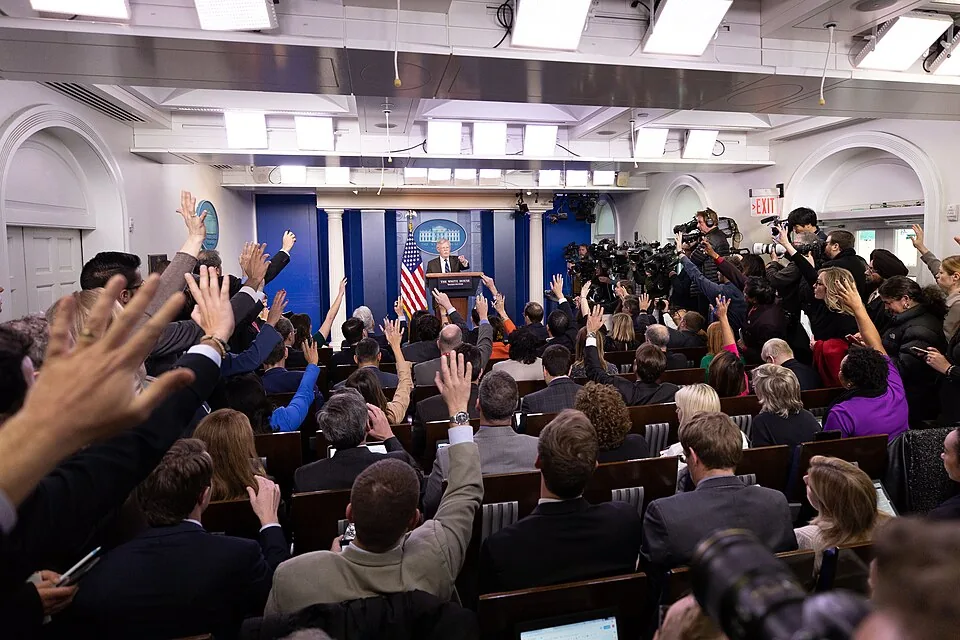
Donald Trump, fresh off getting spanked by the Supreme Court, the Federal Reserve, and a federal judge in the span of about five days, responded to his terrible, horrible, no good, very bad week the way he always does: by punishing the people who wrote about it. On Saturday morning, journalists from CNN, Politico, and MS Now had their press credentials physically confiscated as they tried to enter the White House grounds. The First Amendment, apparently, was unavailable for comment.
What He Actually Did
This is not a suspension. This is not a cooldown. Trump announced on Truth Social on Friday that he was outright "banning" all three organizations from White House access because of their "constant 'reporting' of fake news." The scare quotes around "reporting" are his, not ours, which tells you everything about how this man processes information he doesn't like.
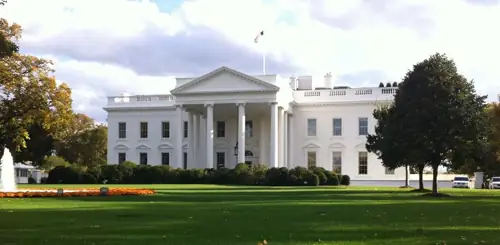
The next morning, according to BBC News, journalists from those outlets showed up to do their jobs and were turned away at the gate, credentials confiscated on the spot. Trump elaborated later Friday, complaining that "something is wrong with a country that can allow people to write purposely negative stories." He added, with the self-awareness of a golden retriever who just ate your sandwich, "I don't have to let them into the people's house."
The people's house. His words. The house he is currently using to bar the people's press from entering.
The Week That Broke Him
To understand why this is happening now, you need to understand what kind of week Trump just had. The Supreme Court, including justices he personally appointed, blocked his plan to restrict mail-in voting ahead of the midterms. Trump responded by melting down publicly about the court, saying "These are not the people I interviewed to serve on the United States Supreme Court." Sir, that is not how lifetime appointments work.
Then the Federal Reserve raised interest rates, the exact opposite of what Trump has spent months demanding. Then a federal judge ordered his administration to give 30 days' notice before making any changes to the Kennedy Center after Trump had floated the idea of tearing it down. BBC News reports this all landed on top of approval ratings that have hit record lows for his second term.
There is also the small matter of an ongoing war with Iran, which Trump chose to start and cannot figure out how to end, and which has sent energy prices surging. His party is staring down the midterms in November looking like they could lose the House and possibly the Senate. In that context, banning three news outlets is less a political strategy and more a toddler flipping the board game.
Is Any of This Legal? No, Probably Not.
The First Amendment forbids the government from "abridging" the freedom of the press. Courts have long read that language as prohibiting the government from discriminating against specific outlets based on the content of their coverage. That is precisely what Trump is doing here, on the record, in his own words, citing coverage he finds too negative.
All three targeted organizations have already announced they will sue. BBC News notes this is not the first time Trump has tried something like this, and the courts have not been kind to him. In his first term, CNN's Jim Acosta got his credentials revoked and won them back in court. A reporter who argued with adviser Sebastian Gorka had their pass suspended, and courts blocked that too. Last year's ban on the Associated Press from the press pool for refusing to call the Gulf of Mexico the Gulf of America led to a legal fight that still isn't fully resolved.
The difference this time, as BBC News points out, is the scale. Previous actions targeted individual reporters or specific access arrangements. This targets entire organizations and bans them from all White House grounds entirely. It is a bigger swing, which means it is a bigger legal target.
The White House Correspondents Association Is Not Happy
The White House Correspondents Association and various media watchdog groups have condemned the move, according to BBC News. This will surprise no one. What is worth paying attention to is whether any other outlets decide to make common cause with the banned three or quietly accept that this is just how things work now.
History suggests the latter is the more dangerous outcome. Every time an administration successfully punishes a press outlet and faces no meaningful industry solidarity in response, it teaches the next administration that the move is available. The AP dispute last year should have been that lesson. The industry's response was, charitably, mixed.
What Comes Next
Lawsuits are coming. Courts will almost certainly step in, probably sooner rather than later given the precedent trail here. But in the meantime, three major news organizations are physically locked out of covering the presidency from inside the building where the presidency happens. That is not a hypothetical threat to press freedom. It is a current, operational one.
Trump, for his part, has offered no specific triggering incident for why he acted this particular weekend. BBC News notes he admitted on Friday there was no single event that set this off. He has just decided this is what he wants to do. The timing, landing immediately after one of the worst political weeks of his second term, is either a coincidence or it isn't.
The Dingo Take
You are supposed to believe this is about fake news. That is the stated rationale. The man who lost at the Supreme Court, lost at the Federal Reserve, and got restrained by a federal judge on the Kennedy Center all in the same week looked at his situation and decided the problem was the people describing it accurately.
This is the authoritarian playbook, page one, written in crayon. When reality starts closing in, attack the people reporting on reality. Make the story about the press instead of about the policy failures, the tanking approval numbers, the war that has no exit, the midterms that are shaping up badly. Banning CNN and Politico from the White House does not fix any of those things. But it does give the base someone to be angry at who isn't Trump.
The courts will likely restore access, the same way they did for Acosta, the same way they pushed back on the AP ban. But every time this administration runs this play, it burns a little more time, costs the outlets money in legal fees, and normalizes the idea that press access is a privilege the president can revoke when the coverage annoys him. That erosion is the point. The lawsuit is the inconvenience they've already priced in.


Comments