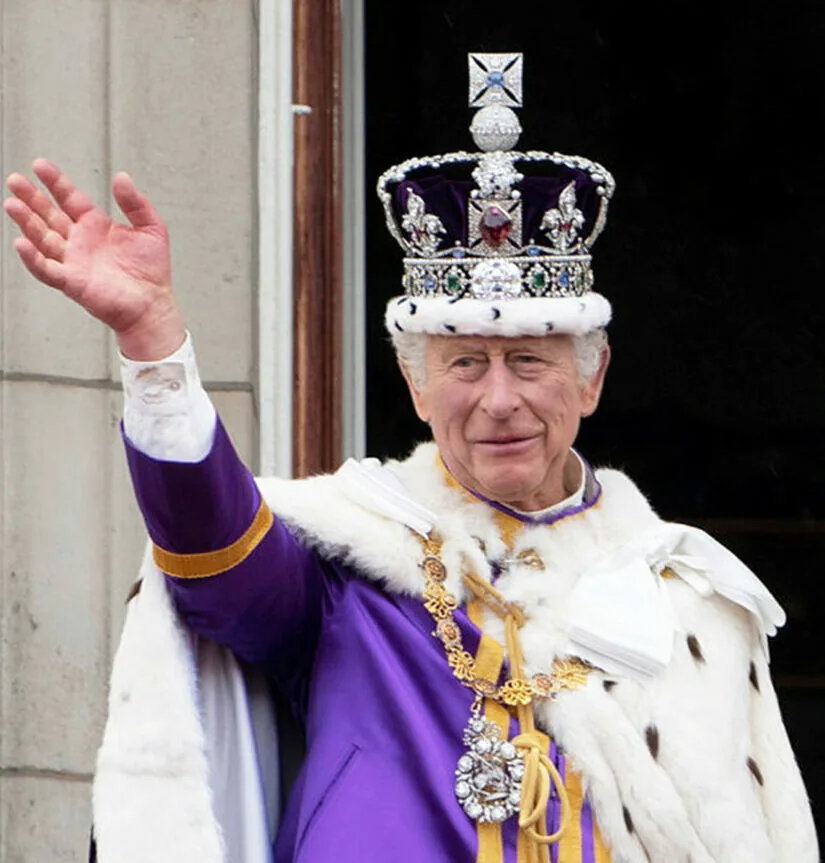
According to her own brother, the King of England looked at his ex-wife's death and basically said: great, moving on. Charles Spencer, the 9th Earl Spencer, claims that shortly after Diana died in that Paris tunnel in August 1997, King Charles called him sounding 'giddily elated like a lottery winner' — and then told him, with what Spencer describes as 'a bit of a hiss,' that Diana would be 'forgotten soon enough.' The palace's response is that grief can make people misremember things. Spencer's response is that he remembers perfectly.
The Quote That's Going to Follow Charles III Forever
Spencer's new book, 'Swan Song: Diana, My Sister,' published Tuesday by Penguin Press, is a 30th-anniversary reckoning with his sister's life, legacy, and the people who made that life harder than it needed to be. The book lands a lot of punches. None land harder than this one.
As CBS News reports, Spencer describes a phone call he received from the then-Prince Charles shortly after Diana's death in which Charles sounded upbeat in a way Spencer found deeply unsettling. Then came the line. 'He said about Diana, "We'll forget her soon enough." And he said it, I can't really recreate it, but it was said with a bit of a hiss, to be honest. And I said, "I can't believe you said that."'
Spencer told the BBC he has no interest in softening this account. 'I can tell you here and now, those are exactly the words he said,' he said. 'I was hyper alert to what he was saying and those are precisely the words that he said and I promise that to you now. Genuinely, that is what he said. I don't hear him saying he didn't say that.' He also described the call itself as Charles sounding 'excited in a sort of upbeat way,' and suggested the most obvious explanation: Charles finally felt free to be with Camilla.
The Palace Fires Back With the Most Insulting Non-Denial in Royal History
Buckingham Palace did not deny the quote. What they did instead was arguably worse. The palace issued a statement, reported by CBS News, saying Spencer's recollections may be the result of 'fraternal grief that can cloud reason, affect judgement and colour memory.' In other words: he's not lying, he's just too sad to remember things correctly. After 29 years.
This is a fascinating strategic choice. If the King didn't say it, you say he didn't say it. The palace chose not to do that. What they chose instead is a statement that manages to be simultaneously condescending, unconvincing, and a complete non-answer — which is quite an achievement for a press operation that has been doing this for centuries.
Spencer is not backing down. His response to the 'fraternal grief' line was to call the comments 'monstrous' and go on the BBC to repeat the allegation word for word. This is not a man who wrote the book and hoped nobody would notice the incendiary parts.
The Funeral Walk and the Question of Who Was Really Being Protected
The book also revisits one of the most haunting images from Diana's funeral in September 1997: the sight of a 12-year-old Harry and 15-year-old William walking behind their mother's coffin through the streets of London. Spencer, who called it 'barbaric' in his CBS News interview, says he pushed back on the idea at the time and believed it wasn't going to happen.
Here is where it gets genuinely grim. Spencer says he was told by politicians involved at the time that having the boys walk behind the coffin was, at least in part, about shielding Charles from the crowd. 'There was a concern that if he walked alone behind Diana's coffin, that he would be insulted by people in the crowd. That was the fear. And that that couldn't possibly happen if the boys walked behind,' Spencer told CBS News. Then he added: 'I was told they wanted to do it. And I believe I was lied to.'
Two grieving children, used as a human buffer against an angry public. And Spencer says he was deceived about whether they actually consented. The palace has not addressed this specific claim.
Harry and Meghan, and the Echoes Spencer Can't Stop Seeing
Spencer doesn't stop at 1997. In interviews promoting the book, he has drawn explicit comparisons between what happened to Diana and what he sees happening to Prince Harry and Meghan Markle. Page Six reports that Spencer told the BBC the tabloid coverage of Harry and Meghan can be 'really, really unpleasant,' and called the relentless criticism 'cancerous.'
'For anyone who is being destroyed in this way daily, it must be such a cancerous influence in their life,' Spencer said. He recalled Diana being 'very, very sensitive to criticism' and 'really brought low' by the experience. 'I think it's a pity when I see echoes of that now.'
Harry himself has made this comparison before. In his 2021 AppleTV+ series 'The Me You Can't See,' he said of Meghan: 'You want to talk about history repeating itself — they're not going to stop until she dies.' A statement that is either paranoid hyperbole or the observation of a man who watched his mother get chased to her death by photographers. There isn't a lot of middle ground there.
Page Six also reports that Harry was made aware of the bombshells coming in Spencer's memoir before publication, and the excerpts were 'not a shock' to him. Whether that's because he knew Spencer was writing them, or because none of it surprises him, is left to the imagination.
Why a Book, Why Now
Spencer's stated reason for writing the book is almost charmingly blunt. With the 30th anniversary of Diana's death approaching next year, he told CBS News he was 'getting inundated with requests to be in somebody else's book or documentary.' His solution: write his own. 'If you're all so interested in hearing from me, I might just give you the definitive story.'
It is worth being clear about what this book is and isn't. Spencer is Diana's brother, and his account is personal, partial, and filtered through decades of grief, loyalty, and what sounds like sustained anger at how she was treated. CBS News was careful to note this is 'the Spencer version of the story.' That caveat matters. But it also matters that the palace's rebuttal amounts to 'he's too sad to remember,' and not 'that isn't what happened.'
The Dingo Take
A king reportedly told his ex-wife's grieving brother, with a hiss, that she'd be forgotten soon enough. She died less than a week earlier. That's not a complicated moral situation. You don't need to be a Diana superfan or a monarchist or anything at all to read that and feel something tighten in your chest.
The palace's decision not to issue a flat denial is the tell. 'Grief can distort memory' is a PR move you deploy when the quote is real but you're hoping the framing will muddy the water. It's the royal equivalent of 'mistakes were made.' Nobody actually believes Charles called Spencer to express his profound devastation, and the palace isn't really asking you to believe that either. They're just asking you to consider the possibility that the person who was there might be slightly off on the details. After nearly three decades of sitting with it.
And then there are the boys, 12 and 15, walked through the streets of London behind their mother's coffin, possibly as a crowd-management strategy to protect the man who had just told her brother she'd be forgotten. If Spencer's account is accurate, and again, nobody has denied it, that is one of the bleaker things to come out of an already bleak story. Harry has spent years trying to explain why he left. Books like this one are a pretty good illustration of what he was leaving behind.


Comments