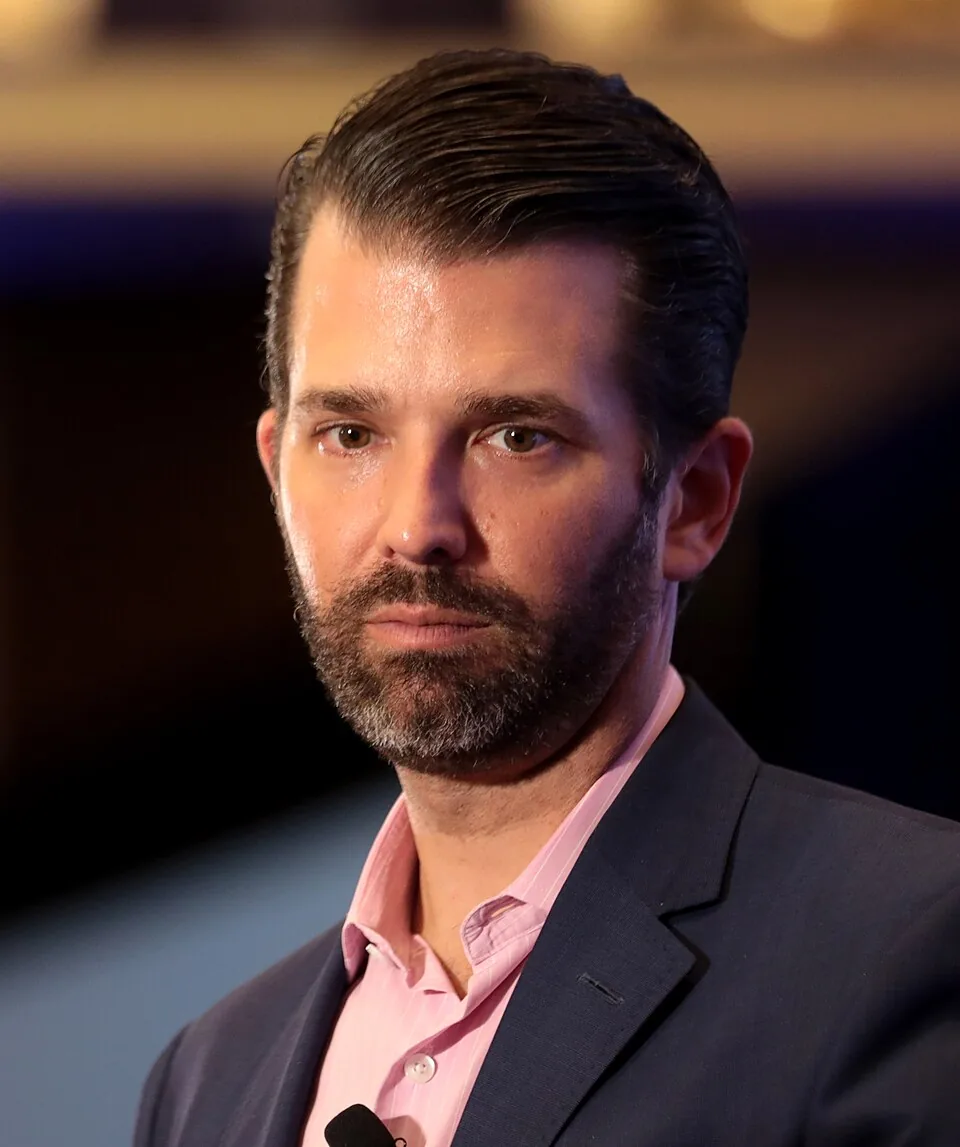
The president's son accepted a $250,000 wedding gift from a billionaire with deep ties to the Kremlin, called it totally fine, and then quietly paid it back after the press found out. This is the story Republicans had to answer for on Sunday morning television, and their answers ranged from "that was wrong" to "have you considered that Biden was bad?"
A Quarter Million Dollars from a Kremlin-Linked Billionaire, Totally Normal
Let's put the facts on the table. According to reporting by ProPublica, a Kremlin-linked billionaire named Umar Kremlev paid for parts of Donald Trump Jr.'s wedding celebrations in the Bahamas. Don Jr. originally described it as a gift. President Trump announced Friday that his son has since repaid the money.
Senator Bill Cassidy, Republican of Louisiana and chairman of the Senate Health Committee, appeared on CBS News's Face the Nation Sunday morning and did not exactly rush to defend the arrangement. "Anytime someone gives a $250,000 gift and they have strong ties to the Kremlin, that's wrong," Cassidy told host Margaret Brennan. He added that with "that proximity to power, being the president's son, you've got to give faith to the American people that Washington is not a swamp."
His Republican colleagues had been less diplomatic. CBS News reports that Senator John Curtis of Utah called it corruption outright, and Senator Thom Tillis of North Carolina described it as "beyond bad." So the range of Republican opinion here runs from "beyond bad" to "corruption" to Cassidy's gentler "wrong but at least he paid it back." Real broad coalition of disapproval.
Cassidy said repaying the funds "does make a difference" and that he'd like to see the repayment verified. He also noted, with what you have to imagine was some effort, that "it shouldn't have been done in the first place." Thank you, Senator. Groundbreaking analysis.
Trump Wants to Split Kids' Vaccines into Five Shots to Fight Autism. A Doctor Senator Has Questions.
If the Russian billionaire wedding gift wasn't enough for one Sunday, Trump also spent Friday claiming he will demand drug companies split children's vaccines into five separate doses, which he said would lead to, quote, "a massive reduction in autism." CBS News aired the clip. The president described children currently receiving "a massive dose of 82 or 88 different vaccines pumped into your arm," which is not a real thing that happens.
Cassidy, who is an actual physician, was asked to respond. He did not say the president was right. He said there needs to be "radical honesty" and asked what Trump is basing this on and who is giving him advice. He said a pediatrician told him that mothers of patients are "so worried" and that the response to that worry should not be "coming up with stuff which may have no" basis. He trailed off there, which is a sentence structure that speaks for itself.
The senator was direct on the underlying facts: "the vaccines are safe. They've been proven to be safe." He warned that if Trump discourages immunization, "there'll be fewer people immunized, and if we're speaking of measles, there'll be more people sick in the hospital or even die." A sitting Republican senator, on CBS News, telling the president of his own party that people will die if he keeps talking like this. Breathe that in for a second.
Brennan pointed out the mathematical absurdity that Trump is proposing more shots, not fewer, while simultaneously claiming to reduce some unspecified scary vaccines. Cassidy's committee has a hearing this week on Trump's FDA commissioner nominee, Dr. Heidi Overton, who stood beside Trump when he falsely called the MMR vaccine lethal. Cassidy called her involvement "almost disqualifying." Almost.
Trump Wants to Hand Out $5,000 Checks Before the Midterms. His Own Party Says It's Inflationary.
Here's another item from the same Sunday morning: Trump has promised to send $5,000 checks to Americans if Republicans win the upcoming midterm elections, with Treasury Secretary Scott Bessent suggesting he can avoid going to Congress for the money. Cassidy was asked whether this is inflationary and whether it's a good idea.
"It's absolutely inflationary," Cassidy said, not pausing to soften it. He went further: "If Joe Biden had proposed that, conservatives would have been all against it." He explained that government borrowing drives up mortgage rates, car payments, and credit card costs, making life harder for the families the administration claims to help. A Republican senator calling out election-year vote-buying from his own president by name. Mark the date.
Cassidy said the better path is addressing the national debt, and he pushed again for Social Security reform, which he's been trying to force through Congress. He warned that waiting six more years until the trust fund goes insolvent would be "too late." It is a genuinely alarming point delivered in the middle of a morning show segment about a president promising $5,000 checks to win elections.
Meanwhile, Ro Khanna Wants an AI Arms Control Treaty and an Independent Federal Agency
On the same program, California Democrat Ro Khanna, the top Democrat on the House Select Committee on the Chinese Communist Party, made the case for treating artificial intelligence the way humanity has treated nuclear weapons: with international agreements, verification mechanisms, and genuine fear of what happens if nobody is in charge.
Khanna told Face the Nation that "winning an AI war is like winning a nuclear war. It is catastrophic for civilization." He's written to Chinese AI companies including DeepSeek and Alibaba asking them to slow AI development until society builds adequate guardrails. CBS News reports none of them have responded. Shocking. He acknowledged that Chinese firms are copying American AI models at what the FBI, NSA, and CISA have described as an industrial scale, and said this is actually a reason to regulate American models in the first place.
On Trump's weekend social media post announcing an "AI Force" modeled on Space Force, Khanna was skeptical, particularly about using AI for offensive military capability. He pointed to what he described as an incident where AI-generated information fed into a general's decision-making on "the shooting of the Iranian school" and received only a pro-forma sign-off from human commanders. That detail, mentioned almost in passing, deserves more than one sentence of attention from anyone covering this beat.
Khanna's ask is an independent federal agency to regulate AI, like the FDA regulates drugs. He pushed back hard on tech executives who claim AI is too complex for government oversight. "Give me a break," he said. "We have regulated very complex things." One of the cleaner arguments made on television this Sunday, for whatever that's worth.
Florida Republican: Trump Blocking Reporters Is Fine Because He Talks to Lots of People
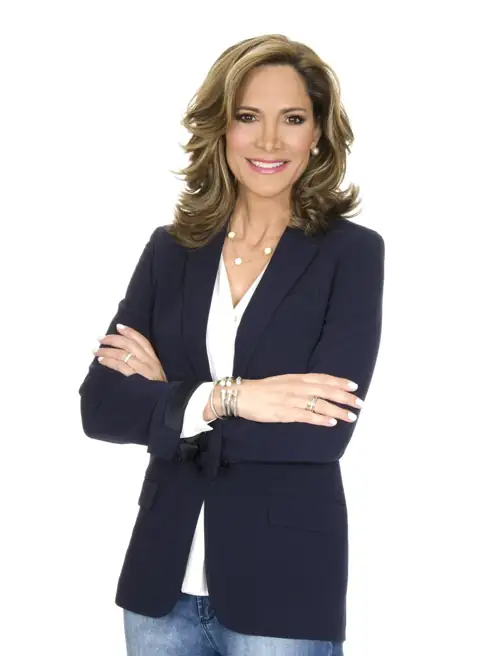
Florida Republican Congresswoman Maria Elvira Salazar joined the program and was asked about Trump blocking journalists from CNN, Politico, and MSNOW from entering the White House after objecting to their organizations' coverage. Salazar said Trump "has a different type of style" and is "the most accessible president in the later years."
Brenan pressed her directly: doesn't banning reporters from briefings based on coverage violate the spirit of the First Amendment? Salazar said Trump "will determine who he wants to talk to" and suggested that with social media and other outlets available, those journalists will manage fine. This is the argument that the First Amendment is satisfied as long as the president hasn't personally gagged every reporter in the country simultaneously.
Salazar was more interesting on immigration. She has publicly accused Trump's enforcement efforts of going "too far," and cited her own data that half of the 50,000 people detained in July had no criminal record. She said she spoke with Trump directly, told him that the Hispanic voters who delivered him a 55-point margin in 2024 feel betrayed, and urged him to pursue actual immigration reform. She was honest that she doesn't know if he listened. Given that deportations haven't slowed, the evidence suggests he did not.
The Dingo Take
A Republican senator called the president's son's relationship with a Kremlin-linked billionaire "wrong." Another Republican senator called it corruption. A third called it "beyond bad." The president said his son paid it back. That is the status of the party that has spent a decade accusing Democrats of being soft on Russia.
What's strangest about this particular Sunday is how much Republican dissent was on open display, and how little any of it is likely to matter. Cassidy can call the vaccine claims dangerous. Salazar can say deportations have gone too far. Curtis can say corruption. And come Monday morning, the administration will keep doing exactly what it was doing on Friday, because there are no consequences. There is no vote. There is no mechanism. There are only senators and congresspeople going on television to express concern, and then going back to work under the same president they just criticized.
Ro Khanna talked about AI governance for several minutes and made the most coherent policy argument of the entire broadcast, and it will receive about one-tenth the coverage of the Kremlin wedding gift, which will itself be forgotten by Thursday. This is the information environment we have built. Don Jr. took a quarter million dollars from a guy with Kremlin ties for his wedding, called it a gift, paid it back when reporters noticed, and his father's party is describing this as a resolved matter. Sleep well.


Comments