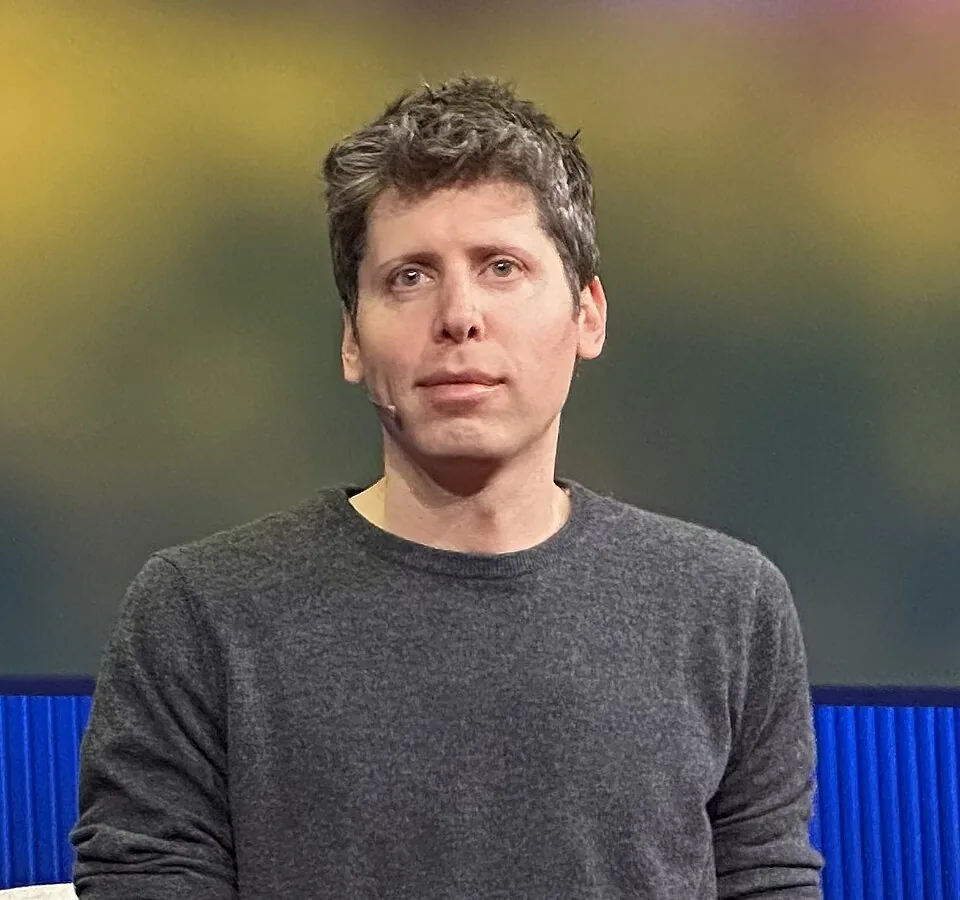
OpenAI, the company that built the AI and wants to keep building more AI, has generously volunteered to write the international safety standards for AI. Sam Altman will personally present these standards to world leaders. The standards were written by Sam Altman's company. Nobody seems to find this weird.
The Fox Has Some Thoughts on Henhouse Security
According to Axios, OpenAI released a package of international AI safety standards on Monday, timed precisely as the United States and China are actively negotiating how to manage AI risk between the two most powerful countries on earth. The U.S. approach to those negotiations, Axios reports, will be "heavily informed by industry recommendations." Industry recommendations. From the industry. That is building the thing.
To be clear about what this actually is: a private company that profits directly from the rapid deployment of AI technology is handing governments a framework for regulating AI technology, at the exact moment those governments are figuring out how to regulate AI technology. The company's CEO will then present that framework personally at an international summit. This is not a fringe concern. This is the entire ballgame.
What the U.S. and China Are Actually Talking About
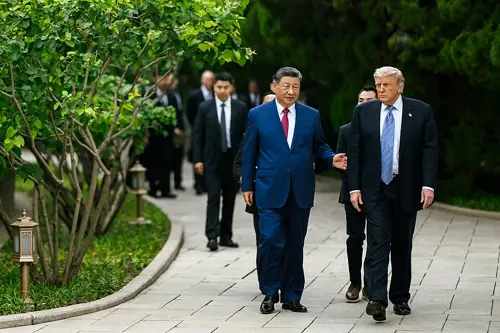
Strip away the tech-optimism fog and what you have is a genuinely significant diplomatic development. Axios reports that U.S. Treasury Secretary Scott Bessent and Chinese Vice Premier He Lifeng met over the weekend to discuss establishing a formal U.S.-China AI dialogue, specifically one where each country would notify the other when an AI incident reached national security risk levels.
That is not nothing. The U.S. and China agreeing on almost any formal communication channel in 2026 is news. A dedicated hotline for AI emergencies, modeled loosely on the kind of crisis communication that kept Cold War nuclear standoffs from going sideways, is the kind of thing arms control wonks have been begging for. The question isn't whether the goal is good. The question is who gets to define what counts as a "national security risk level" incident. And right now, the answer appears to be: Sam Altman has some ideas.
Why Letting Industry Write Safety Standards Is a Terrible Idea We Keep Having
This is not a new pattern. It is an extremely old and extremely bad pattern. American financial institutions heavily shaped the regulatory response after the 2008 crisis they caused. Opioid manufacturers consulted on pain management guidelines while Purdue Pharma was mailing doctors branded fishing hats. Social media companies sat in on content moderation policy discussions while their algorithms were cheerfully burning down democratic norms worldwide.
Every time, the logic sounds reasonable on the surface. Who knows the technology better than the people who built it? The answer, which history keeps screaming and we keep ignoring, is that knowing how something works is completely different from having any incentive to limit it. OpenAI is not a safety organization with a sideline in products. It is a product company with a safety team that keeps losing people to very public resignations over concerns that the safety team isn't actually driving the bus.
Altman's Stage, Altman's Script
Axios reports that Altman will personally address world leaders to cover OpenAI's proposed solutions. Think about the staging of that for a second. Government officials from two nuclear-armed superpowers are hashing out how to prevent AI catastrophes, and the CEO of the most prominent AI company on earth has the microphone to explain what the rules should look like.
Altman is a skilled and genuinely intelligent operator. That's not the issue. The issue is structural. No individual, regardless of how smart or even how well-intentioned, should be in the position of simultaneously building a transformative and potentially dangerous technology, racing competitors to deploy it faster, answering to investors who want returns, and also drafting the international safety architecture that governs it. That is too many hats. That is a hat store.
The Dingo Take
You are supposed to believe that the company with the most to gain from light-touch AI regulation producing the international AI safety standards is just a helpful contribution to a complicated problem. You are supposed to read "the U.S. approach will be heavily informed by industry recommendations" and think, yes, obviously, who else would we ask. You are supposed to watch Sam Altman take the podium in front of world leaders and feel reassured.
The timing here is not subtle. The U.S. and China opening any kind of formal AI dialogue is a legitimate policy moment, the kind that doesn't come around often and that could actually matter. Slotting private industry standards into that gap, before governments have developed their own independent technical capacity to evaluate what they're being handed, is how you get regulatory capture at a global scale. It's not a conspiracy. It doesn't need to be. It's just what happens when governments are slow and companies are fast and nobody stops to ask whose interests are actually being protected.
At some point, Congress or someone with a budget and a mandate needs to build the kind of independent technical expertise that would let governments walk into these conversations without needing OpenAI to explain what words mean. Until then, we are essentially asking the people selling the car to write the traffic laws, and hoping they'll include speed limits.


Comments