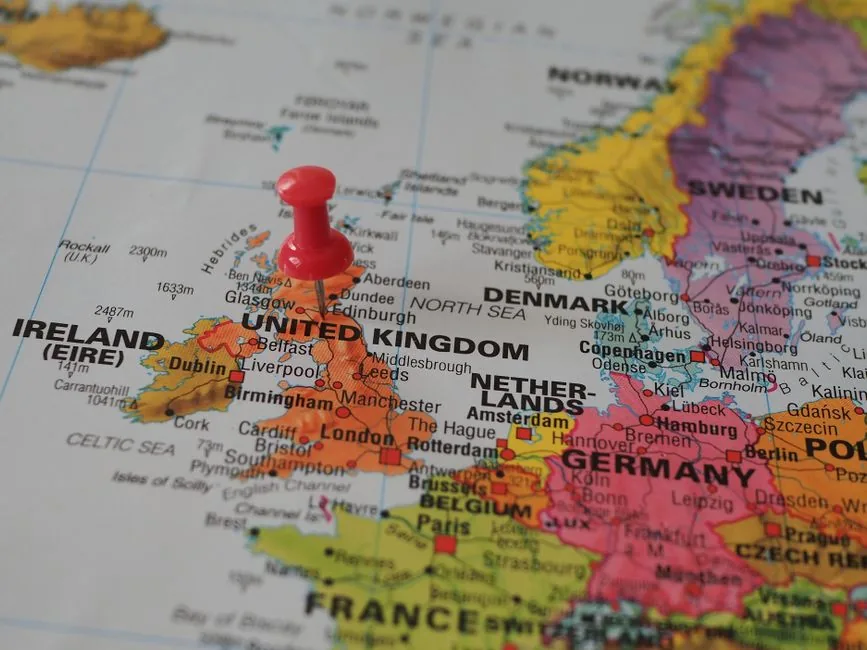
There are roughly 298,000 voting-age American citizens living in the United Kingdom right now. In the last midterm elections, fewer than four percent of them cast a ballot. That is not apathy. That is a catastrophic failure of civic participation at exactly the moment American democracy can least afford it.
The Numbers Are Genuinely Embarrassing
The US government's own Federal Voting Assistance Program estimated 298,268 voting-age US citizens in the UK in 2022. That makes Britain the second largest population of American voters outside the United States, behind only Canada. Second largest. And the turnout rate was 3.8 percent.
To put that in human terms: if you were in a room with 100 eligible American voters in the UK during the last midterms, fewer than four of them voted. The other 96 just watched. Some of them were probably complaining about American politics on social media at the exact moment they could have done something about it.
Kathryn Sikkink, the Ryan Family professor of human rights policy at the Harvard Kennedy School, lays this out in a piece for The Guardian this week, and the core argument is hard to argue with. These people are subject to US tax law. They can be required to file federal tax returns on their worldwide income. They live under the fiscal authority of a government in which they have voluntarily chosen not to participate.
Taxation Without Representation, But By Choice
Here is the part that should sting. As Sikkink points out in The Guardian, US citizenship itself creates the tax relationship with the American government. Not voting. A US citizen who has lived in London for twenty years and never once cast a ballot is still subject to US federal tax obligations. Voting changes nothing about that.
So the old colonial grievance that launched an actual revolution, taxation without representation, applies right now to hundreds of thousands of Americans living in Britain. Except this time, they are doing it to themselves. The representation is there. The ballot is available. The law requires states to allow overseas citizens to register and vote absentee. And still, 96 percent of them pass.
The myth apparently doing some of the damage is that voting from abroad triggers tax liability. Sikkink addresses this directly: voting for federal offices, meaning the House, the Senate, the presidency, has zero effect on your tax profile. None. It is not a factor. The tax obligation exists whether you vote or not, so the only thing you lose by not voting is the representation half of the equation.
Trump Tried to Make It Harder. The Supreme Court Said No.
In case anyone needed a reminder of why this matters, the Trump administration spent real political energy trying to restrict mail-in voting, including for Americans living overseas. This is not a hypothetical threat. The mechanism most overseas Americans rely on to vote is the absentee ballot, and the administration went after it.
According to The Guardian, the US Supreme Court rejected those efforts last week, blocking the administration's push to limit mail-in voting before the 2026 midterms. So the window is open. But the fact that it had to go to the Supreme Court to stay open should tell you something about how much this administration values the participation of Americans who live outside its direct line of sight.
Trump's Save America Act, which included proof-of-citizenship and voter-ID requirements that would have created additional barriers for overseas voters, failed in the Senate before it recessed in August. A narrower voter-ID push also collapsed. The attempts keep coming. The Supreme Court just swatted one back. But midterms are close, and complacency has consequences.
How To Actually Do It
The good news, if you can call a 3.8% turnout problem having good news, is that the legal framework for overseas voting is solid. The Uniformed and Overseas Citizens Absentee Voting Act requires states to let eligible citizens register and vote absentee and to transmit ballots on time. The Federal Post Card Application handles both voter registration and ballot request in one form.
The US Vote Foundation and Overseas Vote websites offer nonpartisan, plain-language guidance on how to navigate the process from abroad. The US Vote Foundation even has an interactive tool called the Journey Map for How to Vote in America, which walks overseas voters through the steps. This is not complicated. It is not a bureaucratic nightmare. It just requires doing it.
Sikkink notes in The Guardian that personal contact is one of the strongest drivers of voter turnout in the research literature. Which means the practical ask is simple: if you know Americans living in the UK, tell them. Text them. Tell them at dinner. The federal ballot is the priority because that is where the policy that affects their lives actually gets made, and voting only at the federal level carries no state tax risk whatsoever.
Why the UK Specifically Is a Missed Opportunity
The UK is not just any country in this conversation. Close cultural ties, shared language, wall-to-wall coverage of American politics in the British press. Americans living in London or Edinburgh or Manchester are not exactly isolated from the news cycle. They are watching American democracy malfunction in real time with full information and high-speed internet.
The Guardian piece makes another comparison worth sitting with. The UK just abolished its own 15-year limit on overseas voting in January 2024, expanding the franchise to roughly 2.3 million additional British and eligible Irish citizens living abroad. Britain looked at the principle of letting citizens vote no matter how long they have lived outside the country and decided it was worth protecting. The US has had that principle embedded in federal law for decades. And still, 3.8%.
The 2026 midterms will determine control of the House and Senate. Control of Congress determines what the Trump administration can and cannot do for the next two years. Nearly 300,000 Americans in the UK have a legal right to weigh in on that question. Most of them will not. That is a choice, and at this particular moment in American political history, it is a genuinely consequential one.
The Dingo Take
You are supposed to believe that Americans abroad are too busy, too confused, or too disconnected to vote. That is not what the numbers suggest. The process is federally protected. The websites explaining it are free and simple. The ballots can be requested online. What is actually happening is that a quarter-million people subject to the full weight of American tax law have quietly decided that their vote does not matter, or have told themselves they will get around to it, and then did not.
This is not a partisan point. Low overseas turnout predates Trump and will outlast him if nothing changes. But the specific context of 2026 is worth being honest about. The administration that is currently in power tried to restrict the exact voting mechanism these people would use. It failed in court, this time. The legislative attempts to add barriers have failed, this time. 'This time' is doing a lot of work in that sentence, and everyone who cares about what American governance looks like in two years should probably notice.
Sikkink ends her Guardian piece with the observation that informal networks, friends reminding friends, can move turnout numbers meaningfully. That is probably the most actionable thing in the piece. If you know Americans living in Britain, this is your reminder to be that contact. The Supreme Court kept the door open. Someone still has to walk through it.


Comments