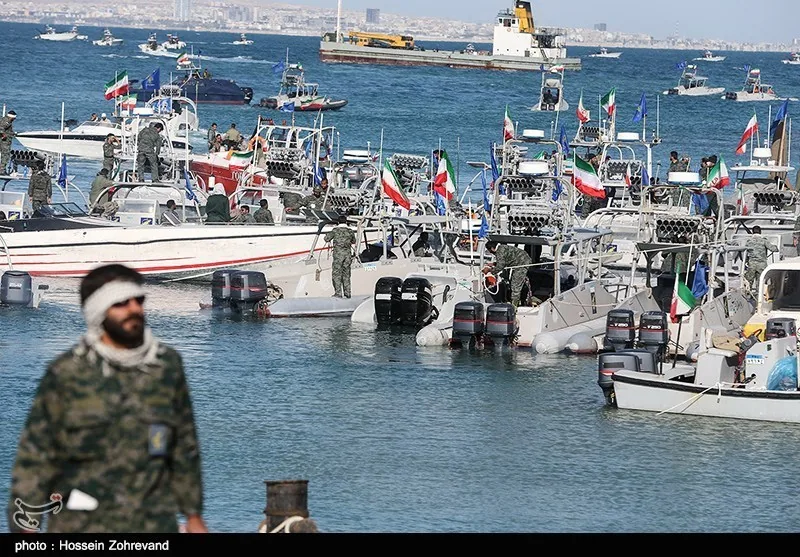
Seven months into a war that has choked off nearly a fifth of the world's seaborne oil supply, Iran just blinked — sort of. According to Reuters, Tehran conveyed an offer last week to reopen the Strait of Hormuz within seven days in exchange for the U.S. ending its blockade and military pressure campaign. The catch, as always with this conflict, is that everything could still fall apart before anyone shakes hands in New York.
What Iran Is Actually Offering
The proposal is straightforward on its face. Reuters reports that Iran told U.S. officials it would reopen the Strait of Hormuz — the narrow chokepoint through which roughly one-fifth of global seaborne oil normally flows — within a week, provided Washington agrees to lift its blockade and stand down the military pressure campaign it has been running for months.
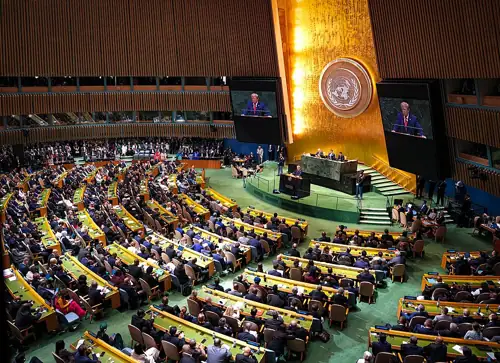
The timing is not accidental. World leaders are converging on New York for the United Nations General Assembly, and Gulf states that have been quietly mediating between Washington and Tehran see this as a rare window, according to Axios. A senior Iranian official told Reuters directly: 'The UN General Assembly is a golden opportunity for the US to return to diplomacy.'
Whether the offer is serious or a negotiating gambit to buy time is the question nobody can answer cleanly right now. The last framework deal — a Memorandum of Understanding — collapsed in July. Iran's response to that collapse was to fully resume its campaign of harassment and disruption in the strait. So the credibility ledger here is not exactly spotless on either side.
Rubio Is Doing the Diplomatic Two-Step
Secretary of State Marco Rubio, a man who spent years calling for maximum pressure on Iran before maximum pressure became his literal job, is now making sounds that would have seemed unthinkable from him circa 2019. Asked Tuesday about a potential Trump-Pezeshkian meeting on the sidelines of UNGA, Rubio told Fox and Friends: 'Common sense tells you there's no harm in engaging and talking to someone. Maybe nothing good will come of it, but nothing bad would come of it.'
He told NBC the same day that Trump is 'open' to meeting with Iranian counterparts in New York because, in Rubio's framing, engaging with people gives you insight into who they are. This is the kind of logic that, when Democrats said it about Iran, got them called naive appeasers on Fox News. But here we are.
Rubio was also careful to flex in the same breath, stressing that the U.S. has 'cleared' the strait of mines and that no Iranian oil is getting through the blockade. The message, roughly translated: we're open to talking, but we're winning, and don't forget it.
The War at Seven Months: A Bleak Scorecard
The conflict is approaching the seven-month mark with no breakthrough in sight, as Axios notes. The U.S. claims it is still moving oil through the strait by hugging Oman's coastline, with Central Command asserting it has pushed through one billion barrels over the past several months. That sounds like a lot until you read the part where those routes run close to Iranian shores, where mines and drone attacks on tankers remain a live threat.
Iran's proxies have expanded the chaos beyond the strait itself. Earlier this month, a drone strike forced Saudi Arabia to briefly shut down its East-West Pipeline, sending oil prices higher. Rubio confirmed it was Kata'ib Hezbollah out of Iraq, an Iranian proxy group, that hit the pipeline alongside the Houthis. The U.S. has a defense agreement with Saudi Arabia, Rubio said, and intends to honor it. Which means this conflict is already pulling in more players than just the two principals.
Iran's central military command issued a warning over the weekend that it would retaliate 'without limitations and considerations' if the U.S. resumed direct military operations. Meanwhile, Axios reports that Trump has been considering retaliatory strikes on the Houthis but held off specifically because of the UNGA timing. Even this administration apparently understands that bombing people during a diplomatic opening looks bad.
The Civilian-Military Split That Keeps Blowing Things Up
One of the persistent structural problems with these negotiations, according to senior Trump administration officials cited by the New York Post, is that Iran's civilian and military leadership keep appearing to be on different pages about what they actually want. Iranian President Masoud Pezeshkian is widely seen as a relative moderate within the Islamic Republic's power structure. But being a moderate in a system where the Revolutionary Guard has its own foreign policy is less reassuring than it sounds.
Pezeshkian is in New York for UNGA. So is Trump. A senior Iranian official told Reuters the U.S. needs to officially announce it wants a diplomatic resolution and agree on a timeline before anything can move forward. That's a reasonable ask that also conveniently buys Iran time if the U.S. says yes and then argues about what 'official' means for three weeks.
No meeting between Trump and Pezeshkian has been confirmed. Arab countries are actively working the phones on both sides, according to Axios's regional source. Whether that quiet shuttle diplomacy produces anything before everyone flies home is genuinely unclear.
Oil Markets and the World Holding Its Breath
The Strait of Hormuz does not just matter because it sounds important. Nearly one-fifth of the world's seaborne oil supply flows through it in a normal year. Seven months of disruption, blockades, mine-clearing operations, proxy drone strikes, and pipeline shutdowns have made the global oil market into something resembling a stress ball that someone keeps squeezing at random intervals.
The pipeline attack earlier this month was a reminder that the disruption does not have to happen in the strait itself to move prices. Iran's proxies have effectively turned the entire Gulf region into a pressure point. The longer this drags on, the more fragile the workarounds become, and the more expensive the whole enterprise gets for everyone — including the U.S. economy.
The Dingo Take
You are supposed to believe that a war entering its seventh month, a blown-up peace deal, a blockaded strait, drone strikes on Saudi pipelines, and mine-laced shipping lanes are all somehow moving toward a tidy diplomatic resolution because both sides showed up to the same building in Manhattan. Maybe. Stranger things have happened. But the last Memorandum of Understanding collapsed in July, Iran immediately resumed maximum chaos operations, and now Tehran is dangling a seven-day Hormuz fix as a negotiating chip while its military command publicly threatens retaliation 'without limitations.' That is not the behavior of a side that has decided to get serious about peace. That is the behavior of a side that is tired and wants leverage.
Rubio talking about the value of 'engaging' with Iran is genuinely something to watch, because Rubio spent years as one of the Senate's loudest voices against exactly this kind of outreach. The fact that he is now the one making the case for it on Fox and Friends tells you something about how the ground has shifted — or about how seven months of war with no victory in sight has a way of clarifying priorities. The Trump administration is not going to admit the military campaign has hit a ceiling. But they are clearly looking for an exit ramp that they can call winning.
The UNGA window is real. Gulf states with enormous economic stakes in a functioning Strait of Hormuz are pushing hard for a meeting. Iran has put something on the table. If Trump and Pezeshkian end up in the same room this week, it will be the most significant diplomatic moment of a conflict that has been burning since February with very little to show for it. If it falls apart again, expect oil prices to have a bad week and everyone's spokesperson to blame the other side. Same as it ever was.

Comments