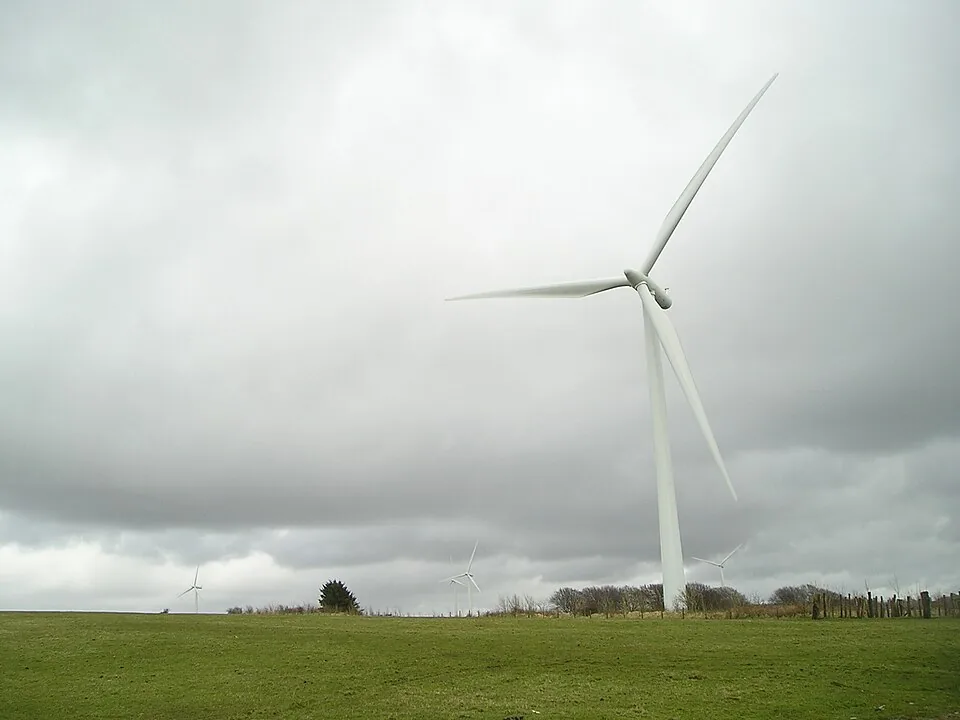
The Trump administration has found a creative new way to torch the clean energy transition: pay companies nearly $4 billion in taxpayer money to abandon their own wind projects. Not block them. Not regulate them. Pay them to quit. California and New York attorneys general filed suit this week to stop it.
The Scheme, Explained Plainly
Here's what's actually happening. The Interior Department, after federal courts blocked Trump's attempts to kill offshore wind through executive action, pivoted to a new strategy: just buy the projects out. According to The Guardian, the administration has pledged nearly $4 billion to energy companies across the country in exchange for walking away from wind development.
The first two deals involve Chicago-based Invenergy, whose leases for four offshore wind projects on both coasts the administration agreed to buy back in June, and Bluepoint Wind, which agreed in April to cancel a wind farm off the New York and New Jersey coast. Those two deals alone will cost taxpayers $1.4 billion. The companies, in exchange, are redirecting investment into fossil fuel projects and geothermal energy.
Interior Secretary Doug Burgum framed this as a win, claiming companies are "shifting investment back toward dependable, secure energy infrastructure." The man said that with a straight face about a scheme that pays people to stop building power plants.
Nine States Walk Into Court
California Attorney General Rob Bonta filed suit over the Invenergy buyback affecting a planned project off the California coast. New York AG Letitia James went bigger, leading a coalition of nine states including Connecticut, Delaware, Maine, Massachusetts, New Jersey, Rhode Island, and Vermont in suits targeting both the Invenergy and Bluepoint deals.
James didn't mince words. "These illegal backroom deals take money that should have gone toward lowering New Yorkers' bills and hand it to fossil fuel projects in other states," she said in a statement reported by The Guardian. She argued the deals are illegal and will ultimately drive up electricity costs by blocking states from building the generation capacity they actually need.
Bonta, speaking at a Climate Week event in New York, pointed out what this constant legal combat is costing beyond money. "Because we have to go to court and block an unlawful action by the Trump administration each time, it takes time. It slows the process down and we know we are running out of time," he said. He was making those remarks right before Trump addressed the UN General Assembly, which is the kind of scheduling detail that would be funny if any of this were funny.
Trump's Wind Obsession Has a Body Count Now
Trump has never hidden his feelings about wind power. He has talked about hating it in rallies for years, called turbines "windmills" with the contempt most people reserve for ex-partners, and stated outright that his goal is to not let any be built. What's new is that he now has the machinery of the federal government executing that personal vendetta at a cost of billions of dollars.
The Interior Department began the buyback program in March, specifically after courts shut down the executive action route. The Guardian reports that the deals require companies to invest their reimbursements in fossil fuel projects. So the federal government is not just paying to kill wind energy. It is actively redirecting that capital into the industry it wants to win. This is industrial policy. Expensive, taxpayer-funded, backwards industrial policy.
California Energy Commission Chair David Hochschild offered the most clear-eyed take at a Climate Week panel, arguing that while Trump can slow the transition and make it more expensive, "he can't put the genie back in the bottle." That may be true. It is also cold comfort to anyone who was supposed to be connected to a wind farm that is now getting paid not to exist.
The Grid Problem Nobody Wants to Talk About
Set aside the climate argument entirely for a moment. Electricity demand in the United States is rising. Data centers, EV charging, industrial electrification, AI infrastructure: the grid is under pressure it hasn't seen in decades, and the projections only go one direction. States like New York and California have been banking on offshore wind to meet that demand.
New York State Energy Research and Development Authority president Doreen Harris put the practical problem as plainly as anyone. Even if the states win in court, she told The Guardian, "the question becomes who is going to invest." Developers who just watched the federal government pay their competitors to quit are not going to feel great about committing capital to the next project. "We just want to get back to building," Harris said.
That's it. That's the whole thing. States trying to keep the lights on, asking to please be allowed to build power plants. And the federal government spending $4 billion to make sure they can't.
The Dingo Take
You are supposed to believe that paying energy companies $4 billion to cancel power plants is a policy designed to lower your electricity bill. Letitia James says it will do the opposite, and basic math agrees with her. You cannot increase demand, reduce supply, and somehow end up with cheaper electricity. This is not a complicated economic proposition.
What makes this particular scheme different from Trump's previous anti-wind moves is that it survived the courts once already. Executive orders got shot down, so the administration found a workaround: make it financially attractive to quit. That's not governance. That's a protection racket in reverse, where the government pays the industry to not build things instead of paying them to build things. The result is the same: fossil fuels win, consumers pay, and the planet keeps warming while Washington congratulates itself on energy dominance.
Nine state attorneys general are now in court trying to claw this back, and the odds are reasonable that they win eventually. But Bonta said it himself: every court battle takes time, and time is exactly what the climate math says we don't have. The administration knows this. Delay is the strategy. Four billion dollars to buy a few more years of fossil fuel dominance, billed to the taxpayer. If that doesn't make you furious, check your pulse.


Comments