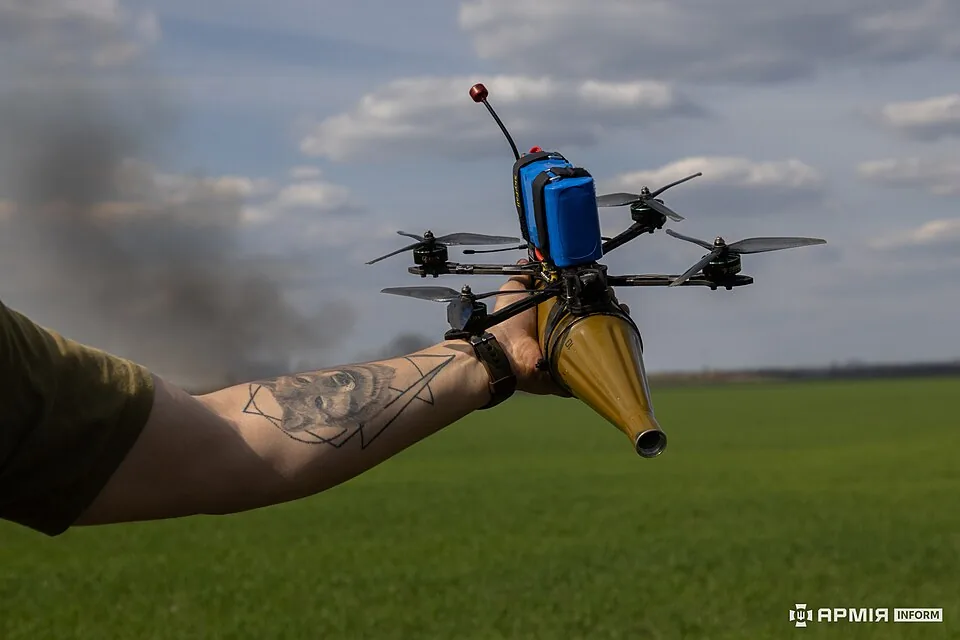
Ukraine is preparing to sign a landmark drone defense deal with the United States on the sidelines of the UN General Assembly in New York, according to CBS News, which spoke to three sources familiar with the matter. The deal would create a framework for Ukrainian defense firms to work directly with the U.S. military. This is, somehow, the underdog story where the underdog has been building the future of warfare while the superpower was buying 50,000 drones a year and calling it a day.
The Numbers Are Embarrassing, So Let's Start There
Zelenskyy has said Ukraine aims to manufacture 10 million drones in 2026 alone. The U.S. Army, the most expensive military institution in human history, acquired roughly 50,000 drones in all of 2025. That figure comes from former Army Secretary Dan Driscoll, who apparently said it out loud without disappearing into a hole in the earth.
To put that another way: Ukraine, a country that has been fighting a land war for years on a shredded budget, is on pace to out-produce the United States military in drones by a ratio of approximately 200 to one. The U.S. defense budget for 2025 was around $850 billion. Ukraine's GDP is roughly $180 billion total. Let that math sit with you for a moment.
This is not an argument that the U.S. should feel bad about itself. It is an argument that the U.S. has been catastrophically slow to understand what modern warfare actually looks like, and that a country being actively bombed figured it out faster than the Pentagon did.
How Iran Proved Ukraine's Point the Hard Way
When Iran began retaliating against joint U.S.-Israeli strikes in March, it did so with Shahed one-way attack drones, the same cheap, mass-produced weapons Russia has been raining on Ukrainian cities for years. The U.S. and Gulf states, CBS News reports, initially lacked cost-effective ways to intercept them. So who did Washington call? Kyiv. Ukraine sent drone interceptors and pilots to help defend American military installations in the Middle East.
Let that sentence breathe. The country the U.S. has been debating whether to keep funding sent its people to protect American troops because the Americans hadn't figured out how to handle a drone threat Ukraine has been living with for years.
Then-Army Secretary Driscoll called Eric Schmidt, the former Google CEO who now runs drone company Perennial Autonomy, and asked him to rush 13,000 interceptor drones and 10,000 reconnaissance drones to the region. Schmidt delivered. But when the hardware arrived, it sat there. According to multiple sources familiar with the shipments, it took weeks to get the drones operational because Ukrainian components arrived late and Ukrainian expertise was needed to integrate them into U.S. air defense radar systems. The guns showed up. The people who knew how to fire them did not.
It's Not a Rifle. Stop Treating It Like One.
Deborah Fairlamb, founding partner of Green Flag Ventures, an American venture capital firm that invests in Ukrainian defense technology, told CBS News that the West keeps making the same mistake: buying the hardware and expecting it to just work. "It's not just like it's a rifle that you just point and shoot," she said.
What Ukraine has built, over years of trial and error under actual combat conditions, is not just a drone. It is a system. Software, operators, coordination chains, real-time adaptation, battlefield integration. The drone is the visible part. The operational knowledge is what actually makes it lethal. And that knowledge lives in the people, not the product.
The deal being negotiated, according to CBS News sources, is specifically designed to address this. Rather than simply awarding contracts to a few Ukrainian manufacturers, it would create a broader framework for Ukrainian defense firms to work directly alongside American companies and the U.S. military. Transfer the tech and the people who understand it. That is the idea. It is a good idea. It is also an idea the U.S. probably should have had earlier.
Meanwhile, the Pentagon Dissolved the Unit Studying This Exact Problem
In August, the U.S. Army quietly phased out a drone battalion specifically tasked with studying lessons from Ukraine's drone warfare. Two of its prominent backers, former Army Chief of Staff Gen. Randy George and former commander of U.S. Army Europe and Africa Gen. Christopher Donahue, were ousted or forced into early retirement earlier this year, CBS News reports.
So to recap the timeline: Iran attacks with drones. Ukraine saves the day. The Pentagon's own unit studying how Ukraine does this gets dissolved. The generals who supported that unit get pushed out. And now the U.S. is scrambling to sign a deal with Ukraine to absorb the expertise it just spent months actively dismantling the infrastructure to learn from.
There are some green shoots. The U.S. Drone Dominance Program, which aims to purchase more than 200,000 drones by 2027, has been inviting Ukrainian companies to compete for military contracts. Skyfall, one of Ukraine's largest drone manufacturers, won the program's first competition. Perennial Autonomy and Neros won the second. Progress is happening. It is just happening on a timeline that would have been a lot more comfortable if it had started three years ago.
The Deal on the Table
According to CBS News, Zelenskyy is ready to sign the agreement this week in New York, potentially on the sidelines of the UN General Assembly. The U.S. side may not be ready to finalize it yet, in which case it gets pushed to a later date. Classic.
Ukraine has already signed defense agreements with Saudi Arabia, Qatar and the United Arab Emirates, pairing foreign financing with its drone manufacturing industry. These are not charity arrangements. They are business deals, because Ukraine has built something that countries with money want to buy. The U.S. is, apparently, the last major partner to formalize this kind of relationship.
CBS News has reached out to the White House and the Pentagon for comment. Neither had responded at time of publication, which is its own kind of answer.
The Dingo Take
You are supposed to believe the United States is the world's unrivaled military superpower. And it is, in a lot of ways, still true. But the Iran-drone crisis exposed a specific, humiliating gap: the most advanced military on earth got caught flat-footed by a cheap, mass-produced weapon that a country a fraction of its size had already spent years learning to defeat. Ukraine didn't just have better drones. It had better doctrine, better operators, and better institutional knowledge. And the U.S. Army, instead of aggressively absorbing every lesson available, disbanded the unit assigned to do exactly that.
The deal being negotiated is the right move. It should have happened faster, with more urgency, and without the detour of dissolving the units and firing the generals who saw this coming. The fact that Zelenskyy is sitting in New York ready to sign while the U.S. side is still getting its paperwork together is a small but perfect symbol of the larger dysfunction.
Ukraine is building 10 million drones this year. It defeated the Iranian drone threat that stumped American air defense. It now has defense deals with Gulf states who paid for the privilege of accessing Ukrainian expertise. At some point, the question stops being whether Ukraine needs the United States and starts being the other way around.





Comments