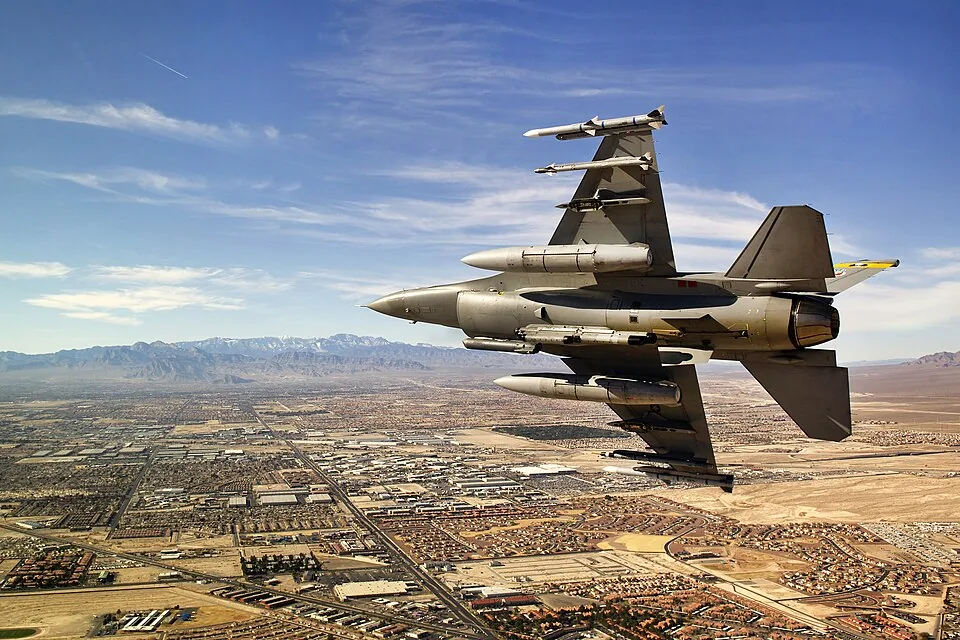
A US Air Force F-16 Fighting Falcon crashed on approach to Spangdahlem Air Base in western Germany on Tuesday afternoon, the second F-16 to go down in less than a week. The pilot ejected and is receiving medical treatment. If you're keeping score at home, that's two multimillion-dollar warplanes lost to crashes in six days, with another one still sitting in a Michigan field.
What Actually Happened at Spangdahlem
According to the US Air Base Spangdahlem's own statement, the crash occurred around 2:30 p.m. local time Tuesday. The F-16 was one of four jets that had been participating in a training exercise, and it went down while returning to base.
Germany's air traffic control authority filled in the picture a bit more, telling reporters that two of the four F-16s were still in the training area when the crash occurred, while the other two were heading back to Spangdahlem. One of those two jets is believed to have crashed on approach. The remaining aircraft were diverted and landed safely at Ramstein Air Base, the other major US military airfield in Germany.
Local German emergency services responded to the scene. The cause of the crash is under investigation, which is the standard answer when the military doesn't yet want to tell you the answer.
The Base and What It Means for NATO
Spangdahlem isn't some backwater installation. CBS News reports the base is home to the US Air Force's 52nd Fighter Wing, a unit that provides airpower and direct support for NATO operations across Europe and beyond. The base employs around 5,000 military and civilian personnel, plus their families, and another 700 to 800 German nationals work there too.
The F-16 squadron at Spangdahlem numbers about 20 aircraft, according to the German news agency dpa, making it the centerpiece of the entire base. The US Air Force has been at Spangdahlem since the mid-1950s, and alongside Ramstein, it's considered one of the most strategically critical American airfields in the region. These jets aren't just here for aesthetics. They are the forward edge of American air commitments to the alliance.
So when one of them crumples on a routine training approach, people notice.
Deja Vu: The Michigan Crash Six Days Ago
Here's where it starts to feel less like bad luck and more like a pattern worth watching. CBS News reports that less than a week before Tuesday's crash in Germany, another F-16 went down in Grand Traverse County, Michigan. That pilot, a member of the 149th Fighter Wing of the Texas National Guard, also ejected and is in stable condition.
The Texas Military Department said the Michigan pilot was on a routine training mission when the incident happened. No injuries on the ground were reported in that crash either. That investigation is also ongoing.
Two F-16s. Two training missions. Two ejections. Six days apart. At some point the word "routine" starts to do a lot of heavy lifting.
The Pilot and the Investigation
The good news, such as it is, is that both pilots survived. The Spangdahlem pilot ejected safely and is receiving medical care, according to the US military's statement. The nature and extent of injuries have not been specified publicly, which is fairly typical in the immediate aftermath of these incidents.
Emergency response personnel were at the crash scene in Germany as of Tuesday. Beyond confirming the crash, the ejection, and the fact that an investigation is underway, the US military has not said much else. That is also fairly typical. These investigations can take months, and initial statements from the Air Force tend to be careful to the point of saying almost nothing useful.
The Dingo Take
Two F-16s in six days. The Air Force would like you to understand that this is simply the cost of maintaining operational readiness, that training is inherently risky, and that the relevant parties are investigating. All of that is true. It is also true that the F-16 is a 1970s-era airframe that the US military has been flying, patching, upgrading, and crossing its fingers about for decades now. The newest F-16s are modern aircraft in important ways. The oldest ones in the fleet are older than most of the pilots flying them.
None of that means these two crashes are connected, or that there's a systemic failure hiding behind the paperwork. It might be two separate and unrelated mechanical or human errors. But the public deserves actual answers, not just the standard-issue 'under investigation' holding statement delivered and then quietly forgotten. The Michigan crash barely made a news cycle. If the Germany crash follows the same trajectory, that's a failure of accountability, not just a slow news week.
Forty-plus years of NATO commitments run through bases like Spangdahlem. The 52nd Fighter Wing is not decorative. When jets start falling out of the sky on training runs, even when pilots survive, someone needs to stand up and explain what happened and why. 'We're looking into it' is a start. It is not a finish.





Comments