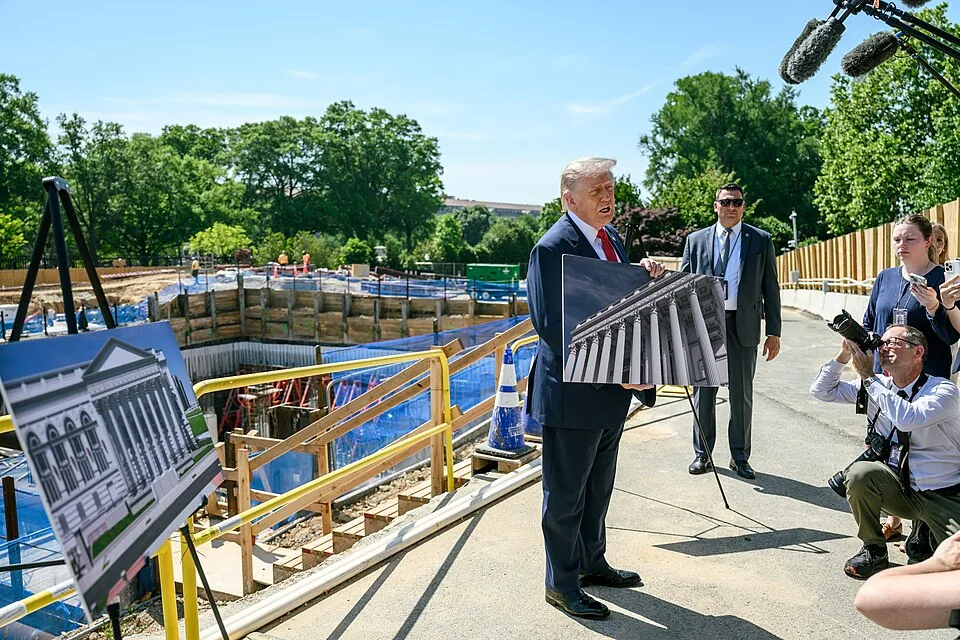
The United States Department of Justice would like you to know that reporting on White House construction projects is a national security threat. That's not a joke. That's a court filing. The DOJ is now in federal court defending Donald Trump's decision to ban CNN, Politico, and MS NOW from the White House, and the argument they've chosen to lead with is genuinely something.
The Charges Are Incredible, and Not in a Good Way
According to BBC News, the Justice Department filed documents this week accusing the three banned outlets of "trafficking in verifiable falsehoods" and producing reporting that "threatened national security." The specific reporting incidents cited in the filing include stories about construction of a security bunker, the building of a new White House ballroom, and coverage of an internal information leak investigation.
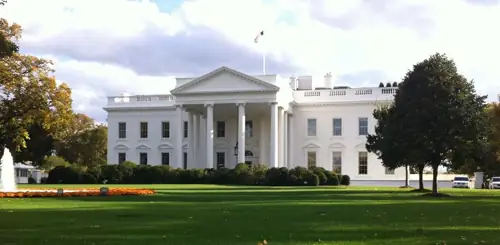
Let that sink in for a moment. A ballroom. The federal government is in a United States District Court arguing that journalism about interior decorating and construction work at 1600 Pennsylvania Avenue constitutes a threat to the national security of the most powerful country on Earth.
The filing also includes the line, almost certainly written with a straight face, that "access to the White House is a privilege, not a right." Which, fine, is technically true in the narrowest legal sense. It's also the kind of thing you say when you've banned the press and need something to put in a document.
How We Got Here
Last week, Trump barred CNN, Politico, and MS NOW from the White House, accusing them, in his trademark fashion, of spreading "fake news." Reporters from all three outlets had their press passes confiscated and were physically denied entry to the building. The White House provided no process, no appeal mechanism, and, until this court filing, no real list of specific grievances.
The three outlets responded by jointly filing legal action, calling the ban unconstitutional and arguing it violates the First Amendment, which prohibits the government from "abridging" freedom of the press. In a joint statement, they said: "Without notice or process, the White House revoked our journalists' credentials because it objected to our reporting. Left unchallenged, this threatens press freedom and the public's right to independent journalism free from government interference."
According to BBC News, a federal judge is set to decide as early as Wednesday whether to issue a temporary order lifting the ban while a full hearing plays out. So at the moment this goes to print, three major American news organizations are legally barred from covering the president of the United States.
The Pool Is Gone, and Trump TV Has Arrived
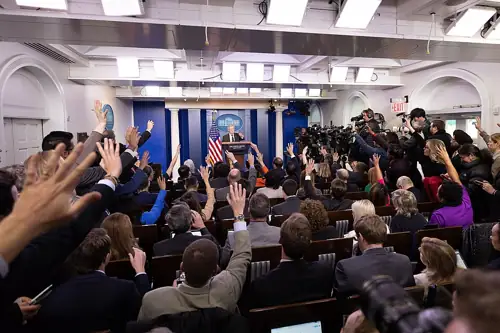
Things escalated fast after the initial ban. Major television networks pulled out of the White House media pool, the long-standing shared arrangement that provides video and images of the president to news organizations that can't always have cameras on the ground. It's a system built on mutual access and, until recently, a basic assumption that the government would not weaponize it.
The White House's response to losing the pool was to launch its own streaming channel. BBC News reports that "Trump TV" is now running a 24/7 feed of clips of the president, produced and distributed by the administration itself. The phrase "state media" is doing a lot of heavy lifting in a lot of newsrooms right now, and it is not being used approvingly.
The First Amendment Argument Is Actually Pretty Simple
The DOJ's filing is clever in one specific way: it leans hard on the privilege framing. No one has a constitutional right to a White House press pass, the argument goes, therefore revoking one isn't a First Amendment violation. Courts have actually engaged with versions of this argument before, and the answer has generally been: yes, but you can't revoke access as punishment for the content of someone's reporting. That's the part that turns a credential dispute into a free press case.
The reporters at CNN, Politico, and MS NOW didn't lose their passes because they failed a background check or violated a security protocol. They lost them because the president didn't like what they wrote. The administration has now essentially confirmed this in its own court filing, by publishing a list of specific stories it found objectionable. That list is the case against the government, dressed up as the government's own argument.
The Dingo Take
You are supposed to believe that a story about a White House ballroom is a national security incident. You are supposed to read the Justice Department's court filing and think, yes, these are serious people making a serious argument in good faith. You are supposed to look at an administration that banned three news organizations, confiscated their press passes, launched its own 24/7 presidential propaganda stream, and is now litigating the right to do all of this in federal court, and conclude that this is normal.
It is not normal. None of this is normal. The DOJ filing is not a legal argument so much as it is a warning dressed in legal clothing. It says, clearly, that the White House will decide who gets to cover it and why, that reporters who write things the president dislikes will lose access, and that the government will go to court to defend that power. The ballroom and the bunker stories are almost beside the point. The point is the precedent.
What makes this genuinely frightening, beyond the dark comedy of "ballroom threatens national security," is how fast all of this moved. A ban, a pool walkout, a government streaming channel, a federal lawsuit, all in a matter of days. The institutions designed to slow this kind of thing down, courts, press solidarity, public outrage, are scrambling to keep up. Wednesday's ruling matters. A lot. Pay attention.


Comments