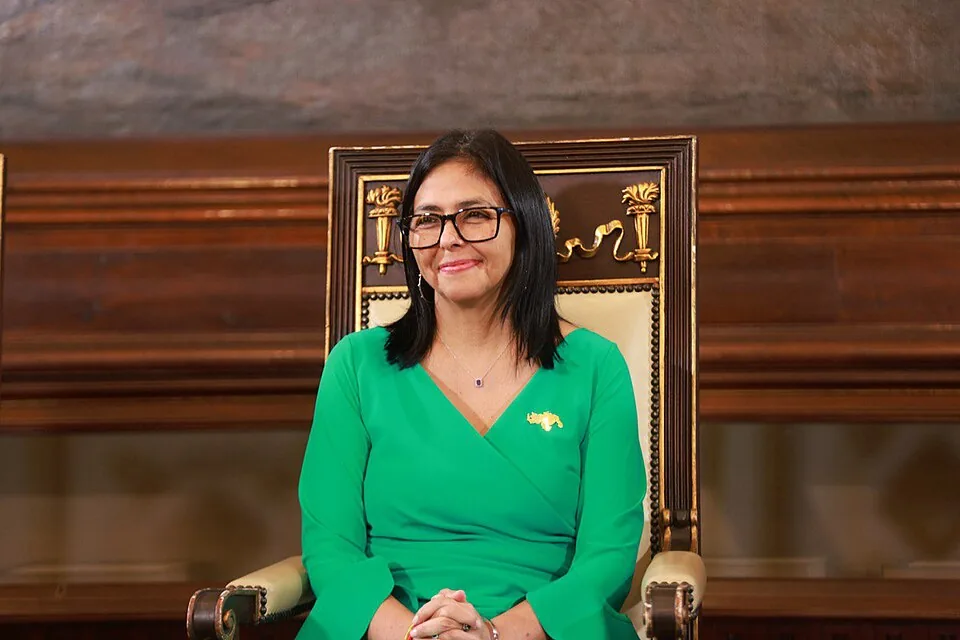
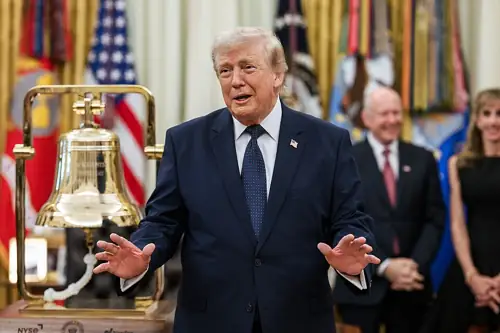
Donald Trump held a friendly diplomatic meeting with Venezuela's new US-backed leader at the UN General Assembly this week — roughly three miles from the New York cell where her predecessor sits in federal custody awaiting trial for drug trafficking. This is not a Tom Clancy novel. This is Tuesday. The pair talked energy cooperation, mining partnerships, and the 100-year oil deal that Trump has already called 'the biggest oil deal in world history.'
How Venezuela Got a New President, Briefly Explained
In case you missed the headlines: US forces raided Caracas, seized sitting Venezuelan President Nicolás Maduro, flew him to the United States, and put him in a jail cell where he will stand trial on drug trafficking charges. His own vice-president, Delcy Rodríguez, was then sworn in as interim president by Venezuela's National Assembly, with the explicit blessing of the White House. The woman who replaced the man America arrested is now meeting with American leadership at the United Nations.
Rodríguez is not a neutral figure parachuted in from nowhere. She served as Maduro's vice-president and was personally sanctioned by the United States in 2018 for human rights abuses and undermining democratic institutions. The US lifted those sanctions in April of this year, according to BBC News, right around the time she became useful to Washington. The timing is, as they say, notable.
Venezuelan opposition leader Maria Corina Machado, who actually won a democratic mandate in the disputed 2024 election that Maduro's government stole, has reportedly been repeatedly barred from re-entering Venezuela. The democratic opposition remains locked out. The ex-vice-president of the authoritarian government they opposed is running the country with American approval. Democracy promotion, it turns out, is somewhat situational.
The Oil Deal That Makes This All Make Sense
The meeting between Trump and Rodríguez at the UN this week covered what BBC News describes as 'advancing a cooperation agenda in strategic areas such as energy, mining, and security.' Strip out the diplomatic language and here is what that means: Venezuela signed an agreement giving a US-led company 100-year concessions over 17 Venezuelan oilfields, covering more than 65 billion barrels of oil, which is over a fifth of the entire country's reserves.
Trump, speaking to the UN General Assembly on Monday, put it bluntly enough that no one needed to read between any lines. 'The US and Venezuela control more than 60% of the world's oil,' he said, then added: 'To the victor belong the spoils.' He actually said that. At the United Nations. In front of the assembled representatives of the international community. The institution founded specifically to prevent powerful countries from just taking stuff from smaller ones.
'To the victor belong the spoils' is a phrase from the 1830s American spoils system, used to justify handing government jobs to political allies. Trump deployed it to describe what is, by any reasonable read, the seizure of a sovereign country's natural resources following a military operation. He called the deal 'the biggest oil deal in world history.' He is not wrong about the scale. He does not appear to think there is anything wrong with that.
The Surreal Geography of the Meeting
Let's just sit with this for a moment. Trump met with Rodríguez at the UN General Assembly in Manhattan. Maduro is being held in a federal facility in New York awaiting trial, scheduled for next June according to BBC News. The two meetings — Trump's diplomatic sit-down with the woman who took Maduro's job, and Maduro sitting in a cell a few kilometers away — happened in the same city, on roughly the same day.
Secretary of State Marco Rubio and White House Chief of Staff Susie Wiles also attended the Trump-Rodríguez meeting. Rubio, for those who remember, spent years as one of the loudest voices in American politics demanding accountability for Venezuela's authoritarian government and the liberation of its people. He is now helping broker century-long oil deals with that government's vice-president. The positions have evolved.
Rodríguez is scheduled to address the UN on Wednesday. It will be her first major international address as interim president, and she will do it while the former president she served is in a cell within taxi distance. American politics has always had a dark streak of absurdism running through it, but even by those standards, this week in New York is something.
What This Looks Like From the Outside
To be clear about what the international community is watching: the United States conducted a military operation inside a sovereign country, removed its sitting head of state, installed a compliant successor government, and extracted a 100-year deal over more than a fifth of that country's oil reserves, with the whole transaction apparently legal under whatever framework Washington is currently using to define legality.
BBC News reports that Rodríguez's government has signed the agreement that grants US-led companies those concessions. She is now the internationally recognized leader of Venezuela, backed by Washington. The legitimate democratic opposition, led by Machado, is locked out. The deal is done. The spoils have been distributed.
There will be a trial. Maduro will stand in a New York courtroom next June on drug trafficking charges, and the prosecution will presumably make its case. Whatever the outcome, Venezuela's oil is already spoken for, in 17 oilfields, for a hundred years.
The Dingo Take
A president who was sanctioned by the United States for human rights abuses six years ago is now the preferred partner of that same United States government, running a country whose resources Washington just locked up for a century. That is the story. Everything else is decoration.
You are supposed to look at this and see geopolitical strategy, a complicated region finally stabilized, a rogue narco-state brought to heel. And maybe some of that is true. Maduro was a genuine authoritarian who oversaw real suffering. Nobody serious is mourning him. But the framework being used here, where America decides who runs a country and then extracts a hundred years of oil rights as the price of recognition, does not become acceptable just because the guy we removed was bad. That logic will get used again on someone less obviously awful, and the machinery will already be built.
Trump said 'to the victor belong the spoils' at the United Nations, an institution built on the idea that victors cannot simply take spoils, and nobody walked out. Rodríguez nodded along. Rubio sat in the room. The meeting happened three kilometers from the man whose job was reassigned, who now sleeps in a federal facility in the city where his replacement is shaking hands with his jailers. History has always had an ugly sense of humor. This week, it is really leaning in.

Comments