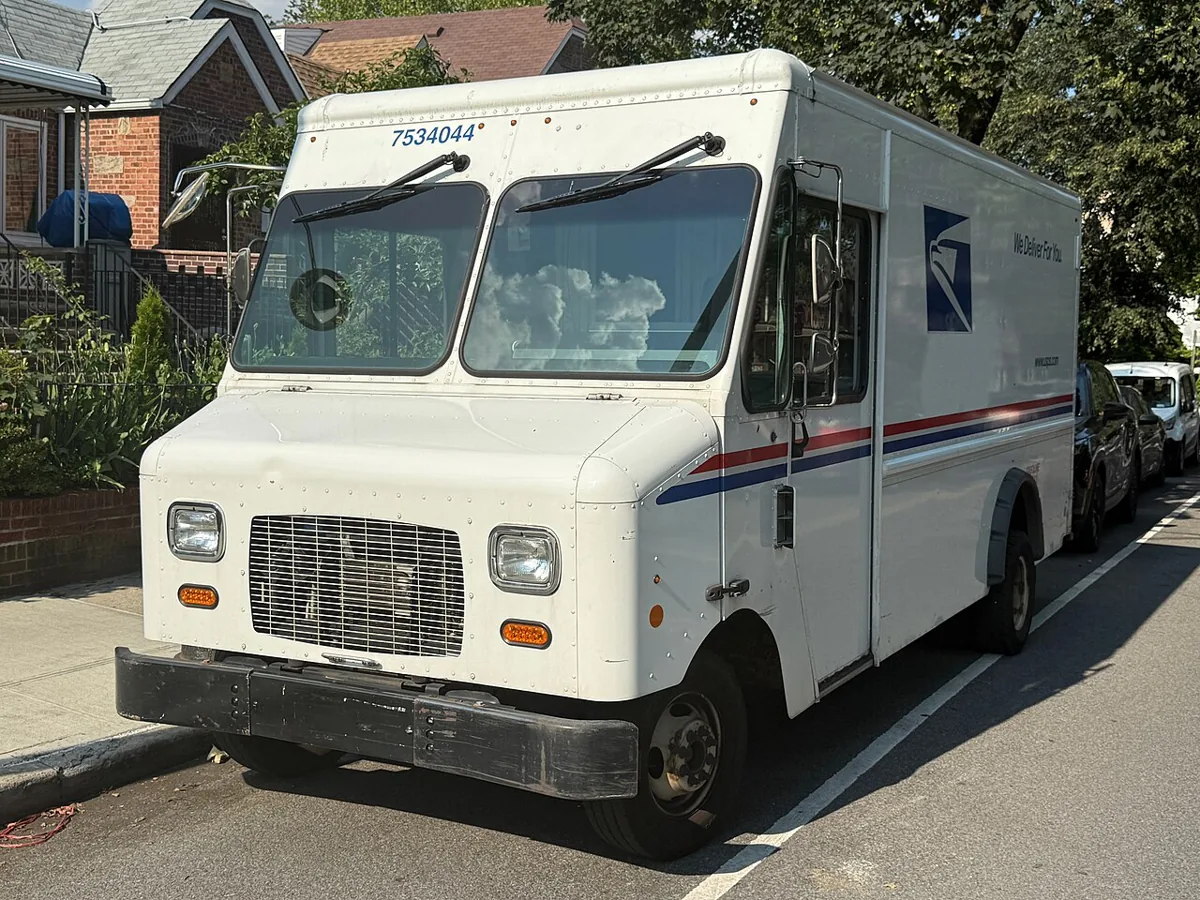
The U.S. Postal Service is running a 97.94% on-time score for election mail. It is also hemorrhaging public trust at a rate that should alarm anyone who cares about democracy making it to November in one piece. A new NPR/PBS News/Marist poll finds that confidence in USPS delivering ballots on time has fallen 13 percentage points in just two years, dropping back to the same levels recorded during the height of a global pandemic.
The Numbers Are Ugly and Getting Uglier
Two years ago, 71% of registered voters said they felt confident or very confident that USPS would get election mail where it needed to go on time. According to the new NPR/PBS News/Marist poll conducted September 14-15, that number is now 58%. Thirteen points. Gone. In two years.
To find trust this low, you have to go back to fall 2020, when the country was locked down, DeJoy was ripping sorting machines out of post offices, and everyone was terrified their ballot would disappear into a void. We are apparently back there now, functionally speaking, except this time the Postal Service says its actual performance is fine.
The poll surveyed 1,280 registered voters with a margin of error of 3.8 percentage points. It was conducted in English and Spanish. That's a solid sample. These numbers are not a blip.
The Supreme Court Just Stepped In, and That's Not Calming Anyone Down
Here's the timeline you need to understand. On September 14, the Supreme Court blocked the Trump administration from using USPS to restrict mail-in voting ahead of the midterms. The poll was conducted September 14 and 15, meaning voters were answering questions about their trust in mail ballot delivery on the exact same day the Supreme Court had to step in and stop the executive branch from weaponizing the postal system against their votes.
That context matters. This isn't just abstract anxiety about slow mail. People watched the Trump administration try to use the post office as an election suppression tool, watched the Supreme Court have to intervene, and then answered a pollster's question about whether they trust the post office to handle their ballots. The surprise isn't that trust fell. The surprise is that 58% still said yes.
Following the ruling, USPS is expected to continue delivering election mail as originally planned, including its "extraordinary measures" policy that kicks in a week before Election Day to prioritize ballot delivery. The agency told NPR it has delivered more than 233 million pieces of election mail this fiscal year through August with a 97.94% on-time rate. That is genuinely good. It is also apparently not enough to move the needle on public perception right now.
The Actual Structural Problems Are Real Too
Separate from the political circus, USPS has legitimate, documented operational issues that aren't helping. The agency has been grinding through a controversial 10-year restructuring plan launched in 2021 that has lengthened expected delivery times and lowered service-performance goals it has still failed to fully meet, according to a recent Government Accountability Office report.
The restructuring has also created a specific, consequential problem with postmarks. In Washington state, the changes led to 19 counties seeing their rate of mail-in ballots rejected for late postmarks more than double during this year's primary compared to 2024, according to a report from Democratic Sen. Maria Cantwell and Washington Secretary of State Steve Hobbs. A ballot that gets dropped in a mailbox on time, but doesn't get postmarked until the next day, can get thrown out. That is not a hypothetical. It is happening right now.
The USPS Office of Inspector General also released findings this month concluding that despite massive network overhauls, the agency has not improved its financial position and has disproportionately hammered rural communities, risking what the IG called the loss of customers who "perceive the service as inequitable." Rural voters, many of whom depend heavily on mail for everything including ballots, are getting worse service. Their trust is leaving along with it.
The Partisan Split Is Exactly What You'd Expect, With One Delicious Footnote
The poll found Democratic voters (32%) are nearly three times more likely than Republicans (12%) to say they plan to vote by mail in November. Independents landed at 26%. On the fraud question, 70% of Republicans say they believe there is a great deal or a good amount of fraud when mail voting is an option, compared to 18% of Democrats and 32% of independents.
President Trump has spent years calling mail voting "corrupt," again, without evidence. The Brookings Institution reviewed the data in 2025 and found mail-voting fraud to be exceptionally rare. The majority of registered voters overall, 55%, told the pollster there is little or no fraud when mail-in voting is available.
Now for the footnote, because it genuinely never gets old: Donald Trump votes by mail. He has done so repeatedly. The man who has described the system as corrupt uses the system. Every single election cycle. This fact should be stapled to every news segment on this topic until the heat death of the universe.
Most Voters Still Expect a Fair Election, Barely
Despite all of this, the poll found that 75% of registered voters feel confident their state or local government will run a fair and accurate midterm election. That's actually up from 69% in a March poll. So there's something. People are more confident in election administration generally than they were six months ago.
The gap between trusting election officials (75%) and trusting USPS specifically (58%) is interesting. Voters seem to be separating the institution of elections from the particular logistics of getting a ballot delivered by mail. Whether that distinction holds through November, after two more months of political noise about postal service, is an open question nobody can answer right now.
The Dingo Take
You are supposed to believe that a 13-point collapse in trust, back to the exact levels recorded during a once-in-a-century pandemic, is just vibes. Just feelings. Just the result of, as USPS diplomatically put it, "a lot of misinformation recently." And look, the misinformation part is real. But misinformation doesn't materialize out of nowhere. It was seeded, deliberately and systematically, by a president who built a political career on telling his base that any vote cast against him must be fraudulent, and who just last month had his administration try to use the post office to make voting by mail harder before the Supreme Court told him no.
The USPS is performing well by its own metrics. Ninety-seven-point-nine-four percent on-time delivery is not a bad number. But postmarks are getting missed in Washington state and ballots are getting rejected for it. Rural service is getting worse. The Inspector General just said the whole restructuring hasn't fixed the finances. "Our actual metrics speak for themselves" is a less convincing statement when the metrics, upon examination, turn out to have some caveats buried in them.
Six weeks out from a midterm election that will determine control of Congress, the system that carries roughly a third of all Democratic votes to the finish line is operating under the lowest public confidence levels since COVID. That is where we are. The machinery of democracy is technically functional, the people running it are doing their jobs, and a substantial chunk of the country has been convinced by relentless propaganda that none of it can be trusted. Congratulations to everyone who made this happen. Truly historic work.


Comments