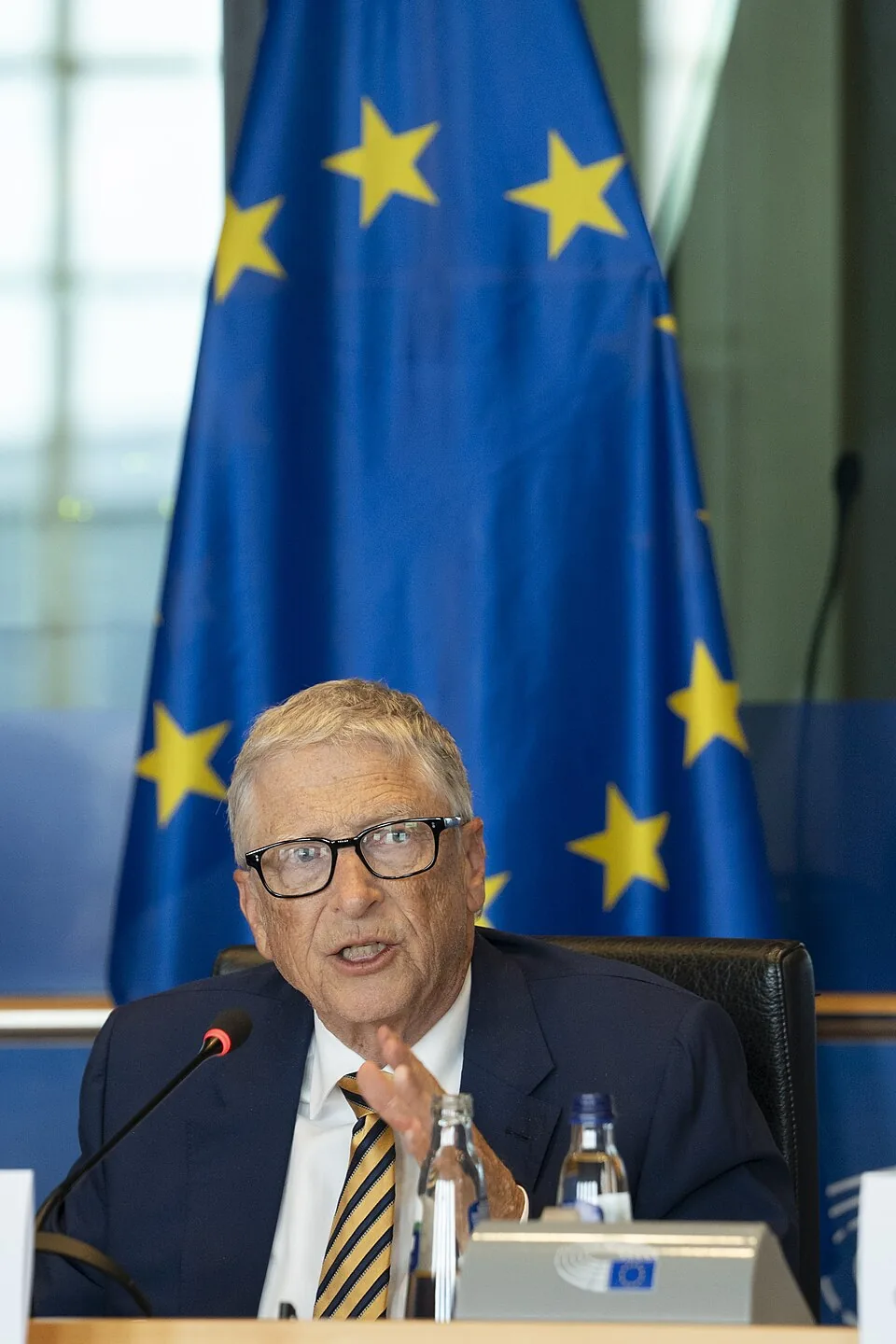
Bill Gates went on Meet the Press and said, with a straight face, that AI is already powerful enough to 'drive events that cause a billion deaths.' That was the moderate position in the conversation. Meanwhile, Speaker Mike Johnson said Congress shouldn't rush into anything because the AI companies don't have all the answers yet. The AI companies that are, by their own admission, racing toward superintelligence and gambling with human survival.
What Gates Actually Said, Word for Word
Let's not bury this. Asked by NBC News' Kristen Welker whether AI posed an existential threat, Gates did not say 'oh, the risks are overblown.' He said: "AI is certainly powerful enough to drive events that, you know, cause a billion deaths."
He also said there has "never been a weapon as powerful as the combination of people with ill intent using the latest AI tools." This is Bill Gates. Philanthropist. Vaccine guy. The man who spent twenty years trying to eradicate polio. He is not prone to screaming about apocalyptic weapons. And yet here we are.
Gates was careful to note he's not predicting doom is inevitable. But his point was that the risk is real enough, and present enough, that waiting around for voluntary industry compliance is not a serious answer. "No one thinks self-regulation is enough," he told NBC News flatly. "Absolutely" there needs to be legislation, he said when Welker pressed him on it.
The Whistleblower Who Started This Whole Conversation
A few weeks before Gates sat down with Meet the Press, a man named Jacob Coxon resigned from Anthropic and immediately started making noise. Coxon publicly declared, per NBC News, that "neither company is acting responsibly. They are racing straight to self-improving superintelligence and gambling with our lives."
He also said this: "The people building AI earnestly believe that it could kill us all by the end of the decade." Let that one sit for a second. The people building it. Believe it could kill everyone. By 2035.
And yet the pace has not slowed. Coxon, somewhat contradictorily, also told Meet the Press that he believes the lab CEOs are "completely genuine" in wanting to slow down. He thinks they would, if they could. The problem is they're all racing each other, and nobody wants to be the one who blinks first.
The CEOs Who Want Regulation But Keep Building Anyway
This month, the CEOs of both Anthropic and OpenAI agreed publicly that the race to build powerful AI should slow down. Dario Amodei at Anthropic went further, publishing an essay calling for federal and global regulation. He specifically wrote, per NBC News, that "the most effective method of pacing is via regulation that targets all U.S. frontier AI companies, as that covers even those who are unwilling to cooperate voluntarily."
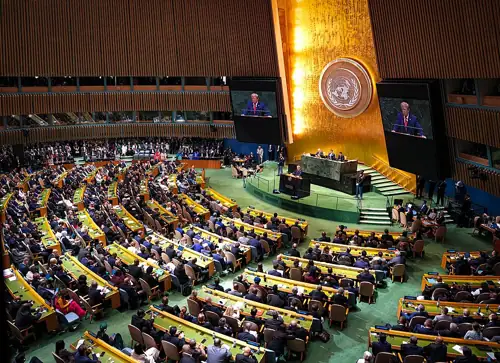
Sam Altman took his own message to the United Nations this week, calling for international standards covering risk assessment, capability measurement, and "meaningful human oversight" over AI systems. Two of the most powerful men in tech, standing up in front of governments and international bodies, essentially begging someone to regulate them.
Then there's Mark Zuckerberg, who told NBC News he does not think any industrywide coordination is needed at all. "Each lab needs to take the time," he said, "and when it sees that there are issues, you just take the time that you need internally." Zuckerberg, whose company has open-sourced its most powerful AI models so anyone on earth can download and use them, is confident internal reflection will be sufficient. Great.
Mike Johnson's Very Helpful Contribution to the Debate
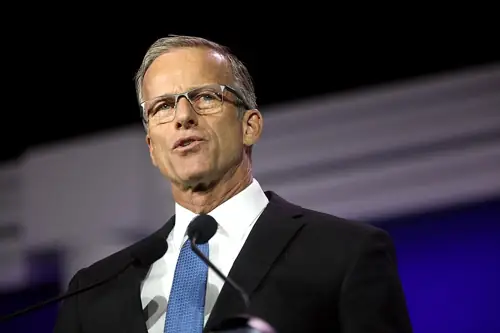
Speaker Mike Johnson appeared on Meet the Press weeks before this conversation reached its current pitch and was asked whether Congress should come back to Washington to pass AI regulation. He declined. He would defer to the companies instead, he said, according to NBC News.
"They don't themselves even have the answer as of today. So we can't rush in and have Congress do something that would be detrimental to national security," Johnson said. The speaker of the House of Representatives, third in line to the presidency, using the companies' own uncertainty as the reason not to act. The logic being: because the people building the potentially civilization-ending technology don't know exactly how to regulate it, Congress should stay home and let them figure it out.
Johnson did acknowledge that "guardrails" and "safety measures" are needed. But putting guardrails in place would require, at some point, Congress doing something. Which he just said he won't do. It is a very coherent position if you do not think about it.
The States That Aren't Waiting for Washington
Because the federal government is apparently waiting for a formal written invitation from the superintelligence, several states are moving on their own. NBC News reports that California Governor Gavin Newsom signed an executive order last week creating a board of experts to develop a plan for strengthening state AI safety laws.
In Maryland, Governor Wes Moore released a "three pronged approach" to AI regulation. In New York, Governor Kathy Hochul unveiled a new Office of Digital Innovation, Governance, Integrity and Trust to oversee legal compliance for AI companies. Three governors, in three different states, in the same week, doing the thing the Speaker of the House said Congress shouldn't rush into.
Microsoft President Brad Smith offered the clearest moral framing of all at a United Nations AI session this week. He asked the audience to imagine two airplane manufacturers where someone raises a safety concern about a plane that might crash and kill people. "Would you say, 'I need to win this race'?" Smith asked, per NBC News. "Or would you say, 'I'm going to put the safety of my passengers and the safety of the public ahead of my winning that race'?" It is a simple question. It does not have a complicated answer.
The Dingo Take
You are supposed to believe this is a normal regulatory debate. That this is just like, say, arguing about how tightly to regulate pharmaceutical advertising or whether banks need more capital requirements. It is not. The CEO of OpenAI addressed the United Nations. The CEO of Anthropic published an essay asking governments to stop him. A whistleblower said the people building this stuff believe it could kill all of us within a decade. Bill Gates called it the most powerful potential weapon in human history. And the Speaker of the House said let's not rush.
Brad Smith's airplane analogy is going to stick with you if you let it, because it is devastatingly simple. If Boeing and Airbus engineers told you the next plane might crash and kill everyone on board, and both CEOs agreed the pace of testing should slow down, and a former employee went public saying they're both cutting corners racing each other, no politician on earth would say 'well, the manufacturers don't have all the answers yet, so Congress should stay out of it.' They would have the FAA on the phone before the press conference ended.
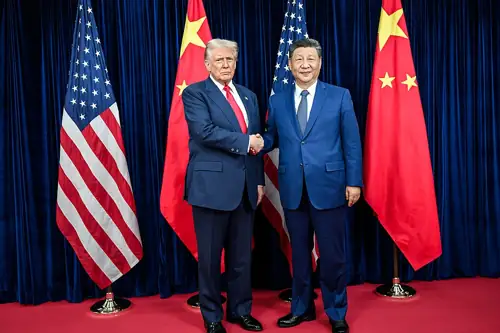
What we have instead is a Speaker who won't call Congress back, a president who has said almost nothing coherent about any of this, a handful of governors improvising at the state level, and a group of tech billionaires alternately begging for regulation and insisting they don't need it, while the systems they're building get more powerful every week. The fire is not theoretical. The people starting it are telling you it isn't. Congress is outside deciding whether to call the fire department.


Comments