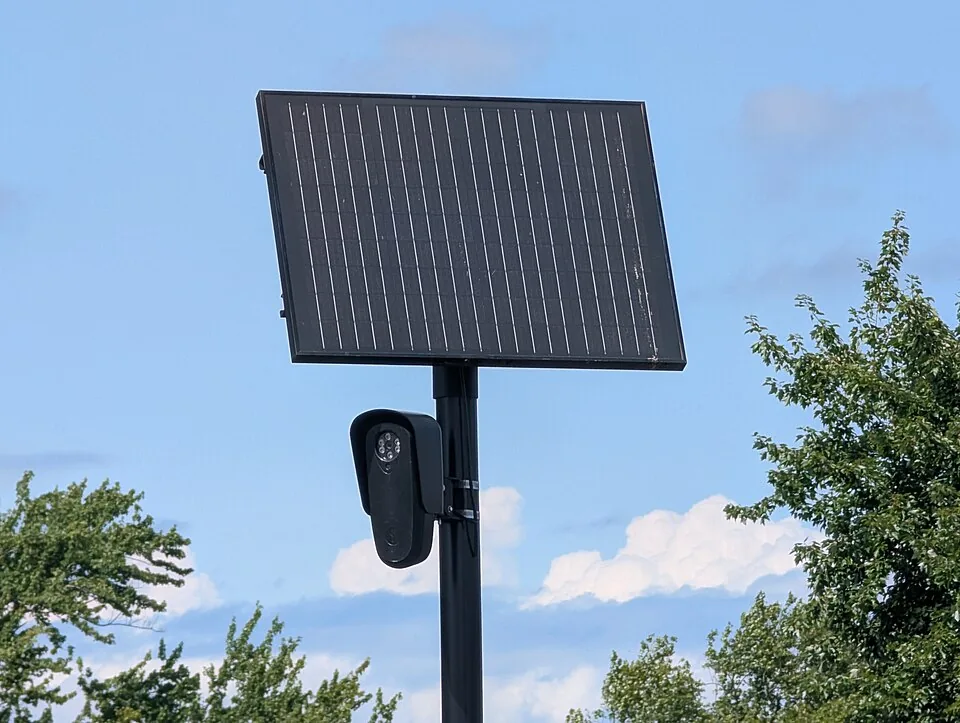
A Florida Republican just introduced a bill demanding warrants before the federal government can tap into a network of 120,000 license plate cameras blanketing nearly every state in the country. That's three separate congressional bills targeting the same surveillance company in a single month. And somehow, the guy standing in the way of all this is Donald Trump, who said from Air Force One that he likes the cameras.
What Greg Steube Actually Proposed
Congressman Greg Steube introduced the Facilitating Liberty and Accountability for Flock Observations Act — yes, they called it the FLAFO Act, apparently — on Friday, according to The Guardian. The bill would require federal agencies to get a judicial warrant before buying, operating, accessing, or sharing data from networked license plate readers. It would also tie Department of Justice grants to local police to whether those departments adopt the same rules.
The bill is technically written to cover any company making this technology. But let's be real. The target is Flock Safety, the Atlanta-based company that controls more than 80% of the license plate reader market and currently operates around 120,000 cameras across every state except Alaska. Flock's cameras photograph passing vehicles and log plate numbers, make, model, and location into searchable databases that police departments across jurisdictions can pull from at will, no warrant required.
"Americans should not be tracked everywhere they drive without a warrant," Steube wrote in a statement. "The government has no business tracking law-abiding Americans." That sentence would read perfectly at home in an ACLU press release. It came from a Republican congressman from Florida. The timeline we are living in continues to confound.
Three Bills in Thirty Days — This Is Not a Fringe Position Anymore
Steube's FLAFO Act is not operating in isolation. The Guardian reports that on September 2nd, Kentucky Republican Thomas Massie introduced the Flock-Off Act — which would ban federal money from being used to buy, install, maintain, operate, or upgrade license plate readers and biometric surveillance cameras. That bill picked up co-sponsors from both parties: California Democrat Ro Khanna, Texas Republican Chip Roy, and Colorado Republican Lauren Boebert all signed on.
Two weeks after that, Illinois Democrat Raja Krishnamoorthi and Texas Republican Michael Cloud introduced the No Flock Act, specifically responding to reports of officers using the system to stalk former partners. Their version gives states two fiscal years to limit camera use to five approved purposes or lose 10% of certain federal transportation funding.
Three bills. Four weeks. Both parties. That is not a fringe libertarian moment — that is a political consensus forming in real time around the idea that a private company should not be allowed to track every car in America without oversight.
What Flock Actually Gets Away With Right Now
Here is the part that puts all the legislative hand-wringing in context. The Institute for Justice, a libertarian law firm, says it has documented more than 200 cases of abuse stemming from automated license plate readers, including stalking and wrongful stops, according to The Guardian. Steube himself pointed to investigations in Florida, Indiana, Illinois, and Wisconsin that found officers misusing the databases.
In Arizona, Chandler ended its Flock contract after an investigation confirmed an officer had misused the system. In Indiana, Fort Wayne and several counties voted in the past month alone to cancel or not renew their contracts. Anti-surveillance watchdog Secure Justice's Flock Termination Tracker has found cities in 36 states have cancelled their Flock contracts, with the list growing steadily.
Flock did not immediately respond to a request for comment, per The Guardian. Classic.
States Are Already Moving Without Waiting for Congress
Florida — Steube's home state — didn't wait for federal legislation. At the start of September, the state's transportation department revoked all permits for local police to operate license plate readers on state roads and ordered existing cameras removed within 30 days. That is a dramatic move from a state that previously had cameras everywhere.
Texas Governor Greg Abbott went a step further in the week before that, halting state funding for the cameras entirely. The Guardian reports that Abbott's move came ahead of a Texas Tribune investigation revealing a state agency had spent at least $30 million building out Texas's Flock network. Thirty million dollars. For cameras that officers were using to track ex-partners.
Santa Cruz became the first California city to drop Flock in January, and more than a dozen California cities have followed since. The backlash is national, bipartisan, and accelerating.
Trump Likes the Cameras — Of Course He Does
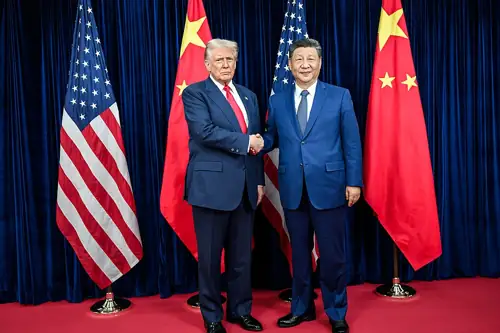
Here's where it gets predictably ugly. The Guardian reports that Trump, speaking to reporters aboard Air Force One this month, came out in favor of the cameras because of their value to law enforcement. "Some people don't. They think it's an infringement," he said. "I like them."
This puts Trump in the unusual position of being to the left of Thomas Massie and Lauren Boebert on a civil liberties issue — or rather, it puts him in the position he always occupies when surveillance and law enforcement are on the table. Trump has never met a tracking tool aimed at the general public that he didn't want more of. The MAGA coalition building against Flock is a genuine intraparty revolt, which makes it more interesting, not less.
The Dingo Take
You are supposed to believe that Republicans introducing warrants-for-surveillance legislation is some kind of historic contradiction. It is not, actually — libertarian-leaning Republicans have been quietly consistent on Fourth Amendment issues for years, and Massie in particular has the receipts. What is genuinely new here is scale. Three bills in a month, 36 states with cancelled contracts, $30 million in Texas alone, and 200 documented abuse cases. This isn't a civil liberties debate anymore. It's a reckoning.
Flock Safety built a near-monopoly on American roads by selling to local police departments one contract at a time, keeping the federal government at arm's length and banking on the fact that nobody would notice until the cameras were everywhere. Somewhere around 120,000 cameras in, people noticed. And the thing about building a surveillance network on the promise that cops won't misuse it is that cops will misuse it. They always do. The Institute for Justice found 200 cases. That number is almost certainly the floor.
The bipartisan coalition here is real and it deserves credit, even when the participants are people you'd never normally agree with. Ro Khanna and Lauren Boebert signing the same bill should be treated as a sign that something actually went wrong, not as a feel-good moment about unity. Something went very wrong. A private company got rich selling the government the infrastructure to track every driver in America, and the government bought it without asking a single hard question. Congress is now asking the questions. Late, but not too late — assuming any of these bills actually move, which, given the Senate's historic ability to let good legislation die quietly in committee, is its own separate prayer.

Comments