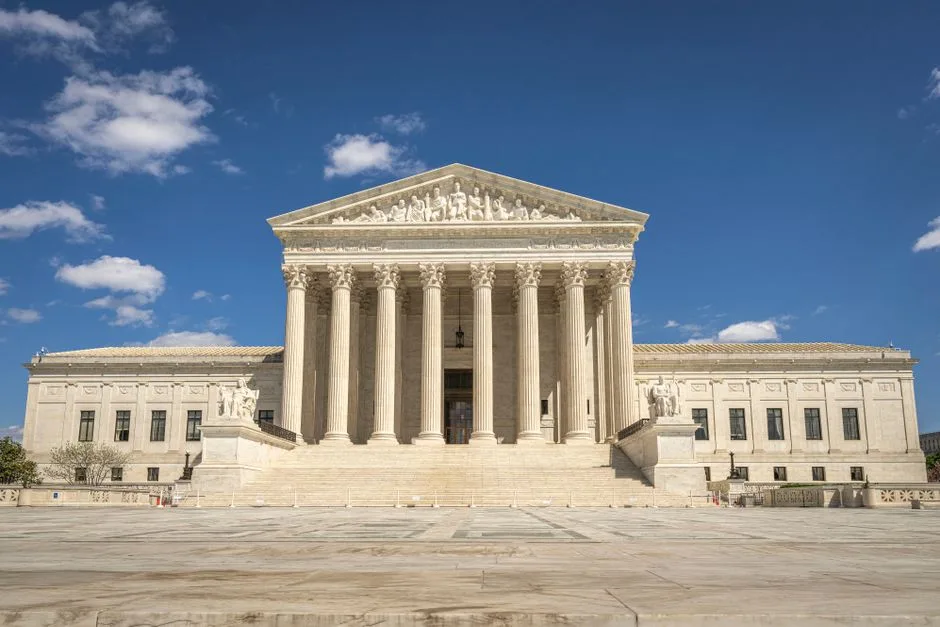
The Supreme Court handed the Trump administration a significant pre-midterm gift on Friday, lifting restrictions on a federal voter database that can cross-reference Social Security numbers and other personal data against the citizenship status of registered voters across the country. The move unblocks what critics are calling a sweeping voter purge mechanism, just weeks before November's midterm elections. A lower court judge had stopped it. The Supreme Court just said, no, actually, go ahead.
What the Court Actually Did
According to The Guardian, the justices granted an emergency request from the Trump administration to block a lower court order that had been preventing state officials from running registered voters' Social Security numbers and other personal information through federal records to check citizenship status. That's the tidy version. The less tidy version is that the federal government just got court approval to run a mass cross-referencing operation on voter rolls weeks before a consequential midterm election.
The lower court judge who originally blocked this presumably had reasons. Courts don't typically issue stops on government programs out of boredom. Those reasons now don't matter, because the Supreme Court's conservative supermajority decided the administration's emergency request was worth granting, and that's where we are.
The Administration's Pitch vs. What Critics Are Saying
The White House line, per The Guardian, is straightforward: noncitizens are voting, this database catches them, end of story. It is a pitch that has been enormously effective with the Republican base for years despite a persistent and stubborn lack of evidence that noncitizen voting happens at any meaningful scale. Federal law already makes it illegal for noncitizens to vote. The penalties are severe. The documented cases are vanishingly rare.
Critics are making a different argument, and it is worth sitting with for a moment. The concern is not really about catching the hypothetical noncitizen voter. The concern is what happens when you run millions of names through a database matching exercise that is imperfect by design. Government databases have errors. Names get misspelled. Records don't match. Clerical mistakes from decades ago surface as red flags. And when a legitimate, eligible American voter gets flagged by this system, the burden falls on them to prove they belong on the rolls. That is not a small ask, particularly for elderly voters, low-income voters, and voters of color who are statistically more likely to have data inconsistencies in federal records.
The Guardian reports that critics contend the database could disenfranchise eligible voters. "Could" is doing some very polite lifting in that sentence.
The Timing Is Not Subtle
Let's just state this plainly. The Trump administration pushed for this. They took it to the Supreme Court as an emergency request. The court granted it. All of this is happening in September 2026, with November midterms approaching. The administration did not discover an urgent civic need to validate citizenship records in, say, January 2025. They are doing it now, in the final stretch before an election where control of Congress is on the line.
This is not a conspiracy theory. This is a calendar. You can look at it yourself.
The Court That Made This Possible
The current Supreme Court has a 6-3 conservative majority, three of whom were appointed by Donald Trump himself. The court has spent recent years methodically rolling back voting rights protections, gutting the Voting Rights Act in Shelby County v. Holder back in 2013, and then again in Brnovich v. Democratic National Committee in 2021. The direction of travel has been consistent and it has consistently pointed toward fewer federal protections for voters and more latitude for states and federal officials to manage, restrict, and in practice reduce voter participation.
Granting this emergency request fits the pattern perfectly. It is not an aberration. It is the point.
What Happens Next
State officials can now move forward with running Social Security numbers and other data against federal citizenship records, according to The Guardian's reporting. What that looks like in practice will depend heavily on which states push hardest and how aggressively election officials pursue flagged voters before November.
The voters who get caught up in database errors probably won't find out until they show up to vote and are challenged or turned away. Some will fight it. Many won't know how. Some will just go home. That's the mechanism. It does not require a single act of intentional fraud to work exactly as critics fear it will.
The Dingo Take
You are supposed to believe this is about election integrity. You are supposed to take it on faith that an administration with a long, documented history of using election security as a political weapon has suddenly, weeks before midterms, decided to run an emergency mass data-matching exercise on voter rolls purely out of civic duty. You are supposed to not notice the timing.
Noncitizen voting is not a real crisis. It is a ghost story told to justify real policy with real consequences for real people. The documented incidents are so rare that prosecutions make local news precisely because they are remarkable. But the voters who get swept up in a flawed database match and then quietly removed from the rolls before they can challenge it? They will not make the news at all. They will just be gone.
The Supreme Court had a chance to let the lower court's order stand and let this play out through normal legal channels. They chose not to. Three of the six justices in the majority owe their seats to the man who filed the emergency request. Make of that whatever you want. The math is right there.


Comments