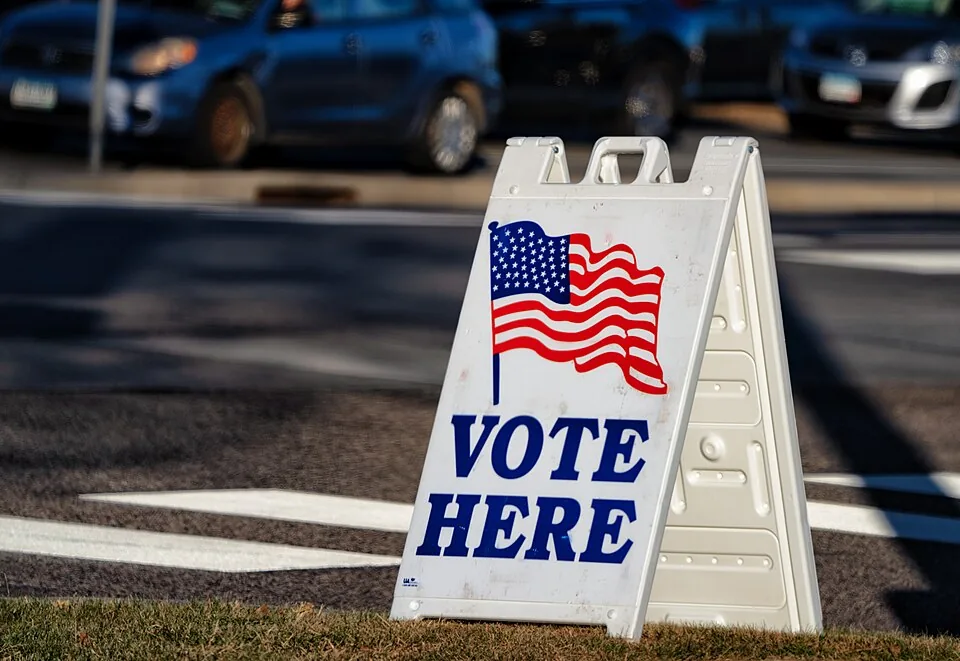
With less than 50 days until the midterm elections, the President of the United States will not rule out deploying the military to polling places, and his administration has not responded to direct requests for clarification. Retired generals are sounding alarms, Democratic senators are sending urgent letters, and civil rights groups are filing lawsuits. Everything is fine. Everything is completely fine.
Trump Said He'd Do 'Anything Necessary.' He Meant It.
Back in May, a reporter asked Trump directly whether he planned to deploy the National Guard or ICE to polling locations during the midterms. He did not say no. According to NPR, he said he would do "anything necessary" to ensure "honest elections," which is the kind of answer that sounds reasonable until you realize the premise is that the elections are dishonest and he's the one who gets to decide what's necessary.
NPR followed up with the White House for clarification. The White House did not respond. That's the posture they've chosen: answer vaguely in public, say nothing in private, and let the uncertainty do the work for them.
Because uncertainty, in this context, is the point. You don't have to actually put soldiers outside a polling place to suppress turnout. You just have to make enough people believe it might happen.
What the Law Actually Says (And Why That's Not Reassuring)
To be clear about what we're talking about: deploying armed federal agents or military troops to or around polling places is illegal. Federal law bars it. Full stop. This is not a gray area. The Posse Comitatus Act exists specifically to prevent the military from being used as a domestic law enforcement tool.
The National Guard can legally support elections in limited capacities, like cybersecurity assistance or logistical support, but only when ordered by a state's governor. The president unilaterally deploying federal troops to polls is a different thing entirely, and legal experts across the board say it crosses a clear line.
The problem, as retired Air Force judge advocate Maj. Gen. Steven Lepper told NPR, is that legality and reality operate on different timelines. "There's no do-over," Lepper said. "There's no way the courts can basically reverse the impact of something like election interference." You can win the lawsuit in January. The election was in November. Courts can't un-ring that bell.
The Administration Already Has a Workaround on Paper
Here's where it stops being a hypothetical. An internal DHS memo from last year, recently made public, outlines a specific method to circumvent the Posse Comitatus Act by deputizing federalized National Guard members as immigration enforcement agents. In other words, someone in this administration sat down and wrote out a legal theory for how to get around the law that prevents exactly this kind of thing.
And this month, Homeland Security Secretary Markwayne Mullin said ICE agents could serve warrants at polling places, adding that military personnel could accompany them. DHS told NPR it is "not planning operations targeting polling locations," which is the kind of carefully worded statement that means nothing if an "incident" conveniently materializes on Election Day.
Lepper and the Former Judge Advocates Working Group, a group of several dozen retired military lawyers who have been tracking Trump's executive orders and deployments, see this coming from a mile away. They've written multiple reports to Congress warning that Trump's executive order designating antifa as a terrorist organization could be invoked amid any disruption at a polling place to justify calling in the Insurrection Act. Create the chaos, then respond to the chaos you created. It's not a new playbook.
The People Paid to Be in Charge of This Are Giving Non-Answers
In March, Democratic members of the Senate Armed Services Committee pressed Gen. Gregory Guillot, commander of U.S. Northern Command and the man who would oversee federal troop deployments if ordered, about what guardrails exist. Sen. Tammy Duckworth of Illinois asked him directly. Guillot said he "very clearly understands the laws" and would "look at it very closely" if given the order, adding that he didn't think troops should be "anywhere near" polling places.
That's the good news, sort of. The bad news is "I'd look at it closely" is not the same as "I would refuse the order," and generals are not supposed to refuse lawful orders, and the question of whether such an order would be lawful is exactly what courts would spend months figuring out after the fact.
Sen. Elissa Slotkin of Michigan sent letters to multiple military leaders and federal agencies demanding written confirmation that troops won't be deployed to polls. According to NPR, exactly one person responded: Joint Chiefs Chairman Gen. Dan Caine, who said there are "no plans" for troop deployment. Everyone else went quiet. The DNC has already sued the Trump administration for ignoring FOIA requests seeking records about any plans to seize ballots.
Voting Officials Are Preparing for the Worst
State and local election administrators, the people who actually run elections, are saying two things simultaneously: we will conduct these elections normally, and we are preparing contingency plans in case armed federal agents show up. That is not a normal thing election officials should have to say.
Civil rights groups, unions, and political organizations have launched what NPR describes as "unprecedented" action: multiple lawsuits, FOIA requests, and public service announcements educating voters about their rights and what to look for on Election Day. Organizations are specifically focused on the National Guard question because of what they call Trump's "extraordinary use" of the Guard on U.S. soil, which has already broken with democratic norms in ways that would have been unthinkable before 2025.
The Supreme Court recently rejected Trump's executive order attempting to restrict mail voting, and Lepper's read on that matters. "As this president's options are dwindling," he told NPR, "the idea that he might use the military becomes even more of our concern." A president with fewer legal tools and an upcoming election he cannot afford to lose is a specific kind of dangerous.
The Dingo Take
You are supposed to believe that a president who refused to answer whether he'd send troops to polling places, whose Homeland Security secretary said ICE could serve warrants at polls, whose own department wrote an internal memo detailing how to legally sidestep the law against military domestic enforcement, and who has repeatedly threatened to invoke the Insurrection Act, is just keeping all options open in an abundance of caution. That is what you are being asked to accept.
The mechanism is already designed. The legal memo exists. The rhetorical groundwork, antifa designated as terrorists, elections described as inherently suspect, the idea that military presence somehow equals election integrity, has been laid for years. What's missing is just the order. And the only person asked directly whether he'd give that order said he'd do "anything necessary."
Election officials across the country are telling voters: show up anyway. Know your rights. Document everything. That guidance is correct and important, and the fact that we need it in 2026 in the United States of America is something that should make every person in this country furious, regardless of who they voted for. Midterm turnout is already the last line of defense here. The people trying to scare you away from the polls are counting on it working.


Comments