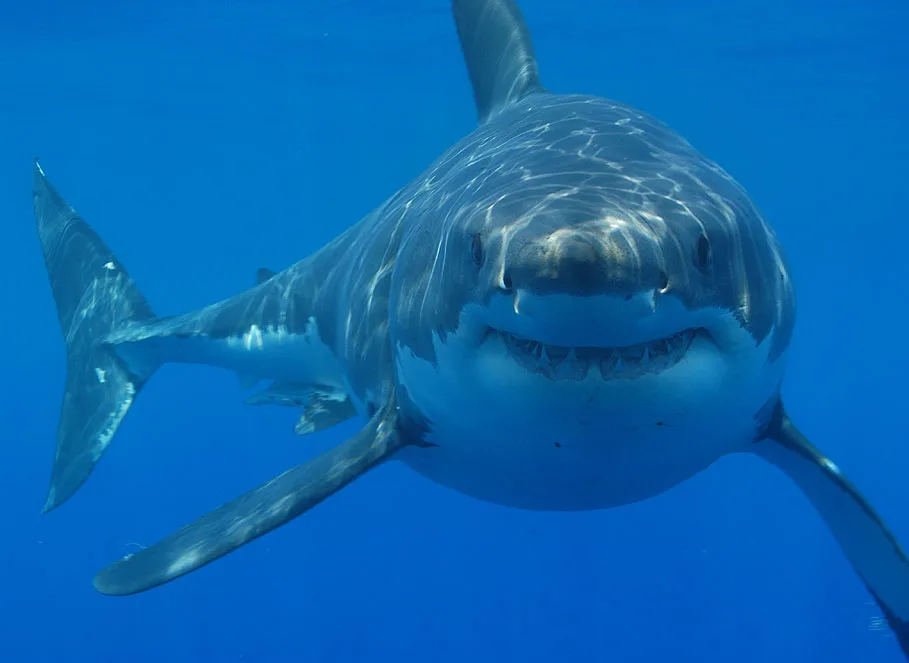
Donald Trump signed an executive order last Thursday directing federal agencies to prioritize recreational fishing, review the scientific standards that prevent overfishing, convert abandoned oil rigs into artificial reefs, and form a government task force aimed at killing more sharks. This is a real thing that happened. In the ocean.
What the Order Actually Does
The executive order, titled 'Restoring American Saltwater Angling and Recreation,' tells the Commerce Department to review the fisheries management guidelines under the Magnuson-Stevens Act, the cornerstone 1976 law governing US marine waters. The review must 'ensure they appropriately account for the recreational fishery.' That sounds procedurally boring until you understand what it means in practice.
According to The Guardian, conservation advocates are not worried about a routine review. They are worried about what this particular administration will do with one. Gib Brogan, senior campaign director at Oceana, put it plainly: 'We're very concerned about how this administration will attempt to reinterpret things like overfishing and rebuilding, or what constitutes best available science.' When an administration has spent two years systematically undermining scientific agencies, questions about 'reinterpreting' overfishing standards are not abstract.
The National Marine Fisheries Service, for its part, issued a statement hailing the order and citing a '$1.2 trillion outdoor recreation economy.' That is the figure they reached for. Not fish populations. Not ecosystem health. The number with the most zeros.
The Oil Rig 'Reef' Scheme Is Exactly What It Sounds Like
Here is one of the stranger provisions. The order directs the Interior Department to establish a program converting decommissioned offshore oil and gas structures into permanent artificial reefs. The administration is framing this as a win for marine habitat. Conservationists are framing it as something else entirely.
Kristen Monsell, oceans legal director at the Center for Biological Diversity, called it 'a handout to the oil industry' and 'another blatant demonstration of Trump's desire to let the oil industry avoid any responsibility for the mess it continues to leave in our oceans.' She told The Guardian that offshore platforms were never designed to function as healthy reefs, are known to harbor invasive species including non-native corals and fish, and can leach harmful chemicals into surrounding water.
Even Arlo Hemphill of Greenpeace, who acknowledged that some rigs could provide useful habitat, cautioned that you cannot just drop artificial reefs anywhere a rig happened to be located. Some sit in navigational lanes. Some are in areas with currents too strong for reef ecosystems. Some are places that already have perfectly good habitat. 'You don't just put them anywhere just because there happened to be an oil rig there,' he said. There is also the inconvenient fact, which Hemphill raised, that placing a structure in the ocean attracts fish that already exist nearby. It doesn't create new fish. It just makes the existing ones easier to catch.
The Shark Task Force Is the Part Where It Gets Genuinely Alarming
The order establishes something called the 'Interagency Shark and Pinniped Depredation Task Force,' which is government language for a federal body tasked with addressing the problem of sharks and marine mammals eating fish off anglers' lines. This task force is also directed to examine 'barriers to shark fisheries,' including international agreements and protections under CITES, the Convention on International Trade in Endangered Species.
Andrea Treece, deputy managing attorney for oceans at Earthjustice, told The Guardian the provision 'seems to be aimed at killing more sharks.' The shark trade has been largely prohibited under US federal law. Reviewing CITES barriers in this context is not a conservation exercise. Treece pointed out that sharks regulate ocean food webs and support the health of coral reefs, and that most US shark populations are already a fraction of their pre-industrial-fishing numbers. 'To the extent that recreational fishers in some places are experiencing more sharks biting fish off lines, it's worth asking why that is,' she said. Here is a thought: maybe there are fewer fish and more people fishing for them.
Grace Casselberry, a postdoctoral shark depredation researcher at the University of Massachusetts Amherst, put the timing in stark terms. The Guardian reports she said it has taken decades to reach the point where shark populations are beginning to recover, and 'that progress could be quickly undone.' She urged that any changes to harvest limits be grounded in the best available science. Which is, of course, exactly what this administration is simultaneously working to redefine.
The Broader Pattern Here Is Not Subtle
Lance Morgan, president of the Marine Conservation Institute, told The Guardian that the US has spent decades becoming a global leader in marine conservation, and that 'the current administration has moved to gut most ocean protections, threatening to take the US from a global leader in marine conservation to nearly a bystander.' That is a remarkable collapse to engineer in under two years.
The executive order hits every pressure point at once. Weaken the overfishing science standards. Give the oil industry a path to abandon its infrastructure in the ocean and call it conservation. Form a federal task force to find legal pathways for killing more of the predators keeping ocean ecosystems functional. And do all of it under the banner of supporting recreational anglers, who are being handed not a healthier ocean but a faster route to fishing out what remains of it.
The Dingo Take
You are supposed to believe this executive order is about helping recreational fishermen. It is about three other things: loosening the science standards that prevent overfishing, helping the oil industry dodge cleanup costs, and opening pathways to kill sharks that have spent decades barely clawing back from collapse. The fishing is a wrapper. The stuff inside is the actual agenda.
The shark task force alone should be disqualifying. Sharks are not a recreational fishing inconvenience to be managed by an interagency working group. They are keystone predators in ecosystems that took millions of years to develop and a few decades of industrial fishing to devastate. The fact that some recreational anglers are losing catches to sharks is not a sign that there are too many sharks. It is almost certainly a sign that there are too few fish. The solution to that problem is not forming a federal body to review international endangered species protections. That is the solution to a completely different problem, namely that someone in this administration wants to sell more shark fins.
Lance Morgan called it: the US built a real record on marine conservation and this administration is systematically torching it. Every order, every 'review,' every task force is another piece of scaffolding kicked out. By the time anyone looks up to see what the building looks like now, the fish will be gone, the reefs will be old oil rigs leaching whatever's left into the water, and the sharks will be in the ground. Great result for the $1.2 trillion outdoor recreation economy. Really nailed it.





Comments