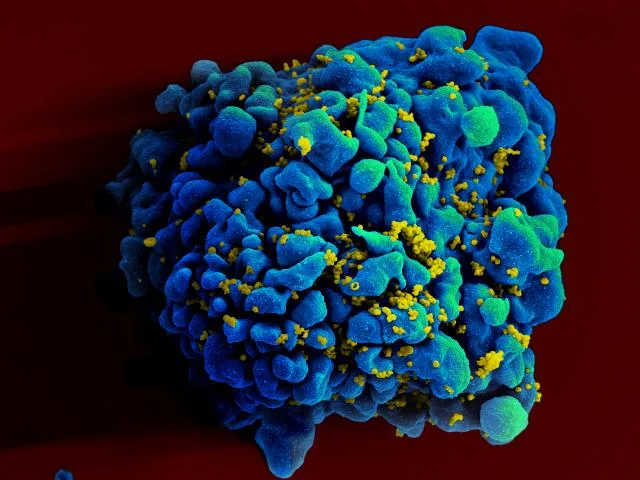
Fiji just declared a national HIV emergency after cases rose 12-fold in 15 years, and the culprit is a crystal meth epidemic so severe that children as young as 9 are injecting drugs. One in 60 Fijian adults is now living with HIV. This is not a slow-moving crisis anymore — it is a catastrophe, and it has a very specific origin story.
The Numbers Are Staggering
Let's get the scale of this on the table before anything else. According to NPR, Fiji's government declared a national emergency in mid-September 2026 after HIV cases exploded from a manageable public health challenge into something that now touches roughly 9,000 people in a country of fewer than a million. The health minister's figure — 1 in 60 adults — is the kind of statistic that belongs in a history textbook about a crisis that wasn't stopped in time.
At the AIDS 2026 conference in Rio de Janeiro this past July, public health specialist Jason Mitchell called it the fastest-growing HIV epidemic in the world. Two-thirds of cases are in people aged 20 to 34. "Our young, active, productive population is currently being infected with HIV," Mitchell told the conference, "and unless we find solutions quickly, this will continue to get worse."
Think about what that sentence means in practice. An entire generation of Fijians, the people who are supposed to be running this country in 20 years, are being hollowed out by two simultaneous epidemics feeding each other.
COVID Left the Door Wide Open
Fiji has always been a transit point for crystal meth moving between South America and Australia or New Zealand. Smugglers used the islands as a waystation. That was the baseline. Then COVID happened, and the baseline got obliterated.
NPR reports that when the pandemic hit and borders locked down, the drugs that were supposed to keep moving got stuck. The shipments sat in Fiji. And simultaneously, the Fijian economy collapsed — unemployment surged, mental health cratered, and young people with no work and no prospects suddenly had easy access to cheap methamphetamine. "Drugs that would otherwise have moved on stayed in Fiji," Dr. Sailosi Soqo, a doctor working on the national HIV response, told NPR, "seeding this domestic market which didn't really exist before."
Soqo told NPR that community workers are reporting children as young as 9 using injectable drugs. Nine years old. That sentence should stop you cold, because it speaks to a collapse of economic and social infrastructure so complete that preteen drug injection is a documented reality.
'Bluetoothing' and the Biology of Disaster
Here is where the specific mechanics of this epidemic become genuinely horrifying. NPR reports on a practice called "bluetoothing" or "hotspotting" — one person injects meth and then injects their blood directly into another person as a way of sharing the high. It sounds like something out of a dystopian novel. It is happening right now in Fiji.
Bluetoothing is a known phenomenon in conditions of extreme poverty, where drugs are scarce and people share everything they have. But Mitchell told NPR that it's taken hold in Fiji partly because sharing is a genuine cultural value — communal consumption of alcohol and the ceremonial drink kava is a normal part of Fijian social life. The habit of sharing transferred to a context where sharing can be lethal.
The law enforcement response made it worse. NPR reports that Fijian authorities cracked down on needle availability to try to reduce meth use. What they actually did was push users toward bluetoothing, because you can't share what you don't have. Now, NPR reports, one HIV-positive person in Fiji is passing the virus on to an average of 10 others. "You add the existing culture in Fiji of sharing things, plus the limited access to clean injecting equipment," Soqo told NPR, "and you get the perfect storm for HIV transmission."
Sex, Stigma, and 59 Babies Born Positive Last Year
Meth isn't the only transmission route. Soqo told NPR that sexual intercourse accounted for roughly 50% of new HIV cases in 2025. A 2021 survey found that among Fijians aged 15 to 49 with multiple sexual partners in the previous year, only 24% of men and 9% of women used a condom during their last sexual encounter. That 9% figure for women is an indictment of something much larger than individual choices.
Mark Lal, a 25-year-old HIV activist from Suva who NPR photographed at the Rio conference, contracted HIV in the summer of 2024 through unprotected sex with a male partner. "You let your guard down once, and boom, it happens," he told NPR. Two of his best friends are dead from the epidemic. He founded Living Positive Fiji.
In 2025, 59 babies were born with HIV. That number, buried in the NPR report, is the one that should follow you around the rest of the day. Fifty-nine infants who entered the world already carrying a virus that will define every medical decision they ever make.
Australia Is Writing Checks — But the Problem Is Bigger Than Money
The international response is arriving, slowly. The Australian government announced a $48 million funding package in August, according to NPR, aimed at HIV testing, prevention, and treatment across Fiji. One of the first priorities is getting HIV tests into every antenatal clinic in the country so that pregnant women can be identified and put on antiretroviral medication before they pass the virus to their children in utero.
Dr. Storm Holwill, a public health physician at Melbourne's Peter Doherty Institute for Infection and Immunity, told NPR that the goal is a reliable, nationwide rollout — every pregnant woman, everywhere in Fiji, tested without exception.
But NPR flags the deeper problem immediately: meth use is concentrated in Fiji's poorest populations, many of whom have no fixed address. You cannot run a sustained public health intervention on people the system cannot locate. The $48 million helps. It does not solve the unemployment, the poverty, or the decade of meth saturation that COVID enabled.
The Dingo Take
You are supposed to look at a place like Fiji and see beaches, resorts, and honeymoon packages. The tourism industry has spent decades making sure that's all you see. Meanwhile, the actual country — the one where poor and unemployed young people live, not the one on the brochure — has been watching a slow-motion catastrophe build for years, and the world is only paying attention now that one in sixty adults has HIV.
The Fijian government's decision to crack down on needle access to fight meth is the kind of policy that sounds tough and achieves the opposite of its goal. It's the same logic that drives needle bans everywhere: punish the supply, ignore the demand, blame the addict. What it produced in Fiji was bluetoothing — people injecting each other's blood in poverty conditions because clean equipment was deliberately made unavailable. That is a policy outcome. Someone made that call. The 10-to-1 transmission rate is partially the result of a government decision.
Australia's $48 million is not nothing, and the work being done by Fijian HIV doctors and activists is genuinely extraordinary under conditions that would break most public health systems. But the origin of this crisis is a pandemic that wrecked a small island economy, a drug supply that got marooned by border closures, and a generation of young people with nothing to do and nowhere to go. Those are structural problems. They don't get fixed with antiretrovirals and testing kits alone. Fiji needed economic rescue in 2020. It got COVID instead, and now it has this.


Comments