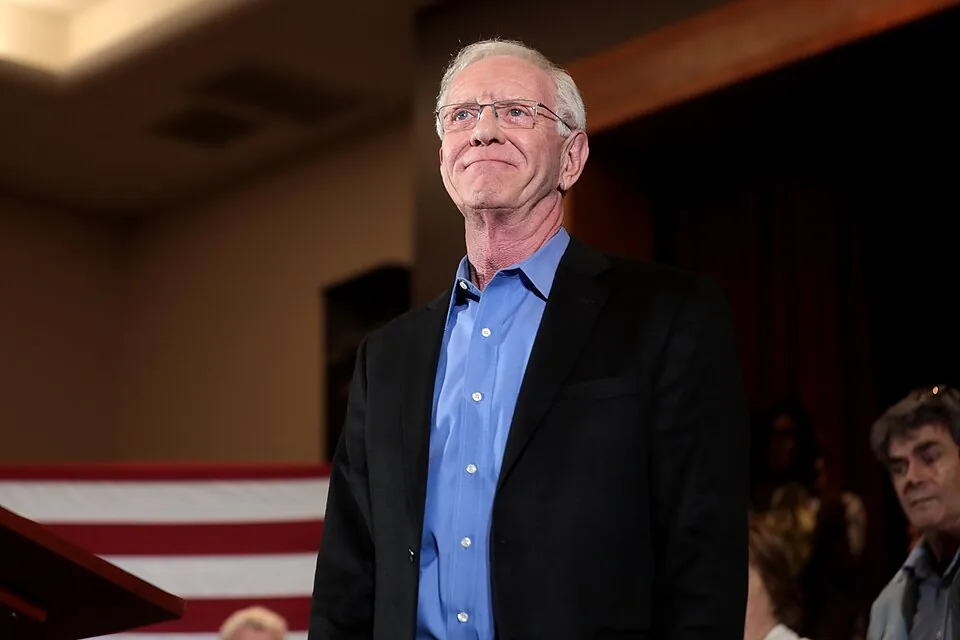
Seventeen years after he landed a crippled passenger jet in the Hudson River and saved 155 lives, Capt. Chesley "Sully" Sullenberger got his Hall of Fame ring — two months after telling the world he has Alzheimer's. He attended the Washington DC ceremony by video. He still managed to be the most dignified person in the room.
The Flight Everyone Remembers
On January 15, 2009, US Airways Flight 1549 departed LaGuardia Airport bound for Charlotte, North Carolina, carrying 150 passengers and five crew members. Minutes after takeoff, according to the Guardian, a bird strike wiped out thrust in both engines simultaneously. Both. Engines. Gone.
Sullenberger quickly determined the plane couldn't make it back to LaGuardia. So he did what you or I absolutely could not do: he put a commercial airliner down in the middle of the Hudson River, in New York City, in January, without killing a single person. All 155 people aboard walked away. They called it the Miracle on the Hudson. Tom Hanks later played Sully in a movie, which is how you know America decided this guy was a legitimate hero.
A Ceremony 17 Years in the Making
The National Aviation Hall of Fame induction ceremony was held in Washington DC on Thursday, with Sullenberger joining a six-member 2026 class that includes NASA astronauts and aviation researchers. He is 75 years old. He participated remotely by video.
His remarks, as the Guardian reports, were gracious and grounded in exactly the way you'd expect from someone who once talked a planeload of terrified strangers through the worst minutes of their lives. "I want to congratulate the other inductees on lifetimes of accomplishments," he said. "And I thank you for the honor of enshrinement in the National Aviation Hall of Fame."
He also made a point that deserves to land. The Miracle on the Hudson made him famous. But he wanted people to know: "My career was much more than one flight." A former US Air Force pilot who spent an entire professional life in the cockpit, Sullenberger said he knew from a very young age that he wanted to fly. "I was so fortunate to spend an entire working lifetime doing something I loved." There's something almost unbearably human about a man at this stage of his life needing people to know he was more than his most famous moment.
The Diagnosis He Didn't Have to Share
In July, Sullenberger publicly disclosed that he had been diagnosed with Alzheimer's disease. He did not have to do this. He is a private citizen. He is 75. He earned the right to deal with this quietly, at home, with his family, away from cameras.
He chose otherwise. "This new phase of my life has challenged what it means to be of service," he said in a statement at the time, as reported by the Guardian. "And the answer is to speak up." His reasoning was straightforward: if he went public, maybe other families dealing with this disease in silence would feel like they could too.
On Wednesday, the day before the Hall of Fame ceremony, Sullenberger spoke to ABC's Good Morning America about learning the diagnosis. He described the experience plainly: "all those emotions, the shock, the anger, why me?" His wife Lorrie appeared alongside him. "This is a disease, not a character flaw," she said. "I think we need to talk about it more openly, and maybe other people can do the same." The Alzheimer's Association estimates roughly 7.4 million Americans aged 65 or older are currently living with clinical Alzheimer's dementia, and about three in four of them are 75 or older.
What He Was Actually Saying
Read the two things Sullenberger said this week together and a theme emerges pretty fast. He wanted his Hall of Fame audience to know he was more than one famous flight. He wanted his Alzheimer's disclosure to remind people that a diagnosis doesn't reduce you to a condition. Both are arguments for seeing a whole person instead of a single defining moment or label.
For a guy who became a symbol almost against his will — the competent, calm professional who showed up perfectly when everything went wrong — there's something almost defiant about insisting on complexity at age 75, with Alzheimer's already in the picture. He's not doing the celebrity illness arc. He's not writing a memoir called "Still Flying" with a sunset on the cover. He made a video, accepted his award, said his piece, and got back to whatever this new phase of life looks like.
The Dingo Take
You are supposed to look at this story and feel good, because a hero got his due and chose public service over private grief. That part is real and it earns the warmth. But sit with it a little longer.
Sullenberger went public with an Alzheimer's diagnosis specifically to reduce stigma for the millions of people dealing with it quietly. That is the same instinct that had him, in 208 seconds over the Hudson, prioritizing 155 strangers over his own survival odds. The man is apparently just built this way. He sees a situation where people need something he can provide, and he provides it, even when the cost is significant and the outcome is uncertain. That is not a common trait. It is genuinely rare. The Hall of Fame got the right guy.
What's less comfortable is the math that surrounds the warm story. Seven point four million Americans are living with Alzheimer's right now. The vast majority of them are not famous pilots. They do not have a Tom Hanks movie. They are not getting Hall of Fame ceremonies over video link. They are getting lost in an underfunded, overstretched care system that the current administration is actively trying to defund further. Sully can speak up. Good. Now let's talk about what happens to everyone who can't.





Comments