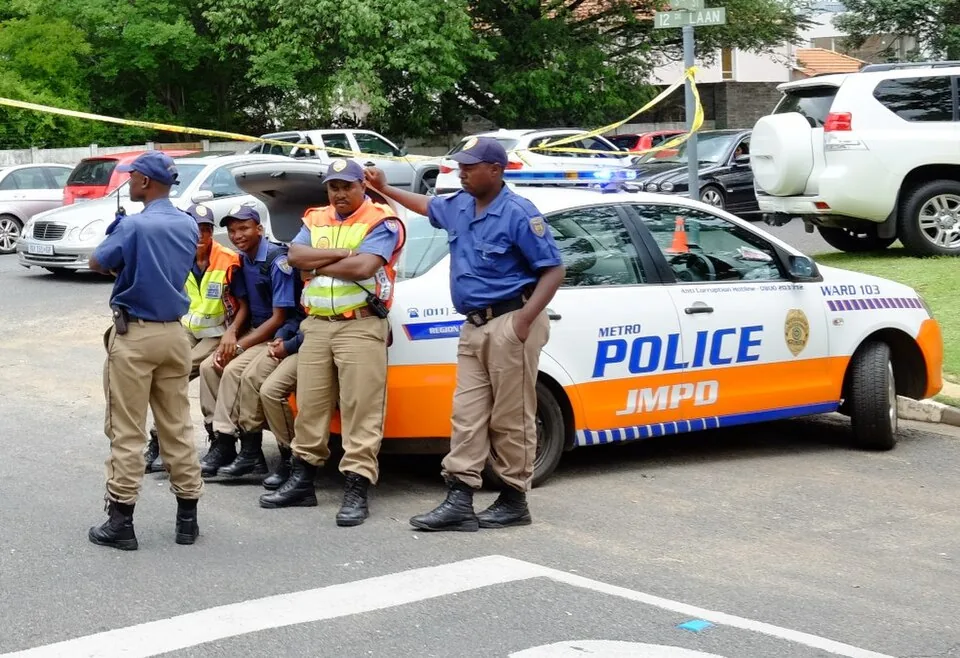
Eight gunmen walked into a bar west of Johannesburg on Saturday evening and just started shooting. By the time the weekend was over, two cities, two attacks, and 27 people were dead. No one has been arrested for either.
What Happened, Exactly
According to CBS News, the first attack happened Saturday evening when eight gunmen armed with assault rifles stormed a bar on the outskirts of Johannesburg. They opened fire on customers drinking outside, then walked inside and kept going. Thirteen men and four women were killed. Fifteen more were wounded.
Before fleeing, the suspects torched two vehicles. Because apparently that felt necessary. Police say the motive is still unknown, which is the kind of sentence that does a lot of heavy lifting.
Less than 24 hours later, gunmen hit an entertainment venue in a township outside Cape Town. CBS News reports 10 people were killed and 11 more wounded in that attack. Five died at the scene. The others died on the way to the hospital. Again, no arrests.
A Country Already Drowning in Violence
South Africa records roughly 60 murders a day, CBS News reports. Not a week. A day. That puts it among the highest murder rates on the planet, in a country of about 62 million people.
The country is, as CBS News puts it, 'awash with legal and illegal firearms,' and gun violence is persistently tied to gang rivalries and turf wars among informal businesses. That's a polite way of describing a situation where the social contract has been renegotiated at gunpoint in entire communities.
This is not new. This is not a spike. This is Tuesday, basically, except it was Saturday and Sunday and the body count was high enough to make international headlines.
The Government Has Been Trying, Sort Of
In March, CBS News reports, President Cyril Ramaphosa deployed soldiers directly into violence hotspots in Johannesburg to back up police, describing crime as one of the biggest threats the country faces. That is a direct quote from the president. One of the biggest threats the country faces.
South Africa has been reaching for the military as a domestic solution for years now. Soldiers enforced Covid-19 lockdowns in 2020. Troops went into the streets in 2021 during the riots that followed the jailing of former president Jacob Zuma. In 2023 they were deployed again after a wave of truck burnings threatened to spiral into wider chaos.
The army keeps getting called in. The murder rate keeps sitting at 60 a day. At some point you have to ask whether deploying soldiers is a solution or just the most visible available response to a problem that isn't actually being solved.
Twenty-Seven People Went Out and Didn't Come Home
It's easy to let numbers do the emotional work so you don't have to. Twenty-seven dead. Twenty-six wounded. Two cities. One night. Those numbers are real, but they also flatten what actually happened, which is that people went to a bar on a Saturday or an entertainment venue early Sunday, and gunmen showed up and killed them.
Four women were among the dead in Johannesburg. Five people were pronounced dead at the Cape Town scene before anyone could get them into an ambulance. The suspects in both cases, as of this writing, are still out there.
Police have not announced a motive. Police have not announced a suspect. Police have not announced an arrest. What police have announced is a body count, and then the weekend ended.
The Dingo Take
Sixty murders a day is not a crime wave. It is a climate. And the difference matters, because a wave implies it crests and recedes, that there is a shoreline somewhere, a point at which normal resumes. South Africa passed that point a long time ago. What CBS News is describing this weekend is not an aberration from the baseline. It is the baseline, occasionally punctuated by incidents large enough to register outside the country's borders.
Two mass shootings in one night across two major cities, 27 dead, zero arrests, and the official response is essentially a shrug dressed up in police statements. Ramaphosa called crime one of the country's biggest threats back in March. The army went in. And here we are in late September with gunmen torching vehicles after a bar massacre and then going home, apparently without much concern about consequences.
None of this means the story is simple or that there are easy answers sitting around unused. South Africa's violence is tangled up in poverty, inequality, the legacy of apartheid, the collapse of institutional trust, and a firearms problem that is both legal and illegal and enormous. But twenty-seven people are dead from this weekend alone. The least the rest of the world can do is actually look at it.


Comments