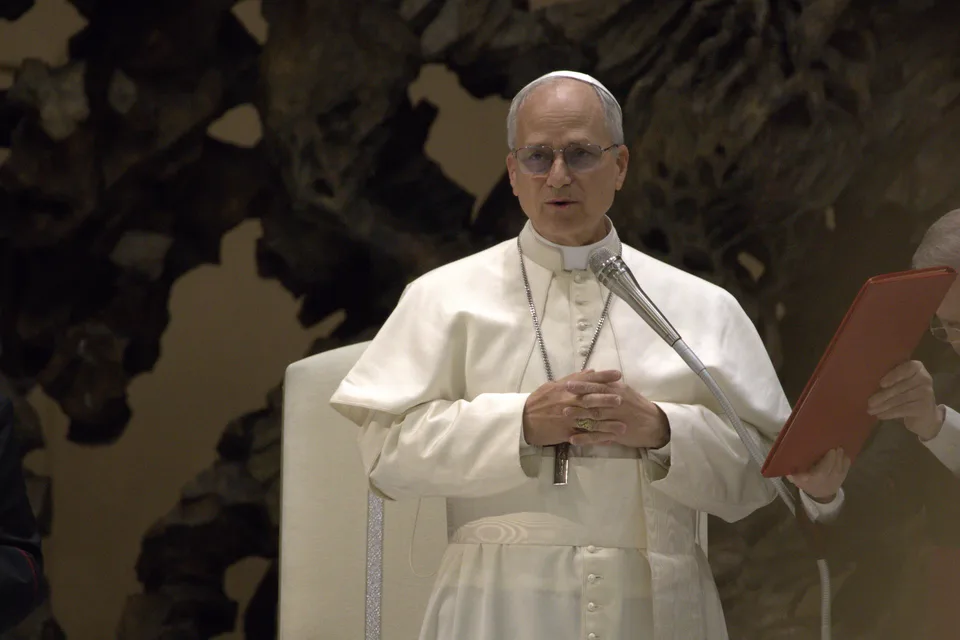
The leader of 1.4 billion Catholics just told the President of the United States that AI safety concerns are real, serious, and not a hoax. Donald Trump, who has called those same concerns a 'SICK conspiracy,' has now officially picked a fight with the Vatican over machine learning. This is the timeline we live in.
What the Pope Actually Said
Closing out a trip to France, Pope Leo XIV spoke to reporters aboard a plane and said warnings from AI researchers should be 'taken seriously' and are not 'fake news.' According to Axios, Leo told reporters he was not in 'panic mode,' but made clear that dismissing expert concerns outright was not an option he was willing to entertain.
That's a direct and deliberate rebuke. Trump had previously called AI safety concerns a 'HOAX' and a 'SICK conspiracy' — language that, even by his standards, is something else when applied to one of the most consequential technological shifts in human history. Leo, apparently, disagrees.
The First American Pope vs. The American President
Here is where it gets genuinely interesting. Leo XIV is the first American pope, which means the Trump White House cannot simply wave him off as a foreign critic who doesn't understand the country. He grew up here. He knows exactly what he's doing when he uses the phrase 'fake news' — a term Trump essentially owns as a rhetorical weapon — and turns it around.
Axios reports this is far from the first time Leo has appeared to break with the president. The two men occupy a strange parallel: both American, both figures of enormous institutional authority, both commanding massive and deeply loyal followings. And they are, on issue after issue, pointing in opposite directions.
Why the Pope Cares About AI in the First Place
This isn't Leo stumbling into a tech debate he doesn't understand. Since taking the papacy, he has made confronting AI risks a central part of his agenda. The Catholic Church has watched the same thing everyone else has watched: AI upending labor markets, generating disinformation at industrial scale, concentrating power in the hands of a few dozen people running a handful of Silicon Valley companies.
For an institution that has spent two thousand years thinking about what it means to be human, these are not abstract questions. They are profoundly moral ones. Whether you believe in Leo's theology or not, the concerns he is voicing track closely with what serious AI researchers, ethicists, economists, and national security officials have been raising for years. The pope did not invent this worry. He is amplifying it.
Trump's Position, Such As It Is
Trump's dismissal of AI safety concerns fits neatly into a pattern. His administration has rolled back AI safety guidelines, pushed to strip oversight mechanisms introduced under Biden, and framed virtually any caution about powerful technology as a form of liberal obstruction. The argument, loosely assembled, is that regulation kills American competitiveness and that fears are manufactured by elites who want to control the internet.
What that argument cannot easily account for is the fact that the warnings are not coming from progressive activists. They are coming from the people who built these systems. Researchers at the labs developing the most powerful AI models have been among the loudest voices calling for safety measures, oversight, and international coordination. Calling that a 'SICK conspiracy' requires either a stunning level of bad faith or a genuine inability to process information that complicates a preferred narrative. Maybe both.
The Geopolitical Dimension Nobody Is Talking About
Set aside the religious angle for a moment. A sitting American pope publicly contradicting the sitting American president on a major policy question, in front of international press, at the close of a trip to France, is a diplomatic event. It signals something about how Leo sees his role and his relationship to American political power.
He is not acting as a soft extension of Washington. He is acting as an independent moral authority who happens to share a passport with the man he is contradicting. That is a genuinely novel situation, and it will not get less complicated as Leo's papacy continues and the Trump administration's hostility to any institutional check on its preferred positions deepens.
The Dingo Take
Trump called AI safety concerns a 'SICK conspiracy.' The Pope of the Catholic Church just called that fake news, using Trump's own term, in front of an international press corps. You are supposed to believe this is a normal moment in American political life. It is not a normal moment.
The specific detail that keeps demanding attention is the phrase 'fake news.' Leo didn't have to use those words. He could have said 'unfounded' or 'mistaken' or any number of things that carry the same meaning. He used 'fake news.' That is not an accident. That is a man who grew up in America, watched what happened to political language between 2015 and now, and chose his words with complete precision.
Trump has spent a decade training his base to distrust experts, institutions, and inconvenient facts by branding them all as hoaxes and conspiracies. Now the most prominent American Catholic on the planet is taking that playbook apart one press conference at a time. Whether Leo can actually shift anything in a country where roughly a quarter of the population would follow Trump off a cliff before they'd listen to a bishop is, of course, another question entirely. But he is not staying quiet. And that matters.



Comments