A cybercriminal group called ShinyHunters apparently decided that hacking Ticketmaster and AT&T wasn't audacious enough, so they went ahead and stole terabytes of sensitive data from the FBI itself, including job applications, medical records, family details, and information on undercover agents. The FBI's response, delivered via a social media video by a senior official, amounted to: "You know how to find us, and we know how to find you." Which is absolutely a thing that is now happening.
What Got Stolen, and Why It's Very Bad
According to NPR, current and former FBI employees say the stolen data could amount to several terabytes of text files pulled from FBIJobs.gov, the bureau's job portal. That means FBI job applications, promotion records, sensitive job postings, family details, and medical data are now sitting somewhere in the hands of people who have already demonstrated they will absolutely use it.
This is not a minor inconvenience. For agents who worked undercover, we're talking about the possible exposure of their real names, their families, their home addresses. NPR reports that some retired employees may need relocation assistance or even name changes if the files go fully public. Let that sink in: FBI agents potentially needing new identities because the FBI couldn't secure its own job website.
One former senior FBI official told NPR the breach could rival the catastrophic 2015 hack of the Office of Personnel Management, which exposed sensitive records on tens of millions of federal employees and was attributed to the Chinese government. The OPM breach was considered one of the worst intelligence disasters in modern American history. The FBI is apparently going for a sequel.
The FBI Sent a Threatening Video to the Hackers. On Social Media.
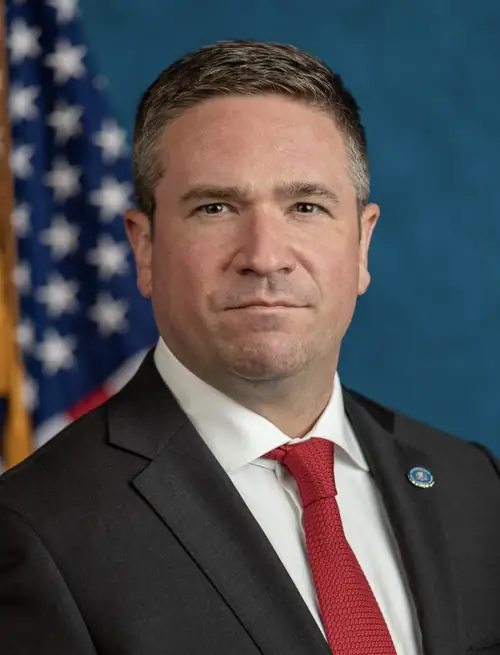
Brett Leatherman, the assistant director of the FBI's cyber division, posted a video online Tuesday addressing ShinyHunters directly. "I suggest you reach out first while the choice is still yours," he said, according to NPR. It was extremely cinematic. It was also the federal government's most senior cybercrime official doing his best Liam Neeson impression on what is essentially the same platform people use to post cooking videos.
To be fair, there is real substance behind the posturing. The video also highlighted a recent arrest of an alleged ShinyHunters member in Amsterdam, carried out by Dutch National Police in an operation the FBI credited its partners for leading. But NPR reports that arrest happened before the FBI data theft, raising an uncomfortable question: did the FBI essentially poke the hornet's nest, and is this breach the sting?
A former senior FBI official familiar with the investigation told NPR that the timing is not lost on anyone inside the bureau. Whether the Amsterdam arrest motivated this particular hack remains unclear, but it's the kind of cause-and-effect chain that makes counterterrorism folks wake up sweating at 3 a.m.
FBI Employees Found Out From the News. Their Boss Is Kash Patel.
Here is where things get specifically uncomfortable. NPR reports that many current and former FBI employees first learned about the breach through media coverage, not from FBI leadership. The FBI told NPR it sent bureau-wide communications within 24 hours of public reporting, which is technically a defense but also sort of confirms the timeline: reporters knew first.
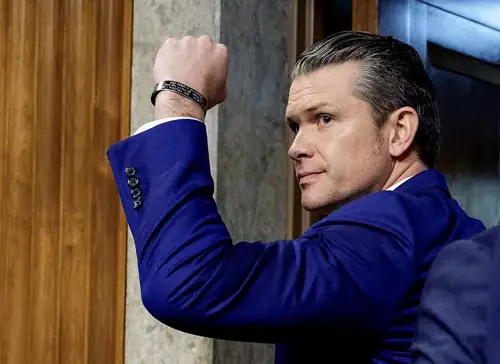
Retired employees, particularly those who worked in sensitive or undercover roles, are furious. NPR sources say there is growing frustration directed at FBI Director Kash Patel specifically, over the lack of clear communication about who is affected, what data was taken, and what the bureau plans to do to protect people whose exposure could put them in genuine physical danger.
Patel, for those keeping score at home, is the same director who spent years as a loyalist media personality before being installed atop the nation's premier law enforcement agency. His leadership of the bureau has already drawn scrutiny on multiple fronts. Now his employees are learning their medical records and family information may be compromised by reading the news.
Who Is ShinyHunters, and Why Did They Do This
ShinyHunters is not a shadowy state-sponsored intelligence apparatus. According to NPR and threat intelligence researchers who have tracked the group for years, it is a loose collective of mostly young hackers scattered around the world with an entrepreneurial attitude toward other people's data. They have previously claimed major breaches at Ticketmaster, Santander Bank, and AT&T, among others.
The group posted a defacement message on FBIJobs.gov after claiming the breach and gave the FBI a deadline of September 30 to correct what ShinyHunters called inaccurate press releases the bureau had previously published about the group. That deadline has now passed. ShinyHunters says it does not intend to leak the files publicly, but as NPR notes, that pledge does nothing to prevent the data from being stolen, sold, or exploited by other criminal, terrorist, or nation-state actors who would very much like a directory of FBI personnel.
Cynthia Kaiser, former FBI deputy director of the cyber division and current ransomware researcher at cybersecurity firm Halcyon, called the hackers "reckless" in a social media post reported by NPR. "When any threat actor targets the FBI directly, they should expect that the FBI is going to marshal additional resources to bring them quickly to justice," she wrote. She is probably right. She is also describing a situation where the most powerful law enforcement agency in the United States just got robbed by kids on the internet.
The Part Where Everyone Braces for Impact
A former senior FBI official told NPR the bureau and its current and former employees are "bracing for impact" and operating under the assumption that the stolen materials are irretrievably compromised. That is the technical way of saying: assume your data is gone and plan accordingly.
The FBI says it is working "around the clock" to investigate the breach and determine whether the hackers got in through third-party software or the FBI's own internal systems. Google's Mandiant has published new research related to the incident, though the FBI has not shared technical details publicly. What exactly was the attack vector, how long were the hackers inside, and what else they may have accessed are questions that do not yet have public answers.
For now, the FBI's official posture is aggressive pursuit of the hackers combined with vague reassurances to employees about their safety. Whether that holds together as more details emerge is, at best, an open question.
The Dingo Take
The FBI got hacked by a group of loosely organized young criminals who were apparently annoyed about some press releases. That's the story. That's the whole story. The most well-funded, most feared domestic law enforcement agency in the world, sitting on decades of cyber expertise and billions in federal resources, could not secure the website where it posts job listings. And now retired undercover agents may need to move and change their names.
The OPM breach in 2015 was attributed to Chinese state intelligence, which is at least a dignified adversary. ShinyHunters is not the People's Liberation Army. They are the digital equivalent of a group of very smart, very reckless teenagers who decided to rob a police station because they felt disrespected. The FBI's response, to its credit, is serious. The video is embarrassing but the manhunt presumably isn't. Arrests will probably come. They usually do with this group.
But none of that helps the retired agent who worked undercover for twenty years, whose real name might now be for sale on a forum somewhere, who found out by reading NPR. That person deserves better than a social media video and a promise that the FBI works around the clock. What they deserved was a government that treated the security of its own people as a priority before the breach, not after.



Comments