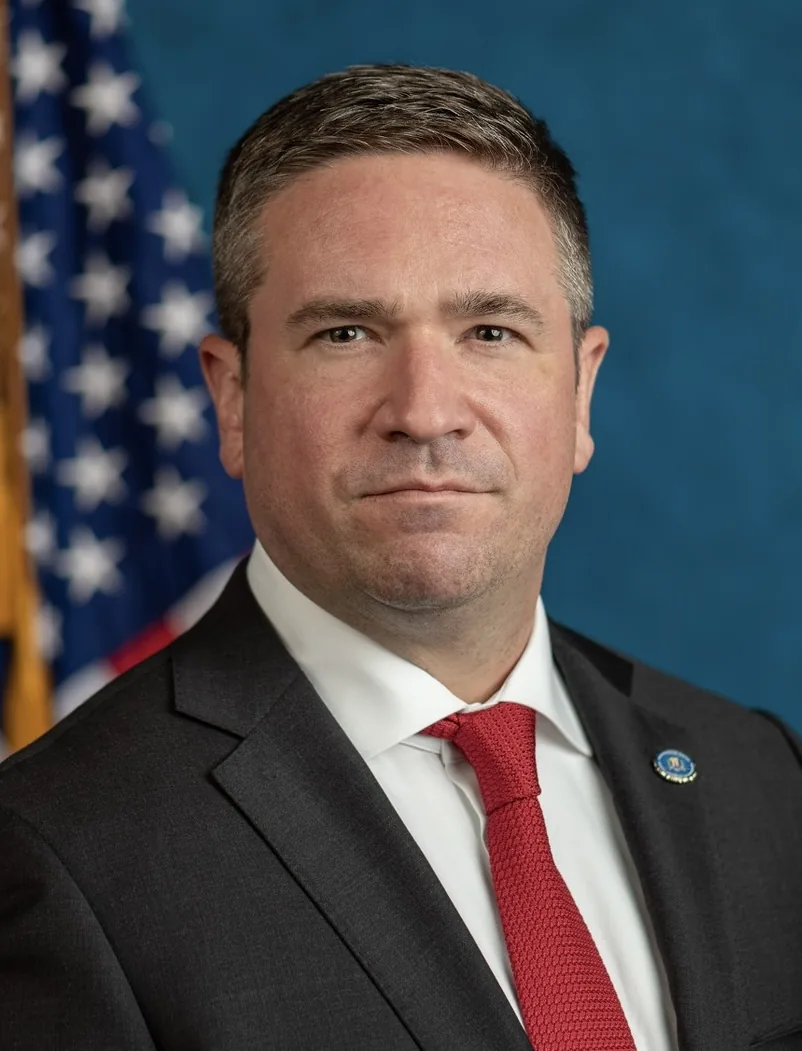
Andrew Bailey, the FBI's co-deputy director, announced Monday he's resigning after just over a year on the job, citing a desire to return to his family in Missouri. That's a perfectly reasonable explanation, and it would be a lot more convincing if he weren't the third person to hold or vacate a deputy director role under Kash Patel in the span of roughly twelve months. The FBI's senior leadership is cycling through people like a restaurant burns through line cooks during a health inspection.
Who Is Andrew Bailey and What Did He Actually Do There
Bailey stepped into the co-deputy director role in August 2025, according to Fox News, slotting in alongside Dan Bongino in one of the stranger experiments in modern federal law enforcement history. The FBI, an agency that has existed since 1908, apparently needed not one but two deputy directors simultaneously — a setup Kash Patel described as a "nontraditional co-deputy structure," which is one way to put it.
Bongino, the conservative podcaster and former Secret Service agent, lasted until December 2025 before clashing with then-Attorney General Pam Bondi over the handling of the Jeffrey Epstein files and walking out. After Bongino left, Bailey stayed on alongside Chris Raia, the former assistant director in charge of the FBI's New York City Field Office, continuing the two-deputy arrangement that makes more sense the less you think about it.
Bailey's tenure will apparently be remembered, at least by Bailey, for "instituting critical reforms" and contributing to what Patel has described as the largest year-to-year violent crime drop in U.S. history. Whether any of that holds up to scrutiny is a separate question. What's not in dispute is that he's leaving.
The Exit Statement Was a Work of Art
Bailey's resignation post on X was a masterclass in the form. "With great pride in what we have accomplished, I am announcing that I am stepping down to return to my family in Missouri," he wrote. "I am confident Director Patel will continue to reform the FBI, combat violent crime, defend the homeland, ensure strong organizational accountability and restore public trust in this institution of excellence."
That last part is doing a lot of work. "Restore public trust" in an institution whose senior leadership has now turned over repeatedly, whose agents were recently demoted for not investigating threatening phone calls to a White House official's wife fast enough, and which operates a social media account dedicated to shouting "fake news" at reporters. Strong stuff.
Patel, for his part, returned the favor with his own warm send-off on social media. "Although Andrew is leaving the FBI in order to return to his family in Missouri, his fantastic contribution instituting critical reforms which resulted in our historic success will live on," Patel wrote. The FBI referred Fox News to Bailey's post. The White House deferred to Patel's remarks. Nobody had anything new to say, which tracks.
The Timing, Though
Here is the part that tends to get buried: Bailey's departure comes just days after two FBI agents were demoted and reassigned, according to Fox News, because the agency wasn't moving fast enough to investigate alleged threatening phone calls made to Katie Miller, the wife of White House deputy chief of staff Stephen Miller. Agents got demoted. Then the deputy director resigned. The sequence is what it is.
The FBI's own rapid response account on X stepped in to deny that Bailey was "annoyed" over recent personnel moves at the Washington Field Office, calling the characterization "clickbait dressed up as reporting" and labeling it "fake news." This is the FBI. The Federal Bureau of Investigation. Using the phrase "fake news" to push back on questions about its own deputy director's abrupt exit. That's where we are.
Axios reported Monday that Bailey's resignation adds to a pattern of turnover under Patel, with top aides and experienced security officials leaving the agency at an accelerating pace. That's not editorial spin. That's just the count.
The Scoreboard Under Patel So Far
Let's run the numbers. Patel took over the FBI in early 2025. Since then: Dan Bongino came in as co-deputy director, clashed with the Attorney General over Epstein files, and left after four months. Andrew Bailey served as co-deputy, and is now out after thirteen months. Two agents were demoted last week for the speed of their response to a politically connected complaint. Senior officials have departed in a steady stream that Axios describes as a defining feature of Patel's tenure.
The FBI still has Chris Raia as the remaining co-deputy director. Whether the agency keeps the two-deputy structure, scales back, or invents some new configuration is anyone's guess at this point. Patel has shown a taste for organizational experimentation, so do not rule anything out.
The Dingo Take
You are supposed to look at all of this and see a well-run federal law enforcement agency undergoing healthy reform. You are supposed to read "returning to his family in Missouri" and nod and move on. You are supposed to believe that three deputy directors cycling through in a year, two agents getting demoted for moving too slowly on a call that involved Stephen Miller's wife, and the FBI's communications team calling journalism "fake news" on the platform formerly known as Twitter all add up to an institution that is, as Bailey put it, on its way to restored public trust.
It does not add up to that. What it adds up to is an agency being run as a political instrument, where personnel decisions are visibly tied to loyalty tests and proximity to power, and where the communications strategy involves copying the boss's favorite insult directly from his social media playbook. Bongino left over Epstein. Agents got demoted over the Millers. Bailey's out now. The FBI's rapid response account is the one saying "fake news." None of this is subtle.
The actual damage here is not to any one person's career. It's to an institution that depends, more than almost any other in the federal government, on the credibility of its agents in courtrooms, in interviews, in the field. When the deputy director's chair has a revolving door on it and the bureau is publicly dunking on reporters who ask obvious questions about why, that credibility erodes. And once it's gone, no social media post from Kash Patel about "historic success" is going to bring it back.


Comments